Last updated November 18, 2026



Free written scope consultation - allowances, timeline, and change-order rules on paper before a single trade is scheduled
How to Hire a Construction Contractor in Fullerton: A Step-by-Step Guide
Three bids on the same Fullerton kitchen remodel can legitimately land at $38,000, $54,000 and $71,000. Nobody in that group is necessarily dishonest. Each number is built on different cabinet allowances, different assumptions about who pulls the permit, and different coverage for the electrical and plumbing changes nobody wrote down. Compare those three figures side by side and you learn nothing except how wide a range can get. This guide walks you through the sequence that actually works: lock the scope first, verify the license and bond second, and only then let anyone put a number in front of you. By the end you’ll know how to read a Fullerton bid, spot the line items that hide cost, and ask reference questions that surface real performance instead of polite reviews.
Quick Answer
To hire a construction contractor in Fullerton, write a scope document before you call anyone, verify the contractor’s CSLB license classification, bond and insurance through the state board’s lookup tool, insist on a written line-item bid with allowances spelled out, and keep your deposit within California’s $1,000-or-10% cap. Compare price only after two bids describe the same work the same way. A contractor who won’t put the scope and the price in writing before starting isn’t a cheaper option – they’re an unknown one.
Styles & brands we work with
- Kitchen remodeling
- Bathroom remodeling
- Home additions & ADU
- Roofing
- Windows & doors
- Driveway & pavers
- Fence
Table of Contents
- Step 1: Write Your Scope Before You Call Anyone
- Step 2: Separate Fixed Items From Allowance Items
- Step 3: Verify the License, Bond and Insurance on the CSLB
- Step 4: How to Read a Fullerton Contractor’s Bid
- Step 5: The Signed Change-Order Clause
- Step 6: Payment Schedules and California’s Deposit Cap
- Step 7: Reference Questions That Surface Real Performance
- Step 8: Permits, Inspections and Close-Out
Step 1: Write Your Scope Before You Call Anyone
The single biggest reason Fullerton homeowners get burned on price is that they shop before they scope. A contractor arriving at a house with no written scope will fill the gap with assumptions, and assumptions are where the extra $20,000 lives. Write the scope yourself, on paper, before the first site visit. It doesn’t need to be technical. It needs to be complete.
Start with the rooms or areas involved and the outcome you want. Then list every decision already made and every decision still open. “Mid-range shaker cabinets, painted, soft-close” is a decision. “Nice cabinets, TBD” is an allowance waiting to balloon. Fullerton’s older housing stock – a lot of it built between the 1920s and the 1960s – means a scope for a north-side bungalow will often carry a structural line item a 1990s tract home in the same city won’t. Knob-and-tube wiring, galvanized supply lines and undersized panels show up often enough in pre-war Fullerton that a bid without a line for “unforeseen electrical” is either lucky or naive.
Include these in writing before the first call:
- Square footage and the rooms affected, with a simple sketch
- What gets demolished and what stays
- Whether the permit is being pulled by the contractor or by you
- Every fixture, finish and appliance decision already made, with brand and model where possible
- Any known issues: leaking valve, cracked tile, a wall that’s always been cold in winter
- Your target start date and any hard deadline, like a school year or a lease end
Bring that document to every site visit. A contractor who reads it carefully and asks questions is scoping. A contractor who glances at it and says “we’ll figure it out” is pricing a guess.
Step 2: Separate Fixed Items From Allowance Items
Every construction bid separates into two categories whether the contractor labels them or not: fixed items and allowance items. Fixed items are the work that must be done and can be priced exactly. Allowance items are choices that flex, and the allowance is the number the contractor assumes you’ll spend before you’ve chosen anything.
Fixed items (should be priced as a flat number)
- Demolition and debris hauling
- Permit fees and plan-check costs
- Structural work: framing, headers, beam replacements, foundation repair
- Rough electrical and plumbing to code, if the scope requires it
- Drywall, texture, prime and paint
- Labor on the installation of every fixture
- Final inspection coordination
Allowance items (will flex during selections)
- Cabinets: KraftMaid and Wellborn both publish dealer price ranges; a $9,000 allowance and a $22,000 allowance are two different kitchens
- Countertops: Cambria and Caesarstone quartz run in a wide band per square foot depending on the slab and edge profile
- Fixtures: a Kohler or Toto toilet is a nameable, verifiable number, so insist on the model not the brand
- Tile, flooring and paint colors
- Appliances
Here’s the trick that makes price comparison meaningful: ask each contractor to break their bid into these two buckets on one page. Two bids for a Fullerton bathroom remodel that both say “$28,000” can mean completely different things if one assumes a $4,000 tile allowance and the other a $12,000 one. When the numbers sit side by side against the same written scope, the comparison is honest. When they don’t, you’re comparing moods.
Step 3: Verify the License, Bond and Insurance on the CSLB
California keeps a public database for this. The Contractors State License Board lookup at cslb.ca.gov takes a name or a license number and returns the classification, the current status, the bond and the workers’ compensation coverage. Check it before you sign anything. It’s free and it takes four minutes.
Which license classification covers which trade
- B – General Building Contractor: takes responsibility for a whole-project build including structural work. A general contractor can hire licensed subs for the specialty trades.
- C-39 – Roofing: roof repairs and replacements.
- C-13 – Fencing: fence installation and repair.
- C-27 – Landscaping: a common classification covering paver and hardscape work at a driveway or yard.
- B with a specialty subcontractor listed: the common arrangement for a kitchen or bathroom remodel where the general holds the contract and licensed subs handle electrical and plumbing.
- A – General Engineering Contractor: work involving fixed works like roads and drainage, not usually a residential remodel.
A contractor who tells you “we don’t need a license for this” for anything over $500 in labor and materials is wrong under California law. Verify the classification matches the trade you’re hiring for. A B license does not automatically make a roofer, and a roofer’s C-39 doesn’t let them run your kitchen renovation. In Fullerton, ask the person in front of you for the license number and check it while they’re still at the table.
Bond and insurance checks that matter
The CSLB listing will confirm an active contractor’s bond – California sets a minimum – and the workers’ comp status. Ask for the certificate of insurance separately for general liability. Confirm the policy is current and the limits are meaningful for the size of your project. If a contractor can’t produce a certificate the same day, that’s the answer.
Step 4: How to Read a Fullerton Contractor’s Bid
A bid is a document. Read it like one. Some are scoped, itemized and honest; others are one line that says “kitchen remodel – $52,000.” The difference tells you how the project will go, because the bid is the first piece of project management you’ll see from that company.
Red flags that should stop you
- Lump-sum line items with no unit breakdown. “Tile – $6,000” is a guess. “Tile – 240 sq ft at $X/sq ft installed” is a number you can verify.
- No permit line item. Fullerton requires a permit for structural, electrical, plumbing and mechanical work. A bid without a permit line either means the contractor is skipping the permit (illegal, and it will come back to bite you at resale or insurance) or they’ll surprise you with it later.
- No line for debris removal, dumpster, or final cleanup. That cost lands somewhere, and if it isn’t in the bid it lands on you.
- Payment schedule front-loaded past California’s cap. More on this in Step 6.
- Missing allowance amounts. If the bid doesn’t name a dollar figure for cabinets, tile, countertops and fixtures, you cannot compare it to another bid.
- No written warranty. Ask for it before you sign. If it exists, it’s a document; if it doesn’t, it’s a promise.
Line-item bids take more effort to produce, and that’s the point. The company that shows you how it built the number has nothing to hide when the project starts. If you already have a competitor’s written estimate and want it read line by line, we offer a free second opinion on any written estimate – that review is one of the easiest ways to catch a scope gap before you sign.
Step 5: The Signed Change-Order Clause
California’s Business and Professions Code gives you a specific protection on change orders: any change to the contract price or scope must be agreed to in writing by both parties before the work proceeds. That’s the legal floor. The practical gap between the law and everyday practice is wide, and it’s where budgets die.
What California law requires
- A written, signed change order for any change to the work or the price
- A description of the change and the dollar amount
- Signatures from you and from the contractor
- Delivery before the extra work begins
What many change orders actually contain in practice
Verbal approval. A text that says “we found rot, add $3,200.” A “supplemental invoice” delivered after the work is done. A handwritten scrap of paper. These arrangements are common and they’re how a $45,000 bathroom becomes a $61,000 one.
When you hire in Fullerton, ask the contractor to show you their standard change-order form. It should have a description field, a unit-price or flat-price field, a schedule-impact field and two signature lines. If they don’t have one, ask them to put one in the contract. Our change-order discipline is straightforward: no work proceeds on a change until the change order is signed. Every time. That single administrative habit is why projects come in within a few percent of the agreed number instead of ten or twenty.
Step 6: Payment Schedules and California’s Deposit Cap
California caps the down payment a contractor can collect on a home improvement project at $1,000 or 10% of the contract price, whichever is less, under the Contractors’ State License Law. That cap exists because front-loaded payment is the most common way homeowners lose money to a contractor who stops working.
What a reasonable payment schedule looks like
- Deposit: no more than $1,000 or 10% of contract, whichever is less
- Progress payments tied to defined milestones: demo complete, rough-in inspected, drywall hung, tile set
- Final payment held back until the punch list is complete, the inspections have passed and the warranty document is in your hand
If a contractor asks for 50% up front to “buy materials,” decline or ask for an alternative. A well-run company doesn’t finance its operation out of your deposit; it buys material against a schedule and shows you the receipts. Get the payment schedule in writing in the contract before anyone starts. If you’re comparing bids for a Fullerton project, a contractor with a more conservative deposit request and a milestone schedule is generally a safer contract than one offering a lower total with a front-loaded payment plan.
Step 7: Reference Questions That Surface Real Performance
Every contractor has three glowing references. They’re real, and they tell you the contractor finishes projects and people liked them. They don’t tell you whether the final cost matched the bid, or whether the permit closed out before the owner sold the house. Ask specific questions, and take notes.
The seven questions worth asking
- What was your final cost compared to the number in the bid, as a percentage?
- Did any change order arrive after the work was already done?
- How long did the permit take to close out after the last inspection?
- Did the crew show up when they said they would, or did you chase them?
- What did they do when something went wrong – and something always goes wrong on a remodel?
- Would you hire them again at the same price?
- Was the project manager the same person from start to finish, or did you get reassigned?
If you’re hiring for an exterior trade, ask a Fullerton homeowner specific to the work. Roofing references should be able to tell you the shingle layer count on the old roof and which manufacturer system was installed – GAF and Owens Corning both run verified installer programs you can confirm. Fence and paver references should be able to tell you what material they chose, whether the fence was set in concrete, and how the drainage was handled at the grade break. Trade-specific questions weed out the polite generalities.
Step 8: Permits, Inspections and Close-Out
The permit is not paperwork. It’s the paper trail that proves the work meets code, and it’s what your insurance company and a future buyer will look at. In Fullerton, structural, electrical, plumbing and mechanical work requires a permit; the common exception is cosmetic work like paint and flooring. Confirm in writing whether the contractor is pulling the permit or you are. If the contractor pulls it, get the permit number and understand that the work is now inspected by the city.
Ask the contractor what happens at close-out. A well-run project ends with final inspection passed, the permit signed off by the authority having jurisdiction, and the signed permit and inspection results delivered to you with the warranty document. If the contractor can’t describe that close-out, or if they say “we don’t pull permits for small jobs” on a structural change, walk away. The Fullerton building department is not the obstacle – it’s the independent inspection that protects your house.
For projects involving an addition, an ADU or a full-home renovation, scope and permit sequencing get more complex. Our team’s guide to Home Additions & ADU in Newport Beach walks through the sequencing when you’re planning a bigger build alongside a Fullerton project. And when you’re ready to see how we approach a Fullerton home project end to end, the Rowan Construction Group Fullerton home page covers our trades and our documentation standards.
Common Mistakes to Avoid
- Comparing bids before comparing scopes. Three contractors looking at the same Fullerton kitchen will write three different scopes unless you hand them a written one. Price difference is usually a scope difference, and sorting it out after you’ve signed is the wrong time.
- Taking “we’ll pull the permit later” at face value. In Fullerton, unpermitted work becomes visible at resale, at a refinance, and on an insurance claim. Get the permit responsibility in writing in the contract.
- Accepting a verbal change order. A text that says “we found X, add $Y” is not a change order under California law. Any change needs both signatures before the work happens.
- Paying more than $1,000 or 10% up front. The deposit cap exists for a reason. A front-loaded payment schedule is the number-one way homeowners lose money to a contractor who stops showing up, and it’s very hard to get back.
- Skipping the CSLB check. Four minutes on the state lookup tells you the classification, bond status and insurance status. It’s the cheapest diligence you’ll ever do, and it catches out-of-classification contractors before you sign.
- Hiring the lowest bid without asking what’s missing. The lowest bid is often lowest because it isn’t scoped for permits, debris removal, or a realistic cabinet allowance. The savings get paid back once the work starts.
- Holding back no final payment. Keep a meaningful final payment until the punch list is done and the permit is signed off. That’s the last bit of leverage you have.
See the difference
 Before
 After
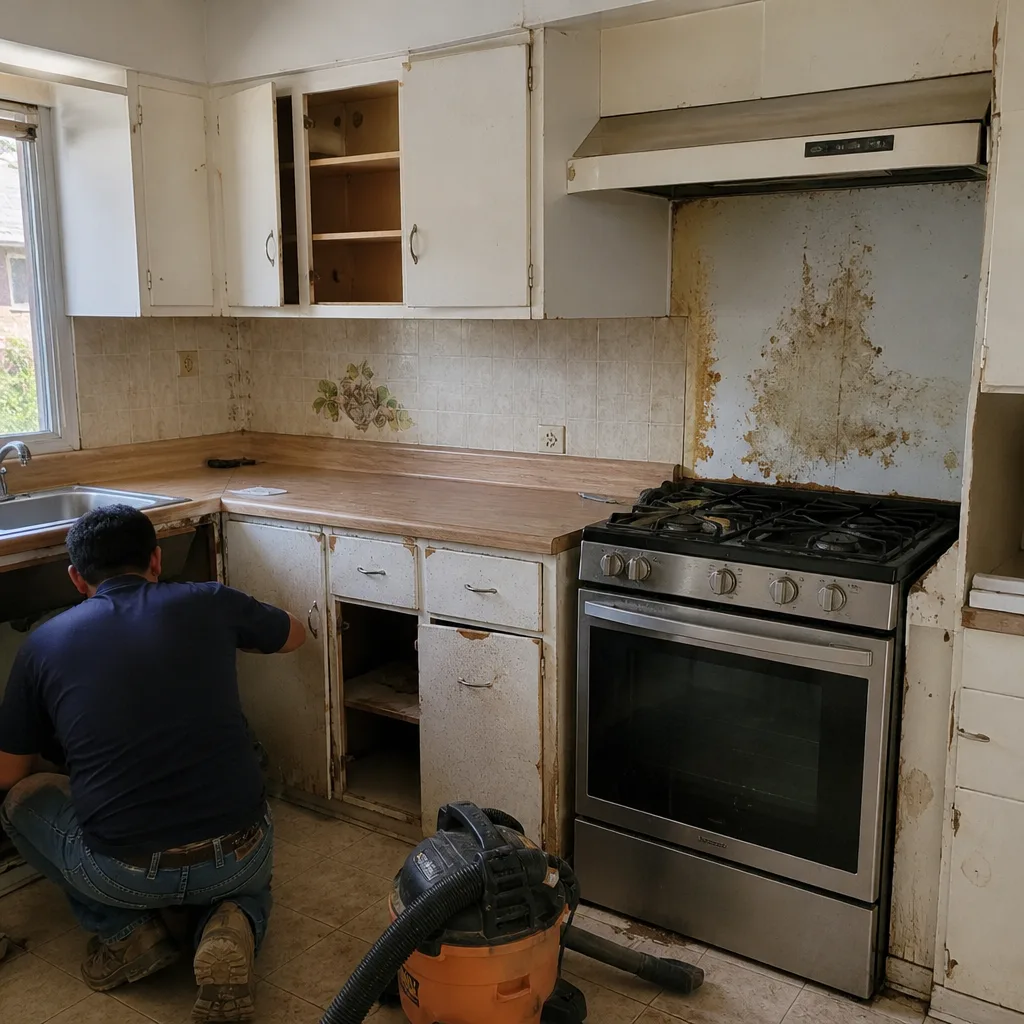 Before
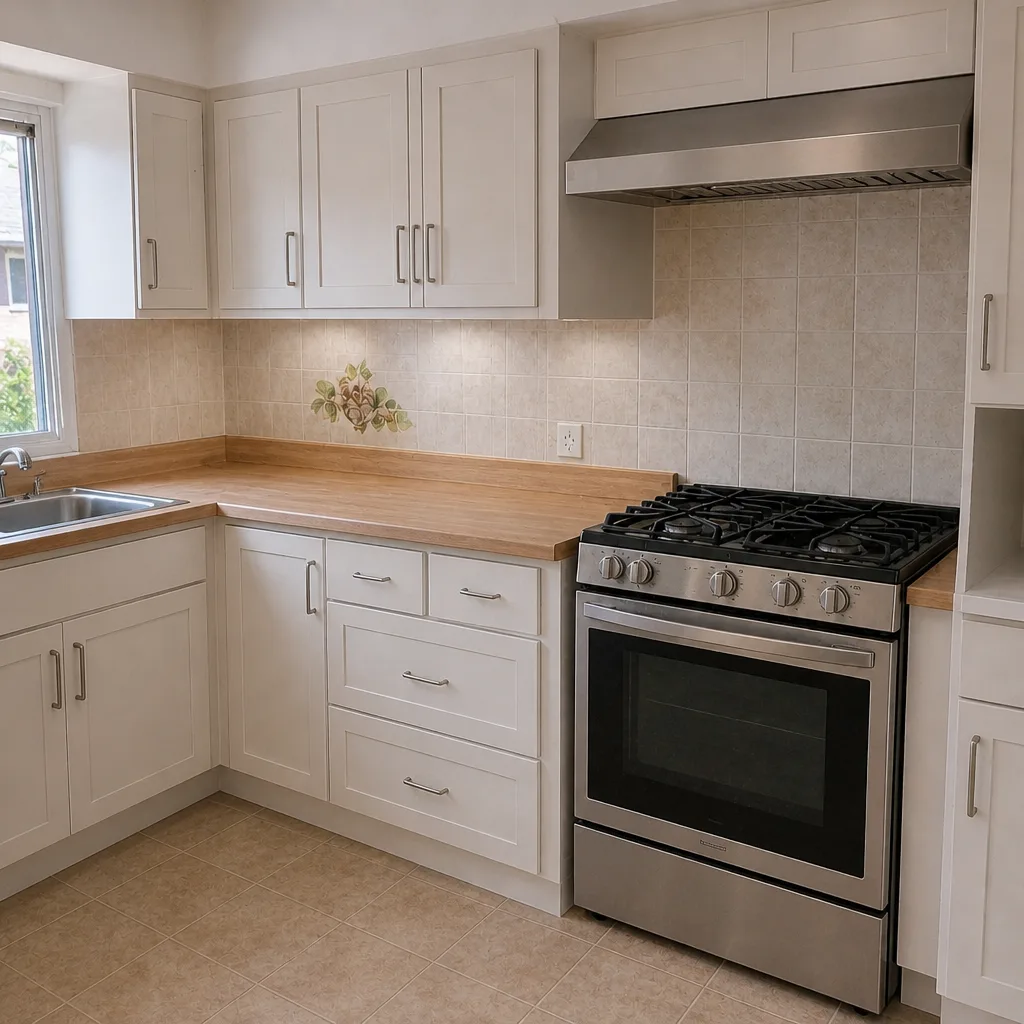 After
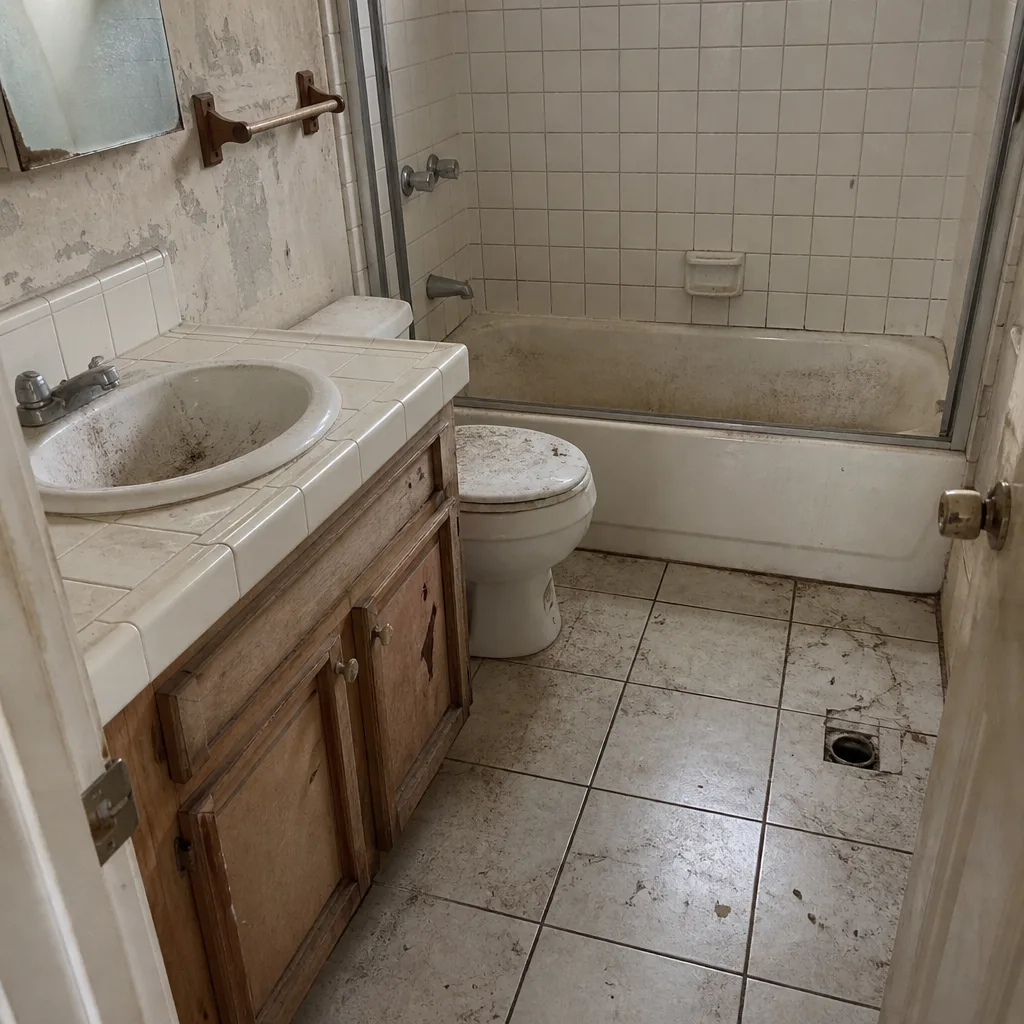 Before
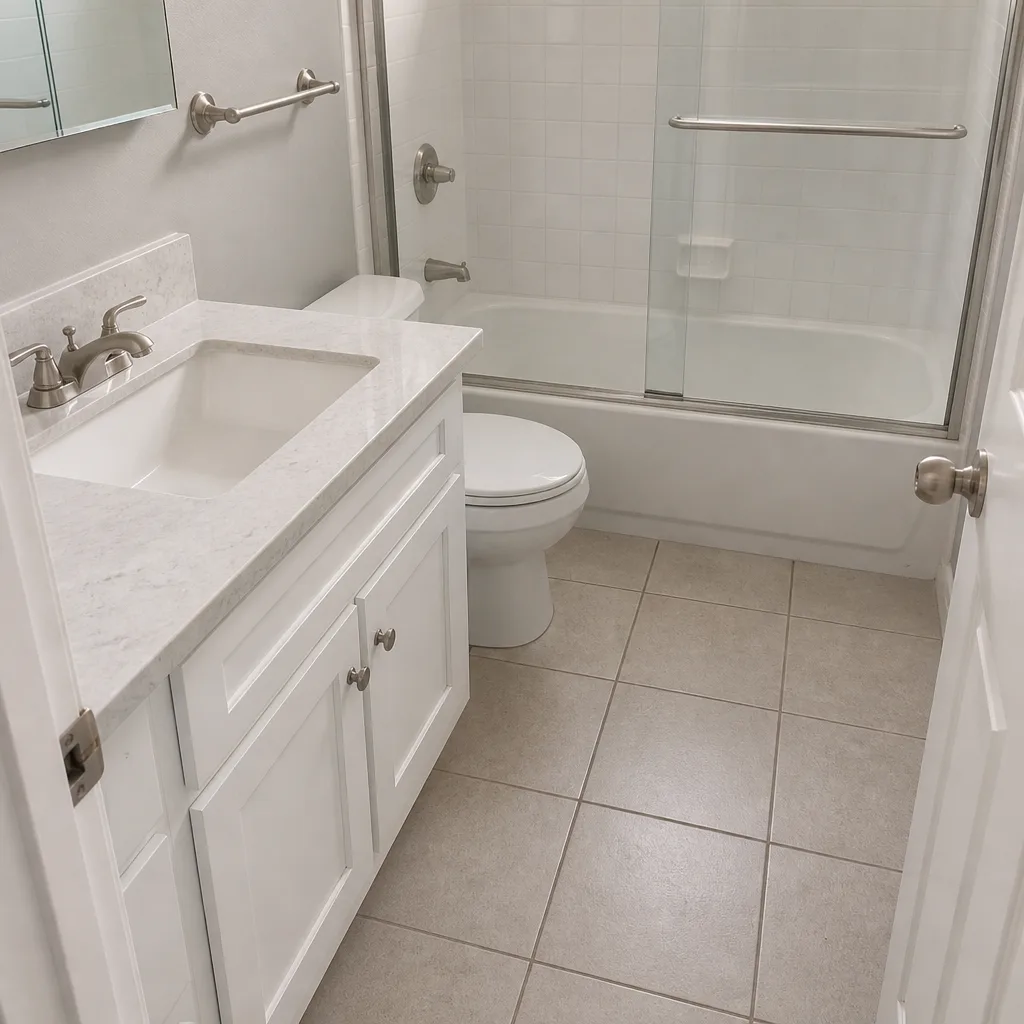 After
When to Call a Professional
Some work is genuinely a homeowner’s job: painting, swapping a light fixture, hanging a fence panel, clearing a drain. The line is where the work touches structure, electricity, gas, plumbing under pressure, or a roofline. A wall removal that “looks non-load-bearing” can be the exact one that carries the ridge above it, and the fix when a header is missing is somewhere north of five figures. A roofline at the wrong pitch, a fence post set in the wrong soil prep, a paver base installed without proper compaction – each of these has a failure mode that shows up months later. If the scope involves a permit, an inspection, or a change to the building envelope, call a licensed professional and get it done once. Rowan Construction Group Fullerton offers free estimates in Fullerton with a written price before any work starts. Call (844) 320-7095 to schedule one.
Frequently Asked Questions
Fullerton kitchen remodels typically land between $38,000 and $71,000 for a mid-range project, driven almost entirely by cabinet, countertop and appliance allowances and by whether the scope requires moving plumbing or electrical. A 1920s bungalow north of Commonwealth with galvanized supply lines needs allowance for plumbing replacement a 1990s tract home won’t. Call (844) 320-7095 for an exact quote – estimates are free, and we put the scope and price in writing before any work starts.
Yes, if the work involves structural, electrical, plumbing or mechanical changes. Cosmetic work like paint, flooring and tile replacement usually doesn’t require a permit. Confirm the permit responsibility in writing in the contract, and get the permit number once it’s pulled. Call (844) 320-7095 to talk through whether your project needs one.
Use the CSLB lookup at cslb.ca.gov with the contractor’s license number or business name. Confirm the classification matches the trade (B for whole-project work, C-39 roofing, C-13 fencing), check that the license is active, and verify the bond and workers’ comp status. Ask for a certificate of insurance separately. Call (844) 320-7095 if you want a second set of eyes on what you’re seeing.
Only if the scope changes, and only with a signed change order. Under California law, any change to the price or scope must be agreed to in writing before the work proceeds. A written price and a written scope, held firm through the project, is what a well-run bid looks like. Call (844) 320-7095 for a written estimate – estimates are free and the number doesn’t move unless you sign a change order.
A mid-range bathroom remodel runs three to five weeks; a kitchen runs six to ten weeks; an addition or ADU runs four to eight months including plan check and permitting with the city. Schedule depends on permit review and material lead times, not on labor speed. Call (844) 320-7095 for a written schedule tied to your specific scope.
Ask both contractors to break their bids into identical line items – the same scope, the same allowance amounts – and compare on that basis. The bid that doesn’t survive the line-item comparison is usually missing scope, not giving you a deal. We offer a free second opinion on any written estimate; bring a competitor’s quote and we’ll review it line by line at no charge. Call (844) 320-7095 to schedule.
The Bottom Line
The Fullerton homeowners who get the best result from a construction project are the ones who scope first and shop second. Write your scope, separate the fixed items from the allowances, verify the CSLB license and bond and insurance, read the bid line by line, ask for the change-order form and the payment schedule, and call references with specific questions about final cost and permit close-out. Everything else – the price negotiation, the start date, the finish date – falls into place once those steps are done. Skip any one of them and the number in the bid stops meaning what you thought it meant.
Rowan Construction Group Fullerton works under The Haven Standard: a written price and written scope before any work starts, no change without a signed change order, background-checked technicians, and a documented photo record on every visit. Material sourcing runs across names like Kohler, Toto, Schluter and Sterling for plumbing and tile, and KraftMaid and Wellborn for cabinetry – so the written quote carries honest numbers, not inflated ones. Our technicians have up to 19 years of experience, and every project is backed by the 365-Day Done Right Promise. If you’re ready to put a plan and a price in writing for a Fullerton project, call (844) 320-7095 to schedule your free estimate. When you’re also planning work beyond the house, our teams handle Driveway & Pavers in Newport Beach and Fence Installation in Newport Beach with the same documentation standard.
Written by the team at Rowan Construction Group Fullerton.