Last updated November 18, 2026







Free written scope consultation - allowances, timeline, and change-order rules on paper before a single trade is scheduled
Seasonal Construction Care for Fullerton: Year-Round Homeowner’s Guide
Fullerton averages about 15 inches of rain a year. That number sounds harmless, and that’s the problem: because big storms are rare here, drainage defects, failed caulk joints, and hairline stucco cracks can sit untested for months. Then a two-inch rain event arrives in a single afternoon and finds every deferred problem at once. This guide treats each of Fullerton’s four mild seasons as a specific maintenance window with trade-specific tasks, not a vague reminder to “inspect your roof.” You’ll get measurement standards, timing windows, and the documentation habit that pays off when you file a warranty claim or take a bid.
Quick Answer
Seasonal construction care in Fullerton means working with the climate instead of assuming it will be gentle: inspect and seal stucco joints in fall before the rain season, verify drainage slope and downspout extensions after the first winter storm, check masonry for efflorescence and staining in spring, and address concrete expansion joints and asphalt sealcoat timing in summer. The through-line is documentation. A dated photo log organized by trade, kept year-round, is what turns maintenance from guesswork into evidence you can hand to any contractor or warranty department.
Styles & brands we work with
- Kitchen remodeling
- Bathroom remodeling
- Home additions & ADU
- Roofing
- Windows & doors
- Driveway & pavers
- Fence
Table of Contents
- Why Fullerton’s Mild Climate Hides Problems
- Fall (September – November): The Caulk and Stucco Window
- Winter (December – February): Drainage and Foundation Verification
- Spring (March – May): Post-Rain Masonry Inspection
- Summer (June – August): Heat, Concrete, and Sealcoat Windows
- The Year-Round Photo Log: Your Best Defense
- Common Mistakes to Avoid
- Frequently Asked Questions
Why Fullerton’s Mild Climate Hides Problems
Fullerton sits in a coastal-influenced inland pocket of Orange County. Summer days routinely push past 95°F while nights cool into the 60s, and winters rarely dip below the low 40s. That daily swing is the real stressor on a house. Materials expand and contract every single day, and the movement is small enough that damage accumulates without a visible event to blame.
Compare that to a climate with a hard freeze. Freeze-thaw cycles announce themselves: a crack opens, water gets in, ice splits it wider, you see it. In Fullerton, a hairline crack in stucco may take three or four seasons to become a leak path, and by the time water stains appear on interior drywall, the defect is often years old.
Clay-heavy soil adds a second layer. Fullerton’s expansive soils swell when wet and shrink when dry. In a year with 15 inches of rain spread across a handful of storms, the soil under a slab can heave and settle repeatedly. We’ve seen walkway slabs in older neighborhoods near downtown lift a half inch at a control joint with no crack visible at all. That’s the pattern: quiet movement, no drama, compounding cost.
The practical response is scheduling. Put the right inspection in the right month and the small stuff gets caught while it’s still small. Skip the schedule and you’re relying on luck and a rare storm to reveal what’s wrong.
Fall (September – November): The Caulk and Stucco Window
Fall is the single most valuable maintenance window in Fullerton, because it’s the last stretch of reliably dry, moderate weather before the rain season. Caulk applied in 75°F fall conditions cures properly. The same tube of sealant applied in a cold, damp January may never adhere correctly.
Start with a joint inspection on every stucco surface. Walk the perimeter with a flashlight and a notepad, and look at three zones: where stucco meets window and door frames, where it meets the foundation or weep screed, and any penetration for hose bibs, vents, or utility lines.
When you find cracking, the width determines the response:
- Hairline cracks under 1/16 inch (roughly the thickness of a credit card) are usually cosmetic. Spot-seal them with an elastomeric patching compound.
- Cracks between 1/16 and 1/8 inch need cleaning out first, then a flexible sealant rated for masonry. If the crack reappears within a season, it’s moving, and that’s a different conversation.
- Cracks wider than 1/8 inch, or any crack that runs diagonally from a corner of a window or door opening, warrant a professional look. Diagonal corner cracks can signal settlement or a framing issue, and sealing them without diagnosing the cause just hides the symptom for one more year.
While you’re on the ladder, check the roof too. Look at the condition of the shingle field, the flashing around any chimney or skylight, and the gutters. GAF and Owens Corning shingles both carry published warranties, but those warranties generally require that the roof be inspected and maintained, so a dated photo of a clean gutter in October is worth keeping. If you’re planning a roofing project rather than a repair, our guide to Rowan Construction Group Fullerton home lays out how the written quote process works before anything gets ordered.
One fall task specific to Fullerton: check the weep screed at the base of your stucco. It’s the metal lip that lets moisture escape from behind the stucco. If it’s buried under soil, mulch, or a raised patio slab, water gets trapped behind the wall. The standard is that the screed should sit a minimum of 4 inches above finished grade. If it doesn’t, that’s a grading correction, not a caulk job.
Winter (December – February): Drainage and Foundation Verification
The first meaningful rain of the season is your free diagnostic. Don’t wait for it to pass and dry out. Put on a jacket and walk the property while water is actually moving.
Here’s a practical sequence for that first-rain walk:
- Watch the gutters. If water is sheeting over the edge instead of flowing to the downspout, you have a clog or a slope problem. Clean them and re-check at the next storm.
- Follow the downspouts. Water should discharge well away from the foundation. In Fullerton’s clay soil, a downspout that dumps directly at the wall keeps a patch of soil saturated for days. The common standard is to extend the discharge at least 3 feet from the foundation, and further if the ground slopes back toward the house.
- Check the slope of the soil against the house. It should fall away from the foundation at roughly 6 inches over the first 10 feet. Grab a level or just watch where puddles form and sit.
- Look at the weep screed again. Now you’ll see whether water is pooling against the stucco base. Pooling there is the single most common cause of moisture behind stucco in this region.
- Inspect the walkways and driveways. Water should run off, not stand in a low spot at the garage apron or the base of the front steps. Standing water at a control joint will find its way under the slab.
Winter is also the season to check anything that might be damaged by wind rather than water. Fullerton’s winter storms occasionally bring gusts that catch a compromised fence panel or a loose gate. If your fence is showing leaning posts or split pickets after a storm, that’s a repair-or-replace decision, and our Fence Installation in Newport Beach page walks through how material choice affects longevity in coastal-influenced climates. The same principles apply inland.
Track the rain totals and photograph each storm’s effect. A log that shows “downspout discharged 2 feet from wall, pooling 3 inches deep along north wall, photographed January 14” is the kind of specific evidence that turns a maintenance conversation into a scoped, quotable repair.
Spring (March – May): Post-Rain Masonry Inspection
By March, the rain has done its work. Spring is the inspection window: you’re reading the results of winter. Walk any brick, block, or stucco surface and look specifically for efflorescence, which is the chalky white powder that appears when water moves through masonry and evaporates at the surface, leaving dissolved salts behind.
Efflorescence is not the same as staining, and the treatment differs by surface:
- On brick and block: white, powdery efflorescence that brushes off with a stiff dry brush is usually a sign of a moisture path that needs correcting, not a cosmetic blemish. A light vinegar wash works for mild cases, but if it returns after a rain, find the water source.
- On stucco: efflorescence often appears at the lower wall near grade. Treat it as a warning about the weep screed and drainage slope, not a stain to scrub.
- On concrete flatwork and pavers: white haze can be efflorescence or a sealer failure. If the haze is in the sealer, the fix is stripping and resealing. If it’s efflorescence, address drainage first.
- Rust-colored or dark staining is different from efflorescence. Rust streaks usually mean a metal component is corroding, often a flashing or a rebar tie. Dark, damp-looking stains that don’t dry out after several days of dry weather point to an ongoing moisture issue, not a cosmetic one.
The distinguishing question is simple: does it come back? Something cosmetic stays gone after cleaning. Something caused by moisture returns within a season or two. If efflorescence keeps returning in the same spot, the water is still moving, and the wall needs a real diagnosis.
Spring is also a good time to check the roof condition while it’s still cool enough to work comfortably. Look at the shingles in the shade. Atlas and IKO both publish expected service life based on ventilation and maintenance, and a roof that isn’t shedding water properly in spring will be the first thing you notice in summer.
Summer (June – August): Heat, Concrete, and Sealcoat Windows
Fullerton’s summer is where the daily temperature swing earns its keep. Concrete and asphalt expand through the heat of the day and contract overnight. Over years, the movement shows up as sealant failure in expansion joints and, eventually, cracking in the flatwork itself.
Walk your concrete. The most important feature is the expansion joint, the visible gap that runs across a slab or between two slabs. If the joint is packed with dirt, or if the old sealant has dried and lifted, the joint stops absorbing movement. Refill joints with a flexible sealant rated for concrete. The sealant should sit slightly below the top surface, not proud of it, so foot traffic doesn’t tear it out.
Asphalt sealcoat has a seasonal window in Fullerton. The material needs to cure in warm, dry weather, ideally when daytime highs stay in the 70s to 90s and the surface is fully dry. Late summer is a workable window; late fall is not, because cool nights prevent a proper cure. Sealcoat applied too thick, applied over a wet surface, or applied when it’s too cool will fail by cracking and peeling within a season. If your driveway is more than a cosmetic issue, and the base or drainage is failing, replacement may be the better investment; our Driveway & Pavers in Newport Beach page covers material choices and how pavers behave differently from poured concrete under large temperature swings.
One more summer job: check the furnace and air conditioning penetrations through the roof and walls. The seal around any roof penetration can dry out in heat, and a summer check catches it before fall rains test it. If you’re considering a larger addition, an ADU, or a re-roof, summer is also the season when quotes are easiest to schedule and coordinate. Our Home Additions & ADU in Newport Beach page describes the permit and inspection process, which applies equally to Fullerton projects.
The Year-Round Photo Log: Your Best Defense
The single habit that makes all of this worthwhile is a dated photo log organized by trade, not by date. Anyone can take pictures. Very few homeowners organize them so a contractor, an insurance adjuster, or a warranty department can read the record in thirty seconds.
Here’s how we’d set it up:
- Create a folder per trade: Roofing, Stucco and Masonry, Windows and Doors, Fence, Driveway and Flatwork, Additions. If you have a basement or crawlspace, add one for foundation.
- Name each photo with a date and a location: “2026-10-14_north-stucco-window-joint.jpg” tells the story before anyone opens the file.
- Include a reference object in the frame: a tape measure or a coin next to a crack gives the photo a scale. Without scale, a photo of a crack is a photo of a line.
- Write a one-sentence note for each photo: “Hairline crack, spot-sealed, 1/16 inch wide, north wall by garage.”
- Keep a separate folder for contractor records: written scopes, signed change orders, warranty documents, and the photo record a crew delivers. That last item matters: our documented photo record on every visit is included as a standard deliverable, so you always have evidence of what was found and what was done.
That archive pays off twice. When you file a warranty claim, the log shows the condition of the component and the timeline. When you take a bid on a larger project, a contractor who can see four years of documented maintenance will bid the actual condition of the property, not the worst-case version. We’ve seen a well-kept log save a homeowner several thousand dollars on a re-roof bid, because the record showed the underlayment had been correctly installed and maintained.
Common Mistakes to Avoid
- Sealing everything in sight. Slapping caulk over every hairline stucco crack without measuring width traps moisture behind the wall. Cracks over 1/8 inch or diagonal corner cracks need diagnosis, not a bead of sealant.
- Waiting for a big storm to check drainage. By the time a two-inch rain event arrives, you’ve lost the chance to fix the grading at low cost. Walk the property on the first real rain and take photos while water is moving.
- Extending a downspout onto the neighbor’s side or into a planter. In Fullerton’s clay soil, that water saturates the ground and finds the foundation on the other side. Extend it 3 feet or more onto a graded surface that drains away.
- Sealcoating in October. The daytime temperature looks fine, the nights do not. Asphalt sealcoat applied when it can’t cure properly will fail within a season and cost more to strip and redo.
- Treating efflorescence as a stain. Scrubbing the white powder off brick and calling it done ignores the moisture path that caused it. If it comes back after rain, the water source is still active.
- Skipping the well-ventilated attic check in spring. Poor attic ventilation accelerates shingle failure, and the related damage often shows up as raised utility bills rather than a visible leak.
- No written record of any of it. A verbal “we had the roof checked in 2024” is not a record. A dated photo and a one-line note is.
See the difference
 Before
 After
 Before
 After
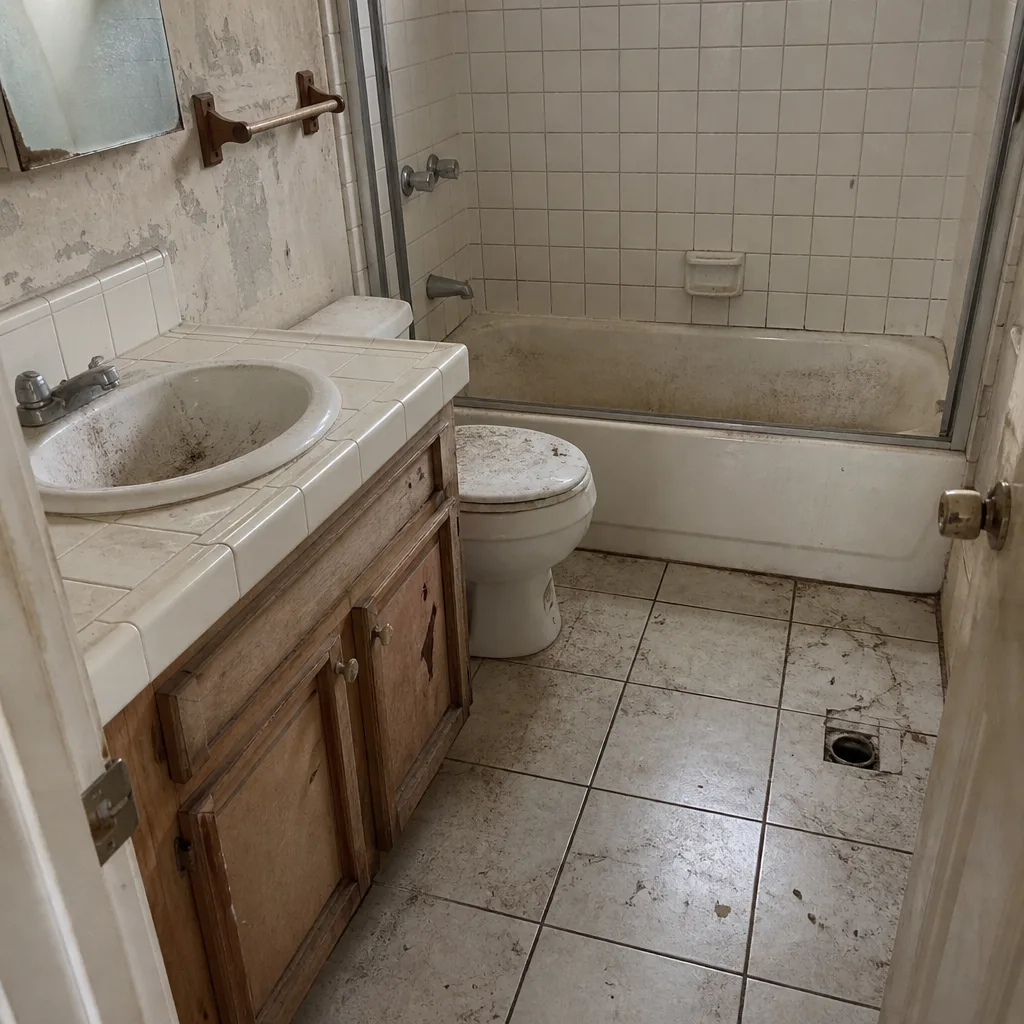 Before
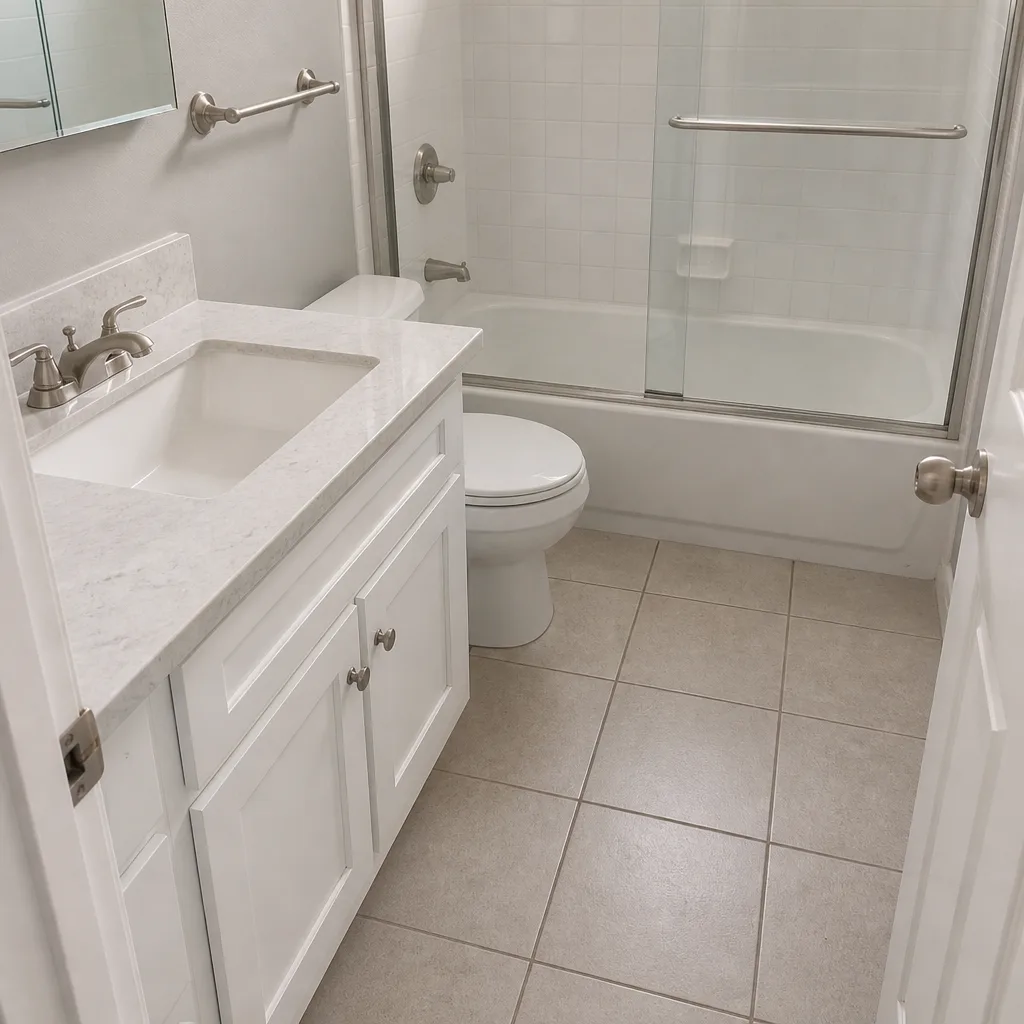 After
When to Call a Professional
Some tasks belong on your weekend list. Others don’t. Call a professional when you find a diagonal crack running from a window or door corner, water staining on interior drywall, a weep screed buried below grade, or standing water that doesn’t drain after 24 hours. Any roof work that requires walking the shingle field at height is a professional job, not a homeowner inspection: steep roofs and height work carry real fall risk and require proper fall protection. Electrical panel work, gas line modifications, and structural framing for additions are licensed-trade jobs, no exceptions.
For a second opinion on a written estimate you’ve already received, that’s free. Bring the quote and we’ll review it line by line at no charge. Rowan Construction Group Fullerton offers free estimates in Fullerton, with a flat written price and written scope before any work starts. Call (844) 320-7095 to schedule yours.
Frequently Asked Questions

A homeowner walkthrough is free, and that’s the recommendation for every quarter. A professional inspection tied to a specific trade (roof, stucco and drainage, concrete) typically runs a few hundred dollars, and it’s often credited toward a repair or quoted project. Call (844) 320-7095 for an exact quote; estimates are free.
October is the best month, with September and early November close behind. The weather is reliably dry and moderate, so sealant cures correctly before the rain season. Sealing in January risks adhesion failure, and sealing in summer heat causes the sealant to skin over before it bonds.
A like-for-like repair generally doesn’t require a permit, but a full re-roof, structural repair, or addition does. Permits are pulled and inspections passed on the work we quote, and the written scope lists which inspections apply. For anything beyond a spot repair, ask before work starts.
Extend them with a splash block or a flexible extension so discharge lands at least 3 feet from the foundation and drains away from the wall. If the ground can’t be regraded to slope away, that’s a drainage correction rather than a downspout fix, and it’s worth a professional look.
No, if it’s on the written scope. The price is a flat number agreed before anyone picks up a tool, and no additional work proceeds without a signed change order. That discipline is why our projects finish within a few percent of the number the customer agreed to.
It means water is moving through the masonry and evaporating at the surface, leaving salts behind. It’s cosmetic in appearance but usually a symptom of a moisture path, so the fix is finding the water source. If efflorescence returns after each rain, treat it as a drainage problem.
The Bottom Line
Fullerton’s climate won’t hammer your house the way a hard-freeze or hurricane zone does, and that’s exactly why maintenance gets skipped. The compounding damage is quiet: a hairline stucco crack that becomes a moisture path, a downspout that saturates clay soil for a decade, a sealcoat that failed because it went down in October.
Put the work on a calendar. Stucco joints and weep screed in fall. Drainage and downspouts on the first winter rain. Masonry and efflorescence in spring. Concrete joints and sealcoat timing in summer. Keep a dated photo log organized by trade all year, and you’ll have the evidence when a warranty claim or a bid comes along.
If it’s time to get a specific condition documented and quoted, call Rowan Construction Group Fullerton at (844) 320-7095 for a free estimate. You’ll get a flat written price, a written scope, and a photo record when the crew leaves. The local pro we connect you with is licensed and insured as the state requires. Bring a competitor’s written estimate and we’ll review it line by line at no charge. The 365-Day Done Right Promise backs the work if anything isn’t right.
Written by the team at Rowan Construction Group Fullerton.