Last updated November 18, 2026






Free written scope consultation - allowances, timeline, and change-order rules on paper before a single trade is scheduled
Construction Emergency Preparedness Guide for Fullerton Homes
When a Fullerton contractor opens a wall during a remodel and finds vermiculite insulation – a potential asbestos-containing material present in thousands of homes built before 1980 – work must stop immediately by law. Most homeowners have no plan for what happens in the next 24 hours. They don’t know who to notify, how fast, or what the notification has to say. And they’re not alone: the emergencies that catch Fullerton homeowners flat-footed usually aren’t burst pipes or fallen trees. They’re discoveries – conditions found mid-project that convert a planned renovation into a regulated, sequenced response with its own rules. This guide covers both categories, the sudden and the discovered, and gives you a plan for each.
Quick Answer
Construction emergencies in Fullerton fall into two types: sudden failures (a burst supply line, storm breach, partial collapse) and discovered conditions (asbestos, mold, compromised framing found during renovation). Sudden failures need documentation and emergency shoring within the first hours; discovered conditions trigger a legal stop-work obligation, required notifications, and licensed abatement before any work resumes. Each type has a different sequence, a different budget profile, and a different set of records your insurance adjuster will ask for.
Styles & brands we work with
- Kitchen remodeling
- Bathroom remodeling
- Home additions & ADU
- Roofing
- Windows & doors
- Driveway & pavers
- Fence
Table of Contents
- The Stop-Work Obligation: What Happens When Asbestos Is Found Mid-Project
- Sudden Structural Failure: The First Four Hours
- Water Intrusion: The 24-to-48-Hour Mold Window
- Building an Emergency Budget by Risk Factor
- Post-Emergency Documentation for Insurance and Permits
- Working With Your Adjuster Without Losing the Claim
- Prevention Checklist for Fullerton’s Climate and Housing Stock
The Stop-Work Obligation: What Happens When Asbestos Is Found Mid-Project
California treats a presumptive asbestos find as a hard stop. Once a contractor opens a wall, ceiling, or floor and exposes material that may contain asbestos – vermiculite attic insulation, certain acoustic ceiling textures, some vinyl floor tile and mastic, older duct wrap – work in that area must stop. The material is presumed to contain asbestos until testing proves otherwise. This applies whether or not the material looks friable.
The sequence, in order:
- The contractor stops work in the affected area immediately and does not disturb the material further. This is not discretionary.
- The material is sampled and tested by a certified laboratory. Bulk sampling is done by a qualified inspector, not by the crew, and results typically come back within a few business days.
- If asbestos is confirmed above the regulatory threshold, a licensed abatement contractor performs removal. In California, abatement is a separate certification from general contracting. Your general contractor cannot simply remove it.
- A clearance test confirms the air is clean before reconstruction resumes.
For Fullerton homes built before 1980 – which includes large stretches of the older housing near downtown and the neighborhoods around the colleges – vermiculite insulation is the most common surprise. It sits in attic cavities and wall voids and stays hidden until a renovation reaches it. Owners of pre-1980 Fullerton properties should have this conversation with their contractor before demolition day, not after. Whether your project is a kitchen gut, an addition, or an ADU build, ask in writing how the contractor handles a presumptive find. The Home Additions & ADU in Newport Beach page is a useful example of how scope and stop-work contingencies get written into a project before work starts.
Sudden Structural Failure: The First Four Hours
A cracked foundation wall, a sagging header, a roof section that gives after a soaked season – sudden structural failure is the category most emergency guides cover. The right response is counterintuitive: document first, repair second. An adjuster can work with photos and a written report; they cannot reconstruct a claim after the damage has been covered up.
What an emergency shoring contractor does in the first four hours:
- Assesses load paths and identifies what is carrying weight it was never designed to carry.
- Installs temporary shoring – posts, beams, cribbing – to stabilize the structure without further movement.
- Takes measurements and photographs before and after shoring so the record is preserved.
- Advises on whether the area is safe to occupy and where the perimeter should be.
Your documentation sequence, done before the shoring crew touches anything:
- Photograph the damage from multiple angles, wide and close, with something for scale.
- Photograph any pre-existing condition nearby so it isn’t later attributed to the event.
- Write down the date and time of discovery and what you saw.
- Call your insurer the same day and get a claim number before the repair crew arrives.
In Fullerton, the housing stock matters here. Older wood-framed homes with original slab foundations and unpermitted past additions are more likely to present surprise failures when a renovation exposes them. A contractor opening those walls should be ready with a stop-work contingency written into the quote, and you should insist on it. Our crews handle this routinely, and every site visit includes a documented photo record – what we found and what we did about it – because the record is the part that protects you later. For Fullerton homeowners weighing a major structural project, the Rowan Construction Group Fullerton home page is the starting point.
Water Intrusion: The 24-to-48-Hour Mold Window
Water damage in a Fullerton home becomes a mold problem within roughly 24 to 48 hours if the moisture isn’t managed. That window is the entire ballgame. It also determines who does the work, because California classifies water remediation separately from general contracting.
A licensed water mitigation contractor:
- Extracts standing water and sets drying equipment (air movers, dehumidifiers).
- Measures moisture content in framing and drywall with meters and documents the readings.
- Removes wet materials that cannot be saved and documents the removal.
- Tests for mold and handles containment if growth is found.
- Produces a drying report your insurer will accept.
A general contractor handles the rebuild after mitigation – drywall, flooring, cabinetry, trim. The two phases are distinct, and an insurer may want the mitigation billed separately. If you call a general contractor about active water, expect them to refer you to a mitigation specialist first. That split is not a runaround; it’s the correct sequence.
Fullerton’s wet season concentrates the risk. Santa Ana winds blowing in from the northeast can push rain into roof edges and window perimeters for hours, and the warm inland air speeds evaporation on the surface while leaving moisture trapped behind the wall. Drywall looks dry on the room side and stays wet on the cavity side. That’s why the moisture-meter readings and the drying report matter – visual checks miss what the meter catches. If you’re scheduling a roof inspection or window replacement because of recurrent leaks, the Fence Installation in Newport Beach page illustrates the same document-first discipline applied to exterior work.
Building an Emergency Budget by Risk Factor
Generic advice says keep a fixed percentage of home value in reserve. That number is useless in a Fullerton context because two homes of the same value can carry wildly different emergency exposure. A home built in 1965 with original plumbing and a flat roof isn’t in the same risk category as a 2010 build with a pitched roof and copper supply. Build your reserve by tier and risk factor:
- Tier 1 – Standard reserve ($5,000 to $10,000): Suits newer homes with recent roof, plumbing, and electrical updates. Covers most water intrusion and minor structural repairs.
- Tier 2 – Elevated risk reserve ($10,000 to $20,000): Applies to homes built before 1990 with original systems, or any home where the roof or plumbing is over 20 years old. Covers shoring, mitigation, and a modest abatement.
- Tier 3 – High-risk reserve ($20,000 to $35,000): Suits homes built before 1980 with original vermiculite insulation, cast-iron drain lines, or original electrical panels, and any home with a past addition whose permits you can’t locate. Covers abatement plus structural repair plus rebuild.
Keep the money liquid – not in a home equity line of credit, not in an account you’d need to sell assets to access. Construction emergencies don’t wait for wire transfers. In our experience, Fullerton homeowners who open a wall and find asbestos are the ones most likely to be scrambling, because the abatement and clearance testing happen on a separate timeline and a separate invoice from the renovation itself. A line of credit can cover the rebuild later; the emergency reserve has to be accessible now.
Post-Emergency Documentation for Insurance and Permits
What Orange County adjusters require after a construction emergency is more specific than most homeowners expect. The difference between a fully reimbursed claim and a partially denied one is usually the photo record and the written scope, not the size of the damage.
Collect and keep in one place:
- Photos with metadata intact. Phone photos retain date, time, and often location. Don’t crop or edit them.
- A written scope from each contractor – what was done, what materials were used, what was found, and the price agreed before work started.
- Moisture readings, lab results, and clearance certificates, if the emergency involved water or asbestos.
- Invoices itemized by trade, not one lump sum. Adjusters flag lump-sum invoices on emergency work.
- Before-and-after photos of the repair area, taken at the same angles.
For permits, the same record serves double duty. Unpermitted repair work on structural elements becomes a disclosure issue at resale and can require retroactive permitting. Keep copies of every inspection card and signed-off permit with your property documents. A contractor who documents the visit as a standard deliverable – the photo record we provide on every job – hands you the claim file and the permit file at the same time. That’s part of why we insist on it. If you’re planning a driveway or hardscape project alongside reconstruction, the Driveway & Pavers in Newport Beach page shows how documentation applies to exterior work too.
Working With Your Adjuster Without Losing the Claim
Adjusters aren’t the obstacle; incomplete documentation is. The practical sequence after an emergency:
- Call your insurer and report the event the same day. Get a claim number.
- Ask for the inspection timeline in writing – adjuster visits can take days, and you can’t leave a compromised structure open that long.
- Document everything before any emergency repair begins. Shoring and temporary protection can proceed, but the record comes first.
- Keep the emergency repair and the permanent repair as separate invoices. Insurers often reimburse differently.
- Get the adjuster’s approval on the permanent scope in writing before the rebuild starts.
If your written emergency estimate gets pushed back by an adjuster or a second contractor, bring it to us. Our free second opinion on any written estimate reviews the quote line by line at no charge – a practice that reveals whether an estimate accounts for the documentation, permits, and cleanup an emergency job requires. The written price doesn’t change after the work begins under our terms: no change proceeds on a signed change order, which is the discipline behind keeping projects within a few percent of the agreed cost.
Prevention Checklist for Fullerton’s Climate and Housing Stock
Most construction emergencies in Fullerton were visible weeks before they happened. A short spring and fall walk-through catches the majority:
- Check the roof after every major rain. Look for staining on ceiling drywall in interior rooms. A stain means water is already inside the assembly.
- Test supply lines and shutoff valves. Braided steel supply lines under sinks and behind toilets have a service life; replace the flexible ones before they burst.
- Inspect the attic for vermiculite. If you see loose, pebble-like gray or silver insulation, don’t disturb it. Have it tested before any renovation approaches it.
- Walk the foundation perimeter. New cracks, spalling, or soft soil at the base of walls after a wet season warrant a professional look.
- Locate the main water shutoff now. Label it. During a burst, seconds matter.
- Keep your permits and inspection cards in one file. Pull them before selling or renovating; missing permits turn into discovered conditions later.
Windows and doors are another recurring leak point. On exterior replacements, specify the manufacturer and the product line before you sign – ES Windows, ECO Window Systems, and Therma-Tru all publish the water-resistance ratings for their products, and a contractor who writes the brand and model into the quote is a contractor accounting for the actual material. A written price before work starts is the standard here. Under Clause 1 of The Haven Standard, the price and scope are in writing before anyone picks up a tool, and the terms page backs it up.
Common Mistakes to Avoid
- Covering up water damage before it’s documented. Painting over a wet stain or replacing drywall without photos kills the insurance claim and hides the mold risk. Photograph first, rebuild second.
- Assuming your general contractor can handle asbestos abatement. Abatement requires a separate certification in California. A contractor who says they’ll “take care of it” without a licensed abatement sub is a red flag.
- Delaying mitigation past 48 hours because you’re waiting on the adjuster. The mold window doesn’t pause for the claims process. Dry the structure first; the report protects you later.
- Treating a written estimate as an opening offer. A line-item quote is a documented basis for comparison, not a negotiation. Ask for the scope in writing before you compare numbers.
- Letting work resume after a stop-work without a clearance test. The clearance certificate is the document that proves the air was clean before reconstruction. Missing it is a resale problem and an insurance problem.
- Forgetting that unpermitted emergency work follows you. Fullerton properties with undocumented repairs show up in future inspections and disclosure forms. Keep the paperwork.
- Relying on a home equity line for emergency cash. Construction emergencies don’t wait for a credit application. Keep the reserve liquid.
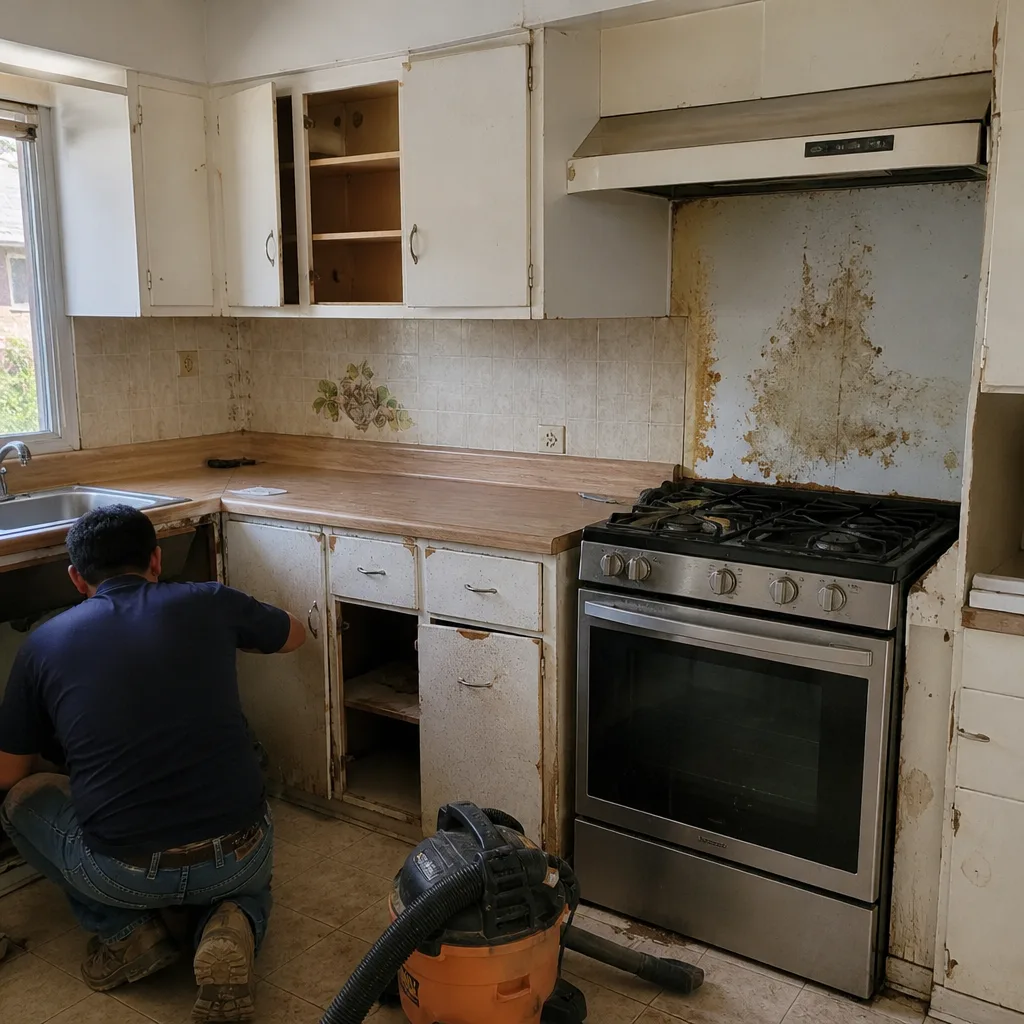
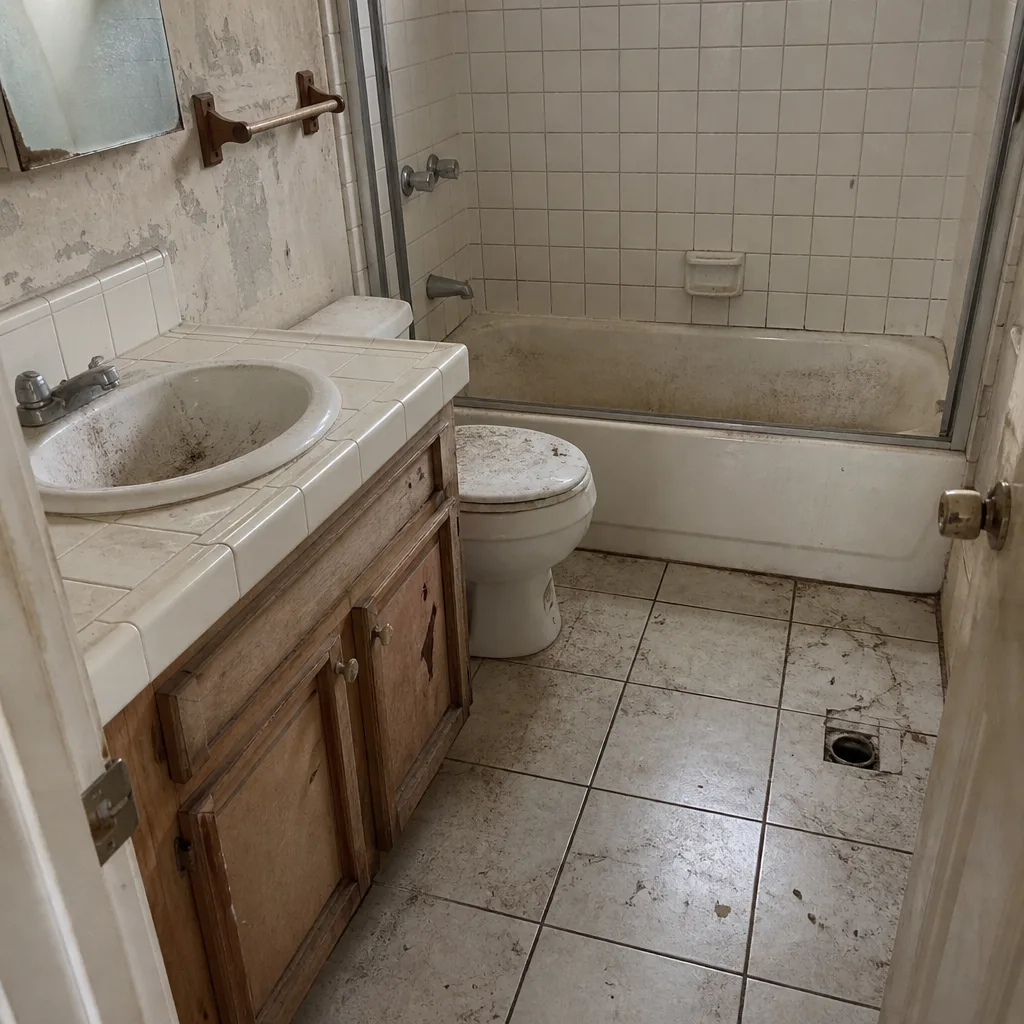
See the difference
 Before
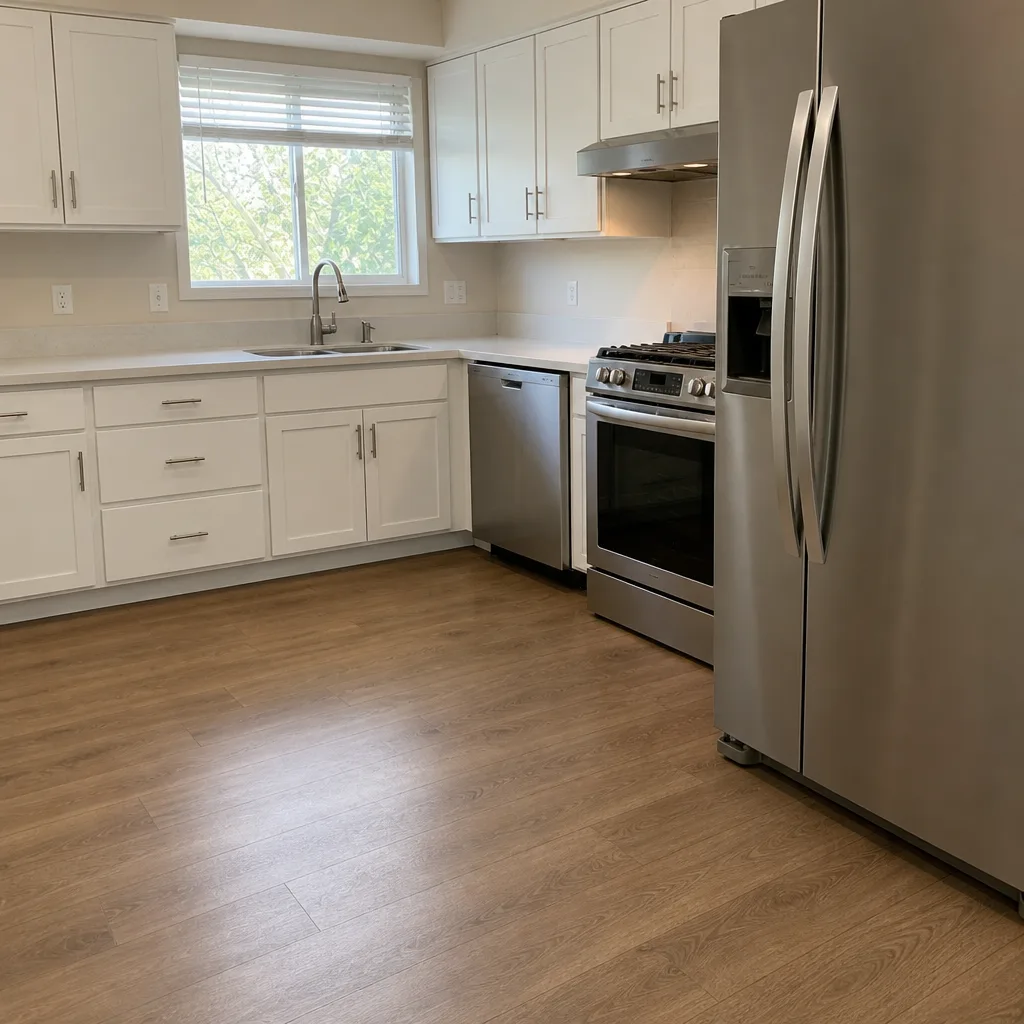 After
 Before
 After
 Before
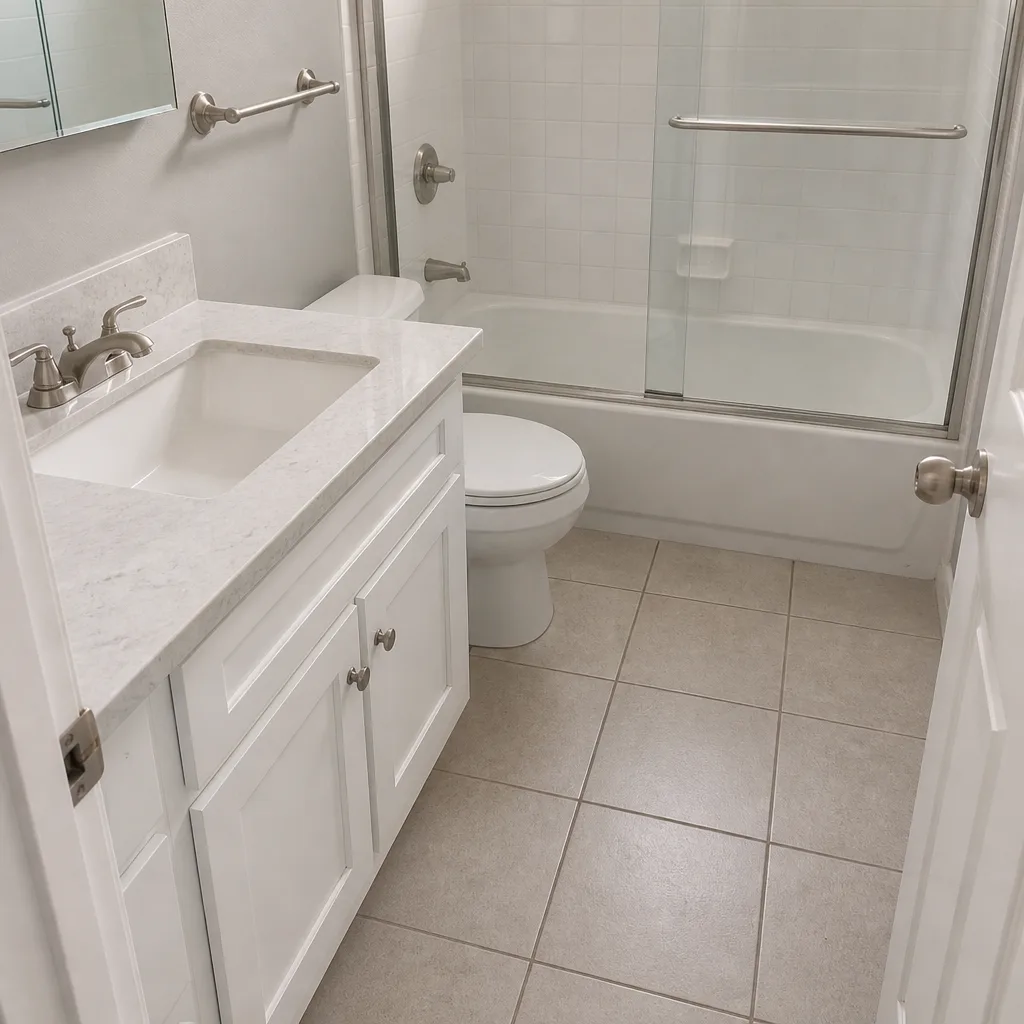 After
When to Call a Professional
Call a professional when the damage involves structural elements, water inside a wall cavity, or any material you suspect contains asbestos. Those three categories are where DIY fixes create bigger problems – covered-up moisture, untested insulation, and structural repairs that pass visual inspection and fail a load test. For a burst supply line, a sagging header, a roof section that gives, or a wall that opens to loose gray insulation, stop and call. Our technicians have up to 19 years of experience, and a live person answers 24/7. Rowan Construction Group Fullerton offers free estimates in Fullerton – call (844) 320-7095. Estimates are free, and every visit includes a documented photo record so you have evidence of what was found and what was done.
Frequently Asked Questions

Stop all work in the affected area and don’t disturb the material. California presumes the material contains asbestos until testing proves otherwise, and the stop applies whether or not it looks friable. Have it tested by a certified lab, and if confirmed, hire a licensed abatement contractor with clearance testing before reconstruction resumes. Call (844) 320-7095 for a free estimate – the earlier we can assess the condition, the cleaner the next 24 hours go.
Roughly 24 to 48 hours in typical Fullerton conditions, faster in warm inland air. Trapped moisture behind drywall keeps drying the room side while the cavity stays wet, so visual checks miss it. Licensed water mitigation with moisture meters and a written drying report is the correct first call. Call (844) 320-7095 and we’ll help you sequence it.
Usually yes, when the damage is caused by a covered event and the shoring is documented as emergency protection. But the photos and written report have to exist before the shoring goes up. Our free second opinion on any written estimate can review whether your quote accounts for the documentation an adjuster will require. Call (844) 320-7095 for an exact quote on the assessment.
No. The written price and scope are documented before work begins, and no work proceeds on a change until a change order is signed. That’s the discipline behind keeping projects within a few percent of the agreed cost. If the scope genuinely expands because of a discovered condition, you’ll see the change in writing before anyone touches it. Estimates are free – call (844) 320-7095.
Look in the attic without disturbing anything. Vermiculite presents as loose, pebble-like gray, silver, or gold insulation, most common in homes built before 1980. Don’t handle it, test it yourself, or run an attic fan across it. Have a qualified inspector sample it. If you’re planning a renovation anywhere near the attic cavity, put the contingency in the quote before work begins. Call (844) 320-7095 to schedule a free estimate.
Timestamped photos with metadata intact, a written scope from each contractor, itemized invoices by trade, moisture readings and lab results where relevant, clearance certificates after abatement, and before-and-after photos at matching angles. Lump-sum invoices on emergency work get flagged, so keep the paperwork clean and itemized. Call (844) 320-7095 – the photo record we provide on every visit produces exactly this paperwork.
The Bottom Line
Construction emergencies in Fullerton split into two categories, and most homeowners only plan for one. Sudden failures get documented first, repaired second, with the photo record and written report protecting the insurance claim. Discovered conditions – vermiculite, mold, compromised structure – trigger a legal stop-work obligation, a testing and abatement sequence, and a separate budget tier. Wrap both categories with the same tools: a liquid emergency reserve scaled to your home’s age and system condition, a written price before work starts, a signed change order for any change, and a documented record when the crew leaves. If you plan for the discovered condition as carefully as the sudden one, the next surprise inside your walls is manageable. Call (844) 320-7095 to schedule your free estimate.
Written by the team at Rowan Construction Group Fullerton.