
Last updated November 18, 2026







Free written scope consultation - allowances, timeline, and change-order rules on paper before a single trade is scheduled
Bathroom Remodeling Warning Signs Every Homeowner Should Know
If a contractor hasn’t pulled a permit within five business days of breaking ground, the work inside your walls has no inspection record – and that becomes your problem at resale, not theirs. The permit file follows the house, not the contractor. When you sell, a buyer’s inspector pulls the record, finds no bathroom alteration on file, and asks you to explain a shower valve that was never signed off. Most bathroom remodel disasters we see in Fullerton were visible in advance. Not hidden in the framing. Visible in a proposal that never mentioned a permit, a verbal change order, or a tile order placed before anyone confirmed measurements. This guide catalogs the specific, observable signals that a project is heading toward a cost overrun or a structural failure, and shows you what to check at each stage.
Quick Answer
The clearest bathroom remodeling red flags are a missing permit number in the written proposal, a scope that isn’t itemized by square footage, allowances used in place of named products, and change orders presented verbally or after the work is done. During construction, watch for tile set without a visible waterproofing membrane, grout applied the same day as tile, and caulk used at floor-to-wall junctions instead of a flexible movement joint. Any one of these is a reason to stop and ask for documentation before another phase begins.
Styles & brands we work with
- Kitchen remodeling
- Bathroom remodeling
- Home additions & ADU
- Roofing
- Windows & doors
- Driveway & pavers
- Fence
Table of Contents
- Pre-Contract Warning Signs: Before You Sign Anything
- During-Construction Red Flags You Can See Yourself
- Financial Red Flags: Change Orders, Draws, and Lien Releases
- How to Verify a California Contractor License in Under 2 Minutes
- What a Finished Bathroom Should Look Like at Punch List
- Why Fullerton Bathrooms Fail in Specific Ways
- Common Mistakes to Avoid
Pre-Contract Warning Signs: Before You Sign Anything
The proposal is where a project is won or lost. A written scope that names rooms, dimensions, and materials is the difference between an agreed price and an open-ended one. When we review a competitor’s estimate for a Fullerton homeowner under the Free Second Opinion offer, the problems are almost always in what the document leaves out.
Watch for these five signals in any bathroom remodeling proposal:
- No written scope at all. A verbal “we’ll gut it and rebuild it” is not a scope. You should see the demo, rough-in, waterproofing, tile, fixtures, and paint each listed as separate line items.
- Square footage not itemized. A tile estimate that says “bathroom tile: $6,400” tells you nothing. It should say how many square feet of floor tile, how many of wall tile, what the tile is, and what the setting material costs.
- Allowances instead of named products. An allowance is a placeholder number. “$2,000 allowance for vanity” means you can easily spend $3,500 once you pick something real. A named brand and model – a Wellborn vanity cabinet, a Cambria quartz top with a specific edge profile – is a price, not a guess.
- No permit mentioned. In California, a bathroom remodel that moves plumbing, electrical, or framing requires a permit. If the proposal is silent on who pulls it and pays for it, assume nobody will.
- No written warranty. Ask for the warranty in writing before you sign. If it doesn’t exist on paper, it doesn’t exist.
A written price before any work starts is the standard we build to under Clause 1 of the Haven Standard. If a contractor won’t put a number on the page, that refusal is itself the warning sign.
During-Construction Red Flags You Can See Yourself
You don’t need a trade background to spot most of these. You need to walk the job at the right moments and ask one direct question: show me.
- The waterproofing membrane isn’t visible before tile. In a wet area, a bonded waterproofing membrane or a cement backer board with a liquid-applied membrane must go on before the tile. Ask to see the wall after the membrane is on and before the tile is set. Take a photo. If the tile is already up and nobody can show you the layer underneath, that’s your answer.
- Grout applied the same day as tile. Freshly set tile needs time for the thinset to cure before grout goes in. Same-day grouting traps moisture and leads to cracked or hollow-sounding grout lines. Ask how long the tile will sit before grouting.
- Caulk where a movement joint belongs. The junction where the floor tile meets the wall tile moves as the house settles and the seasons shift. It gets a flexible sealant joint, not a hard grout line. If you see hard grout jammed into that corner, expect a crack within a year.
- No photo record. A professional crew documents what it found and what it did behind the walls. If nobody is taking photos before the drywall goes back up, you have no record of the plumbing or the framing.
We include a documented photo record on every visit as a standard deliverable, not an add-on, because the walls close up fast and the evidence is gone once they do.
Financial Red Flags: Change Orders, Draws, and Lien Releases
This is where bathroom remodels quietly become 20 percent more expensive than the number you agreed to. Three financial signals matter more than the rest.
- Verbal change orders. A change order is a written authorization for work that wasn’t in the original scope, with a price attached. If somebody tells you “we found rot behind the tub, it’ll be about $1,800” and then does the work before you’ve signed anything, the paperwork is now chasing the labor. No work should proceed on a change until the change order is signed. That discipline is why projects finish within a few percent of the agreed price.
- Draws requested ahead of completed phases. A draw is a payment installment. It should release after a phase is completed and inspected, not before the work begins. A contractor asking for the tile draw before demo starts is financing their own overhead with your money.
- No lien releases from subcontractors. In California, a subcontractor or material supplier who isn’t paid can file a mechanics lien against your property – even if you already paid the general contractor. Ask for lien releases or conditional waivers from the subs and suppliers as each phase is paid. If the contractor won’t provide them, you’re carrying the risk.
Ask for a lien release before you write the check for each phase. A contractor with a clean payment record has no reason to refuse.
How to Verify a California Contractor License in Under 2 Minutes
Every licensed contractor in California is listed in the Contractors State License Board (CSLB) database, and the lookup is free. Here is the exact process:
- Go to the CSLB website and open the “Check a License” lookup.
- Enter the license number from the contractor’s proposal, or search by business name.
- Confirm the license status shows “Active” and the expiration date is current.
- Read the classification code. A “B” license is a general building contractor. An “A” is general engineering. “C-36” is plumbing, “C-10” is electrical, “C-54” is tile. A contractor performing plumbing or electrical work on an unclassified license, or pulling permits outside their classification, is working outside the law.
- Check the bond and workers’ compensation status, and look for any disciplinary actions or complaints on file.
The classification tells you what the contractor is legally authorized to do. A pool contractor remodeling a bathroom is a real problem – the license doesn’t cover the work, and the inspection may not pass. Spend the two minutes. It’s the cheapest diligence in the whole project.
What a Finished Bathroom Should Look Like at Punch List
Punch list is the walkthrough at the end of the job, where you note what still needs fixing. Homeowners often accept work here because they don’t have a standard. Here is one – use it as a checklist, so your approval is based on criteria instead of a feeling.
- Grout lines are consistent. Line width should match across the whole run. No wide-to-narrow variation, no voids, no pinholes. Run your eye along a horizontal joint from one end to the other.
- Tile is flat and level. Lay a straightedge or a level across adjacent tiles. Lippage – one edge sitting proud of the next – should be imperceptible by feel, not just by sight.
- Doors and drawers operate. The vanity doors close flush without rubbing, the drawers pull smooth on their slides, and the soft-close (if specified) works from every position.
- Fixtures operate. Run the shower and the tub, hot and cold, and check the pressure. Flush the toilet. Run the sink. Check the drain for leaks at the trap.
- Caulk bead is uniform. A clean bead of sealant at the tub or shower base should be continuous, of even width, and tooled smooth. No smears, no gaps, no blobs.
- Paint and finish are clean. Cut lines at the ceiling and trim are straight, and there are no scuffs on the newly painted walls.
Document each item with a photo. The 365-Day Done Right Promise means if something on that list fails within a year, it gets fixed – so the punch list is a record for everybody.
Why Fullerton Bathrooms Fail in Specific Ways
Fullerton sits in a climate with warm, dry summers and a wet winter rainy season, and the housing stock swings from 1920s bungalows near the downtown core to 1960s tract homes in the surrounding neighborhoods. That combination produces a few predictable failure patterns:
Older Fullerton homes frequently have cast-iron drain lines under the slab or in the crawlspace, and they corrode from the inside. A bathroom remodel that doesn’t scope the drain replacement ends up cutting back into the new floor within a year. Ask up front whether the drain line is being inspected or replaced.
The dry summers mean homeowner-installed tile jobs get away with skipping the waterproofing membrane, because the wall never sees enough moisture to fail visibly inside the first season. The failure shows up two or three winters later, when the rainy season soaks through and the drywall behind the shower softens. In a bathroom remodel we take on in Fullerton, we treat the membrane as non-negotiable, every time.
Fullerton’s older housing stock also carries galvanized supply lines and, in some cases, aluminum branch wiring, both of which need a qualified trade to address. If a proposal skips over the supply lines or the electrical, it’s not a complete scope – it’s a remodel that will surface a much larger bill later.
Common Mistakes to Avoid
- Signing a proposal that doesn’t name the permit. In Fullerton, a bathroom alteration that touches plumbing or electrical requires a permit. Confirm who pulls it, what it costs, and who schedules the inspection. If the answer is “we don’t bother,” walk.
- Accepting an allowance in place of a product. A $1,500 allowance for a vanity becomes $3,000 once you look at a real Wellborn or Silestone selection. Get the product and the price in writing before you sign.
- Paying a draw before the phase is done. Pay for completed, inspected work. A contractor with cash flow problems will ask you to fund the next phase in advance; a disciplined one won’t.
- Letting tile go up without seeing the membrane. Ask to see the waterproofing layer and photograph it. Once the tile is set, the layer is invisible and unverifiable.
- Approving a change order verbally. Get every change in writing with a price and a signature before a tool is picked up. The change order is the thing that protects your budget.
- Skipping the lien release. Pay each subcontractor phase against a lien release. Without it, an unpaid sub can file a mechanics lien on your Fullerton property even after you’ve paid the general contractor in full.
- Accepting the punch list without a standard. Use the grout, tile, door, fixture, and caulk criteria above. “Looks good to me” is not a punch list.
When to Call a Professional
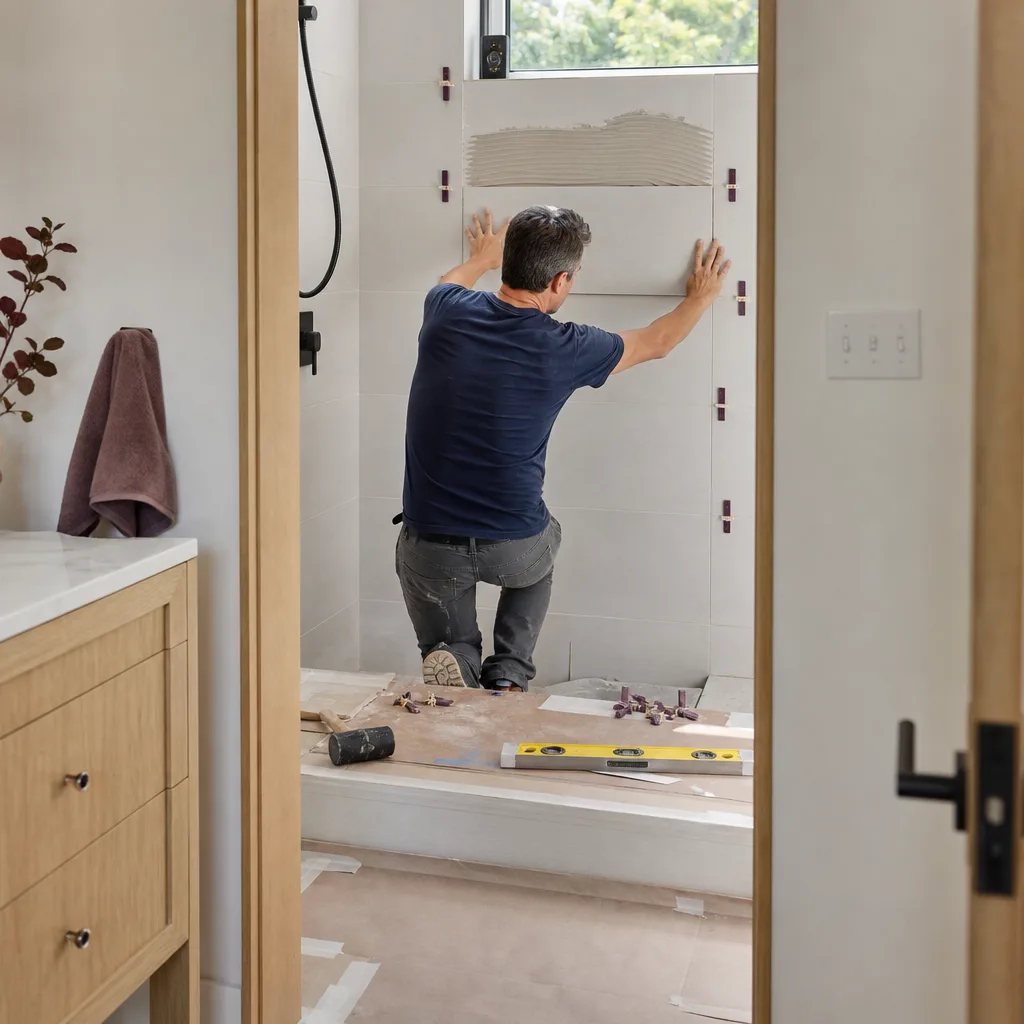
Some bathroom work is genuinely beyond a homeowner’s scope. If you’ve discovered galvanized supply lines, corroded cast iron under the slab, or a drain that doesn’t hold water, that’s a trade problem, not a weekend problem. If the waterproofing membrane wasn’t installed correctly – or you can’t confirm it was installed at all – the fix means removing tile and starting the wet area over. Electrical work in a bathroom, including a new GFCI circuit, requires a licensed electrician. And a permit pulled improperly becomes a resale problem with a real dollar cost attached. When a project is past the point of a patch, get it evaluated by a licensed contractor.
For the broader scope of what a whole-project engagement looks like, our Rowan Construction Group Fullerton home page lays out how a written price, a signed change order, and a documented photo record fit together on one job. Rowan Construction Group Fullerton offers free estimates in Fullerton – call (844) 320-7095 to schedule one.
See the difference
 Before
 After
 Before
 After
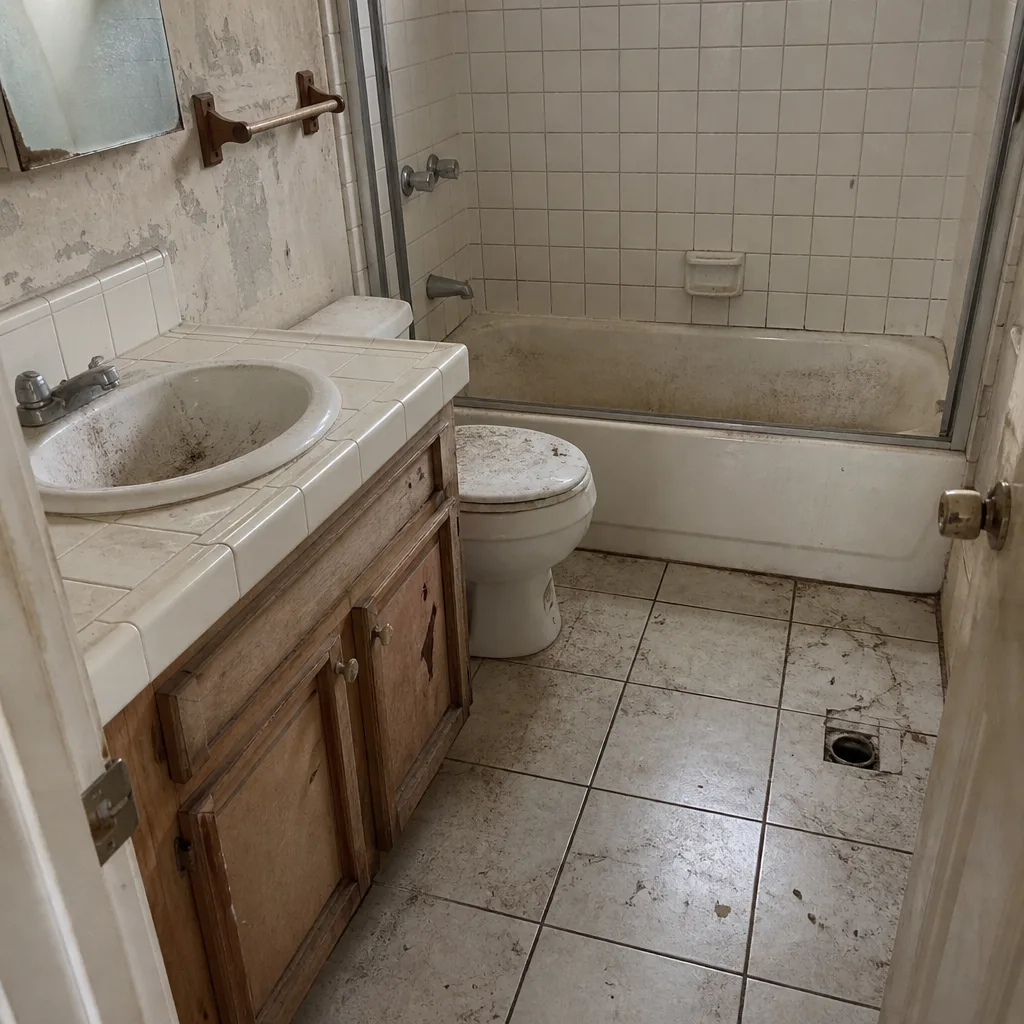 Before
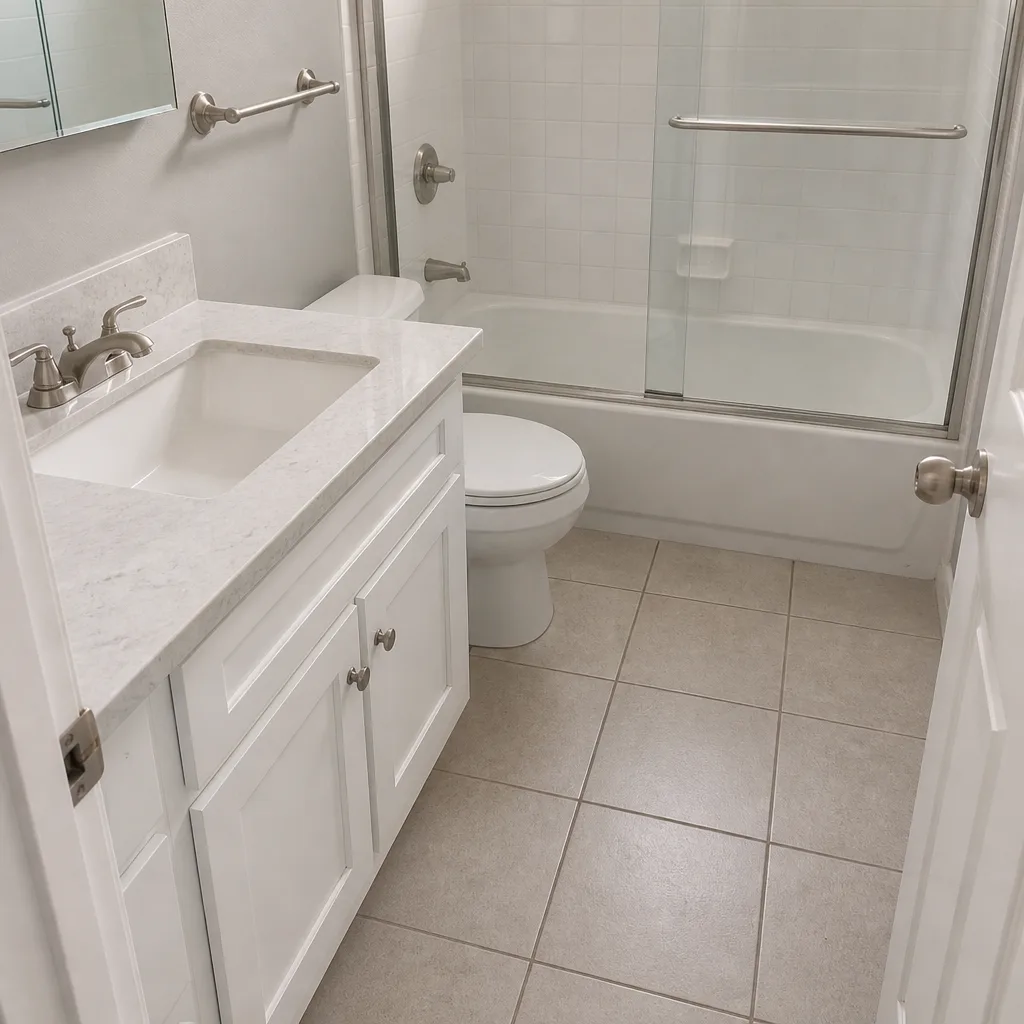 After
Frequently Asked Questions
A cosmetic bathroom refresh in Fullerton – new fixtures, tile, paint, and a vanity – typically runs $12,000 to $22,000. A full gut remodel with new plumbing, electrical, and tile runs $30,000 to $55,000 depending on the square footage and finish level. A primary bathroom with a move or a tub-to-shower conversion can exceed that range. The single biggest driver is what’s behind the wall: corroded cast iron or galvanized supply lines push the number up before any tile is selected. Call (844) 320-7095 for an exact written quote – estimates are free.
Only if you approve a written change order first. Hidden conditions – rot, a failed drain line, unexpected framing – are real, but they should be presented with a price and a signature before anyone proceeds. A contractor who does the work first and invoices after has removed your choice. When you get a written quote, ask what happens if the scope changes and whether change orders require signature. Any hesitation is the answer.
Yes. On a remodel that touches plumbing, electrical, or framing, the contractor pulls the permit in their license name and schedules the inspection. That record follows the house and matters at resale. Ask any contractor to show the permit number before work begins – if there’s no number five business days after breaking ground, the work has no inspection record. Call (844) 320-7095 to ask how permits are handled on your specific project.
A cosmetic refresh runs two to three weeks. A full gut remodel typically runs six to ten weeks, and a primary bathroom that moves plumbing or adds a shower conversion can run eight to twelve. The two biggest schedule killers are material lead times and surprise conditions behind the wall. Get the tile and the vanity selected and ordered early – a Cambria or Caesarstone top has a lead time that you can’t compress after demo starts. Call (844) 320-7095 and we’ll give you a real timeline with the written quote.
A permit is the legal authorization to do the work; an inspection is the city’s verification that the work was done to code. You need both. A Fullerton bathroom remodel that moves plumbing or electrical gets a rough-in inspection before the walls close, and a final inspection after. If the contractor pulls a permit but never schedules the inspection, you own a house with an open permit – which becomes a title problem when you sell. Ask for the inspection record when the job is done. Call (844) 320-7095 for a free second opinion on any written estimate you’ve already received.
For a full remodel that touches plumbing, electrical, and tile, a general contractor who coordinates the whole job and holds a single written price is the safer choice for most homeowners. The exception is a small single-trade job, like a tile-only refresh, where hiring a tile setter directly can be reasonable. The problem with separate trades is the seams: when the plumber and the tile setter disagree about who should be behind the wall, you’re the one arbitrating. A single point of responsibility with a written scope removes that friction. Call (844) 320-7095 for a free estimate on the whole job.
The Bottom Line
Bathroom remodel disasters leave a paper trail before they leave a hole in the floor. The warning signs are all observable: a proposal with no permit number, an allowance instead of a named product, a change order delivered verbally, tile set without a visible membrane, grout applied the same day, a lien risk that shows up after you’ve paid. Check the CSLB license in two minutes. Demand the written scope with square footage itemized. Confirm the waterproofing before tile goes up. Use a punch list standard when the job closes. A written price before work, a signed change order for any change, and a documented record on every visit – those three things are the difference between a bathroom and a bill. Rowans home-additions and remodeling trades are listed on our Home Additions & ADU in Newport Beach page, and if you’re planning outdoor scope alongside the bathroom, see Driveway & Pavers in Newport Beach and Fence Installation in Newport Beach for how adjacent trades get quoted. Under the 365-Day Done Right Promise, if it isn’t done right, Rowan makes it right – backed by the Haven Standard, not a handshake.
Contact
Rowan Construction Group Fullerton delivers a written price before any work starts, on every project across our seven trades – Kitchen Remodeling through Bathroom Remodeling and Home Additions. Our technicians have up to 19 years of experience, and every visit comes with a documented photo record as standard. A live person answers calls 24/7. If you’re in Fullerton and want a bathroom project priced on paper – permit number, itemized scope, and a written warranty included – call (844) 320-7095 for a free estimate. Estimates are free, and the number you get is the number you’ll see.
Written by the team at Rowan Construction Group Fullerton.