Last updated November 18, 2026
Free written scope consultation - allowances, timeline, and change-order rules on paper before a single trade is scheduled
Construction Cost Breakdown: The Fullerton Homeowner’s Reference for 2026
Most cost guides quote the national average for a bathroom remodel at $10,000 to $15,000. The realistic range for the same scope in Fullerton in 2026 starts around $18,500 and runs to $34,000. That gap catches homeowners who budget from a national benchmark, then get their first local bid and assume something is wrong. Nothing is wrong. Orange County labor carries a prevailing wage premium, City of Fullerton permit fees are their own line item, and the suppliers serving the 92831 through 92835 zip codes price materials for this market, not a national one. This reference gives you 2026 ranges calibrated to Fullerton, per trade and per project, so the numbers you compare are honest ones.
Quick Answer
In Fullerton in 2026, expect bathroom remodels at $18,500 to $34,000, room additions under 500 sq ft at $78,000 to $142,000, and ADU conversions at $95,000 to $210,000 depending on whether utilities and foundation need work. Concrete flatwork runs $9 to $16 per square foot, stucco applied runs $9 to $14 per square foot, and drywall hang-and-finish runs $2.40 to $3.75 per square foot. The spread between the low and high end is driven by three things in Fullerton specifically: the condition of the existing substrate, permit scope, and whether the work is being done in a pre-1960 home.
Styles & brands we work with
- Kitchen remodeling
- Bathroom remodeling
- Home additions & ADU
- Roofing
- Windows & doors
- Driveway & pavers
- Fence
Table of Contents
- Why national averages miss Fullerton by 40 percent
- Per-trade cost ranges in Fullerton for 2026
- City of Fullerton permit fees, line by line
- Material benchmarks for brand-name products in Fullerton
- How to read a contractor’s cost breakdown for hidden margin
- The cost of deferred maintenance: the $400 repair and the $6,200 bill
- Common mistakes to avoid
- When to call a professional
Why national averages miss Fullerton by 40 percent
Three forces push Fullerton construction costs above the national median, and none of them show up in a Zillow-style cost calculator. The first is labor. Orange County crews bill higher hourly rates than the national average because the cost of living here is what it is, and because the pool of licensed tile setters, stucco applicators, and finish carpenters is smaller than demand. That labor premium lands at roughly 20 to 30 percent over the national number on labor-heavy trades.
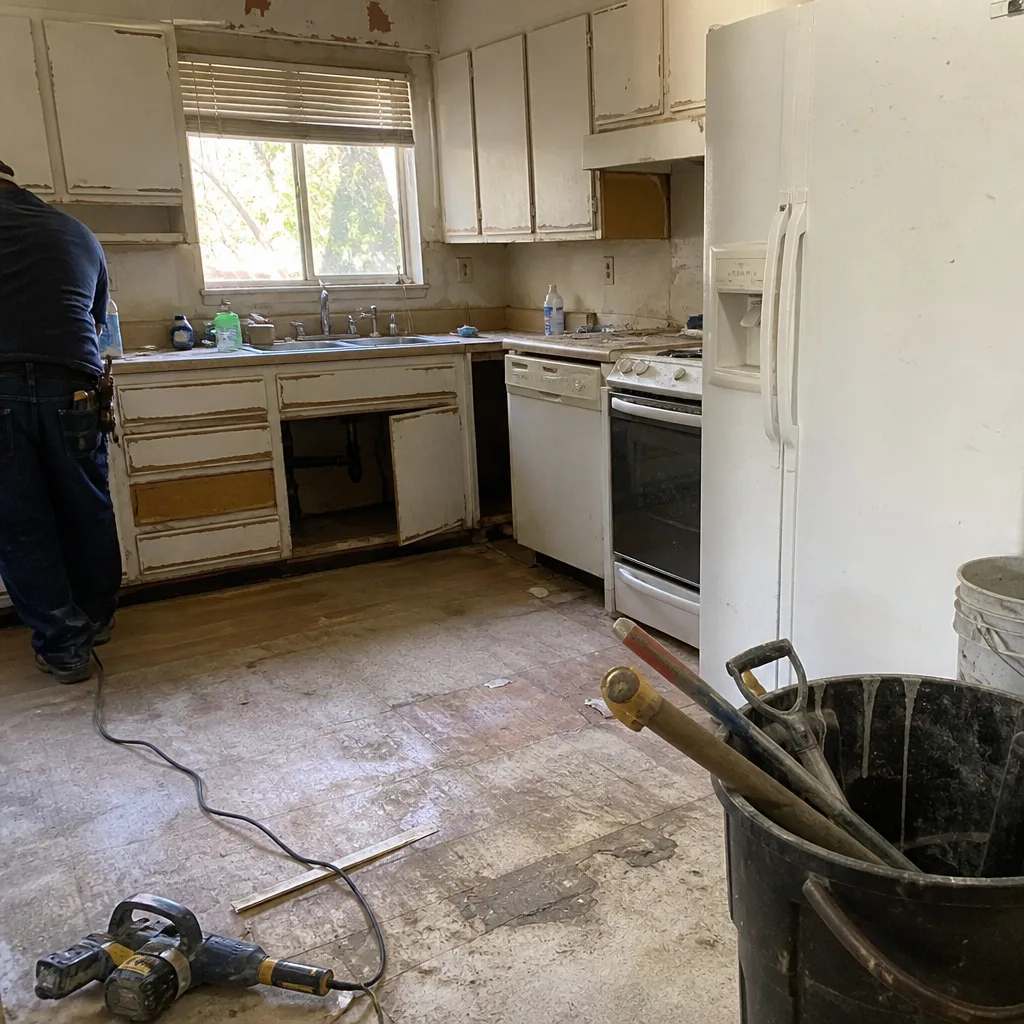
The second is housing stock age. Large parts of Fullerton were built between 1920 and 1965. Homes near the downtown core and the older blocks off Harbor Boulevard frequently have original galvanized plumbing, knob-and-tube wiring remnants, and plaster walls over wood lath rather than drywall. When we open a wall in a 1950s Fullerton bungalow, the scope almost always grows: re-plumbing a wet wall, bringing an outlet up to code, patching plaster rather than drywall. None of that appears in a national average, all of it appears in your bid.
The third is permit overhead. City of Fullerton plan check and inspection fees are a real cost, and how a project triggers them depends on scope. Move one fixture and you may not need a permit; move a wall and you will. The next section breaks down the actual fee schedule.
Per-trade cost ranges in Fullerton for 2026
These are installed costs – material plus labor plus reasonable markup – for work in Fullerton in 2026. Use them to sanity-check any bid you receive.
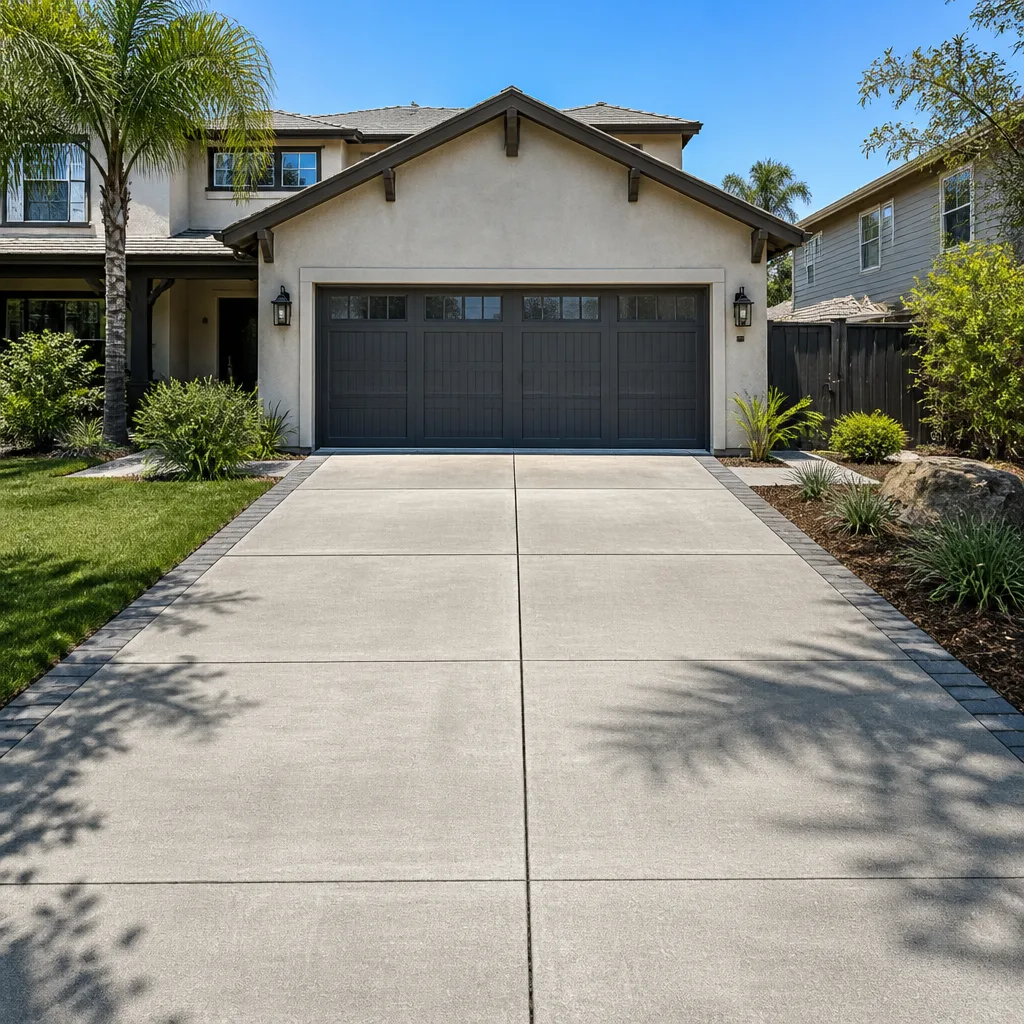
- Concrete flatwork (driveways, patios, walks): $9 to $16 per square foot installed. The low end reflects a simple 4-inch pour over prepared base with a broom finish. The high end reflects thicker slabs, rebar reinforcement, decorative finishes, or a demolition-and-haul-away line item.
- Framing (wood stud wall, interior): $12 to $22 per linear foot. The spread is driven by wall height, whether the wall is load-bearing and requires a header, and whether the wall is being built into an existing structure with limited access.
- Stucco, three-coat applied: $9 to $14 per square foot. The high end reflects scaffolding, two-story access, or repair over failing substrate where the existing stucco must be removed and the sheathing inspected before application.
- Tile labor (floor or wall, standard format): $7 to $13 per square foot labor only. Tile set on a proper membrane over a flat substrate lands at the low end. Irregular tile, large format, or a floor that needs self-leveling pushes to the high end. Tile material is separate and ranges from $2 to $20 per square foot depending on selection.
- Drywall hang, tape, and finish (level 4): $2.40 to $3.75 per square foot. The high end reflects small jobs, ceiling work, or repair patching where the finished wall must match existing texture.
- Roofing (asphalt shingle, tear-off and replace): $5.50 to $9.50 per square foot. Two-story access, steep pitch, and multiple existing layers push the number up.
In our experience, the single line item that most often blows a Fullerton budget is what we find under a floor or behind a wall. A 1950s bathroom floor tile demolition frequently reveals rotted subfloor from decades of slow leak. Budget a contingency line of 10 to 15 percent on any renovation in a pre-1965 Fullerton home, and you will rarely need all of it.
City of Fullerton permit fees, line by line
Three common Fullerton project types, and how the permit fees stack up in 2026. These are fee schedule ranges, verify the current schedule with the City of Fullerton Building Division before final budgeting.
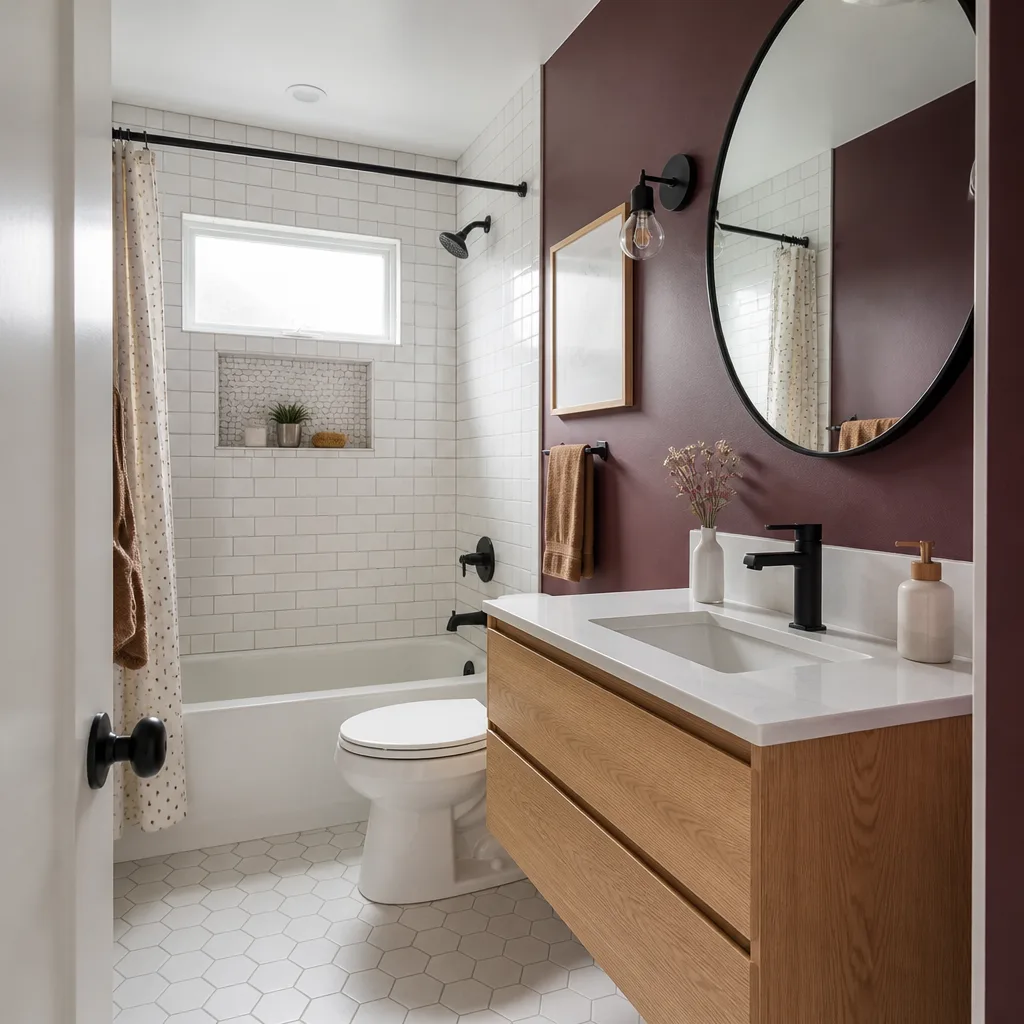
Bathroom remodel (fixture-for-fixture, no wall moves)
Building permit for plumbing and electrical alterations only: approximately $340 to $620. This covers the permit issuance and one inspection cycle. If any wall is relocated or a load-bearing element is touched, the permit escalates to a full remodel approval with plan check fees adding $480 to $900.
Room addition under 500 square feet
The permit package includes plan check, building, electrical, mechanical, and plumbing sub-permits. Total City of Fullerton fees for a sub-500 sq ft addition typically run $3,200 to $5,400. Plan check is charged as a percentage of valuation, so the fee climbs with the stated project value. A smaller addition with simple geometry costs less than a complex one with several bump-outs.
Garage conversion to ADU
City of Fullerton and State law have streamlined ADU permitting, and ADU fees are capped by state statute. Expect total City fees of $2,400 to $3,900 for a garage conversion ADU, plus any sewer connection fee if the ADU adds a new wet line. A full new-construction ADU carries higher school and park impact fees unless exempted. This is the project type where a $600 conversation with the building department upfront saves weeks.
When we quote a project through Rowan Construction Group Fullerton, permit fees are a fixed line item with the specific fee schedule referenced in writing. That way a permit escalation shows up as a signed change order, not a surprise.
Material benchmarks for brand-name products in Fullerton
Material markup is easier to see when you know the current market price of the product. Here are 2026 benchmarks for brands commonly specified in Fullerton projects, and the waste factor to attach to each.
- HardiePlank fiber cement siding: $1.60 to $2.20 per square foot material, waste factor 10 to 12 percent.
- Boral concrete roof tile: $4.50 to $7.50 per square foot material, waste factor 10 to 15 percent for hip roofs.
- USG Sheetrock drywall (1/2 inch, 4×8): $0.55 to $0.75 per square foot material, waste factor 10 percent minimum, 15 on cut-up jobs.
- Quikrete concrete mix (80-lb bag): $6.50 to $9.50 per bag; bagged mix is for small repairs only, poured slabs use ready-mix at roughly $165 to $210 per cubic yard delivered in Fullerton.
- Cambria quartz countertop (installer grade): $70 to $110 per square foot installed, with fabrication and slab selection driving the spread.
- Caesarstone quartz: $65 to $105 per square foot installed, comparable range.
- Kohler or Moen fixtures: a mid-grade kitchen faucet lands $220 to $480; a standard two-handle bathroom faucet $110 to $260. Moen’s cartridge design means a repair years later costs an hour of labor, not a new fixture.
- Blanco sink (Silgranit undermount): $380 to $720 depending on size and basin count.
Ask your contractor for the actual product spec sheet and the quantity ordered on any of these. A bid that names the brand but not the model number is a bid with an allowance tucked inside it, and allowances are where margin hides.
How to read a contractor’s cost breakdown for hidden margin
A written bid with a flat price and written scope is the standard we hold. Here is how to read anyone’s bid and spot where the number is soft.
- Look for the material markup. Standard contractor markup on materials runs 15 to 25 percent. Above 30 percent on a commodity item like drywall or concrete mix is worth a question.
- Find the allowances. An allowance is a placeholder number for a product the homeowner hasn’t chosen yet. A $500 tile allowance on a 60 sq ft shower is a fixed allowance; a “to be determined” allowance on the same line is where the final bill balloons. All allowances should be fixed numbers in the signed contract.
- Check the contingency line. A legitimate bid carries a contingency of 10 to 15 percent on renovation in an older home. A bid with zero contingency will produce change orders.
- Count the change order process. The written contract should say, explicitly, that no change proceeds without a signed change order. That discipline is what keeps a job within a few percent of the agreed cost.
- Read the warranty paragraph. A written workmanship warranty is a line item in the bid, not a courtesy.
If you have a bid in hand and want a second set of eyes on it, we offer a free second opinion – bring any written estimate and we will review it line by line at no charge. That is the fastest way to find out whether a number is fair before you sign it.
The cost of deferred maintenance: the $400 repair and the $6,200 bill
Here is a documented example we see repeatedly in Fullerton. A homeowner notices a hairline crack at the stucco-to-window-frame joint on a 1970s rancher off Chapman Avenue. A qualified technician re-caulks the joint with paintable exterior sealant for roughly $400. That is the whole repair.
Skip it for five years. Fullerton’s rain gets in at that joint each winter, wicks along the sheathing, and finds the wood framing. The stucco begins to separate from the wall. The window frame distorts. By the time the interior shows a paint blister, the repair scope is stucco removal on an 80 sq ft section, replacement of rotted sheathing and one stud bay, re-application of the three-coat stucco, and re-painting that section – roughly $6,200 in 2026 Fullerton pricing, or 15 times the original caulk repair. This is not a scare story: it is the arithmetic of a $400 line item amortized over five years.
The same pattern holds for roofing. A missing or cracked roof shingle replaced for $375 becomes, after two winters of water intrusion into the sheathing, a $4,000 to $8,000 repair. Gutter cleaning is $180; fascia replacement on a rotted run is $2,200. Every maintenance item on the house has a small version and a big version, and the price difference is roughly five to fifteen times.
If you are budgeting a renovation, set aside a small annual maintenance line – roughly 1 to 2 percent of home value per year is a common rule for a Fullerton home – and spend it before it becomes a change order.
Common Mistakes to Avoid
- Budgeting from a national average. A national cost calculator will understate a Fullerton project by 25 to 40 percent. Use local ranges from this guide or a written local bid, and treat any national number as an opening reference only.
- Accepting an allowance as a final number. An allowance is not a price. When a bid shows a $1,200 flooring allowance and the homeowner picks $4,800 of tile, the difference is a change order. Ask for allowances to be fixed in the signed contract.
- Skipping the permit. Fullerton permit fees are real money – $3,200 to $5,400 for a small addition – but a project done without a permit can cost far more at resale when the buyer’s inspector finds the unpermitted work.
- Choosing on the low bid alone. A bid 30 percent under the pack is not saving money; it is a missing line item that will appear later. Bring the low bid and the median bid to a free second opinion and compare line by line.
- Ignoring the substrate question. In a pre-1965 Fullerton home, ask before you sign what happens if the subfloor or sheathing is compromised. The answer you want is a fixed contingency line, not “we’ll deal with it then.”
- Postponing the small repair. The $400 caulk job and the $180 gutter cleaning are not the items to defer. Fullerton’s wet winters turn small gaps into rotted sheathing in one season.
- Accepting verbal promises on warranty. A workmanship warranty is a written document. Ask for it before work starts, every time.
When to Call a Professional
Call a professional when the work touches structure, water, electricity, or gas. The specific triggers in a Fullerton home: a stucco crack wider than a hairline or any stucco that has separated from the wall; a roof that has lost shingles or shows water stains on ceiling drywall; a bathroom or kitchen with original galvanized plumbing; any wall you want to move; any addition, ADU conversion, or permit-triggering work; and any project over roughly $5,000 where a written bid and a written scope will pay for themselves in avoided change orders.
For the planned work, the right move is a written estimate with a written scope, permit fees named, and a fixed price. Rowan Construction Group Fullerton offers free estimates in Fullerton – call (844) 320-7095 to schedule yours.
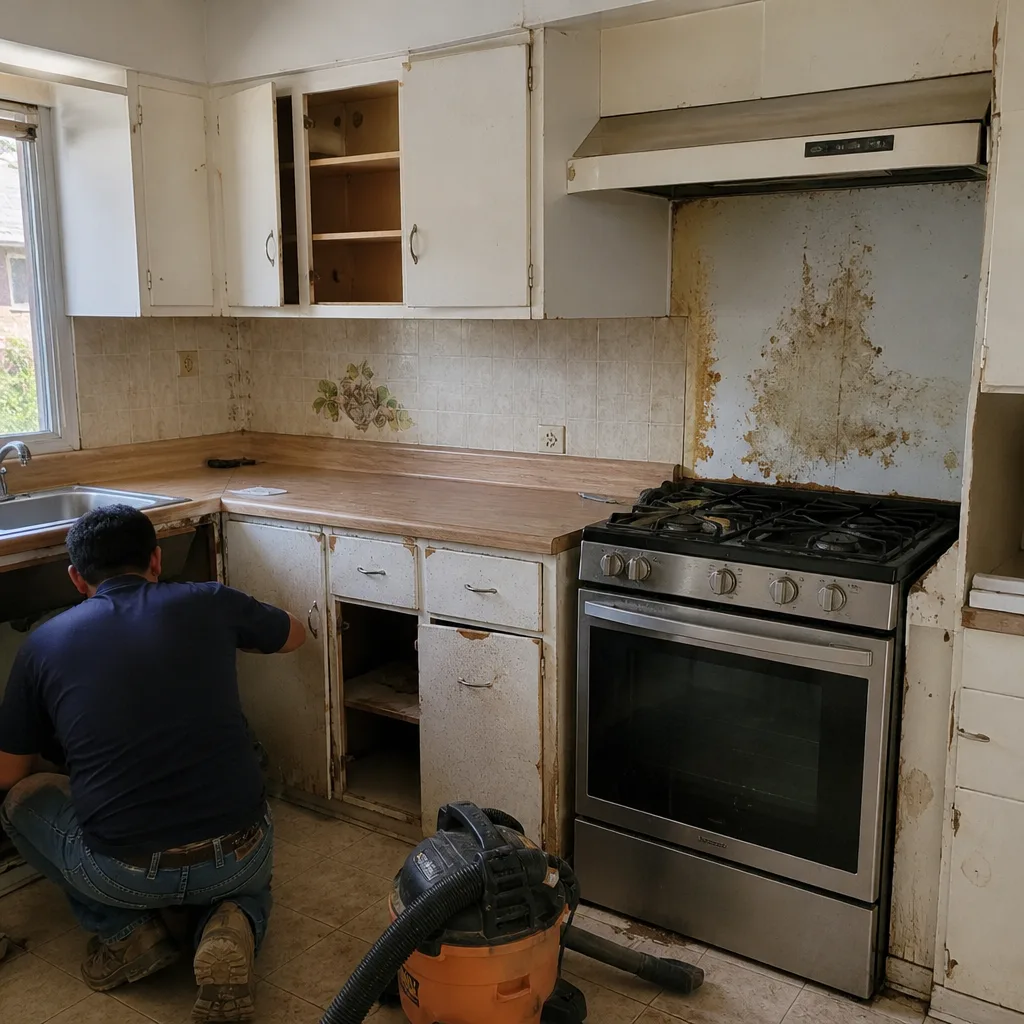
See the difference
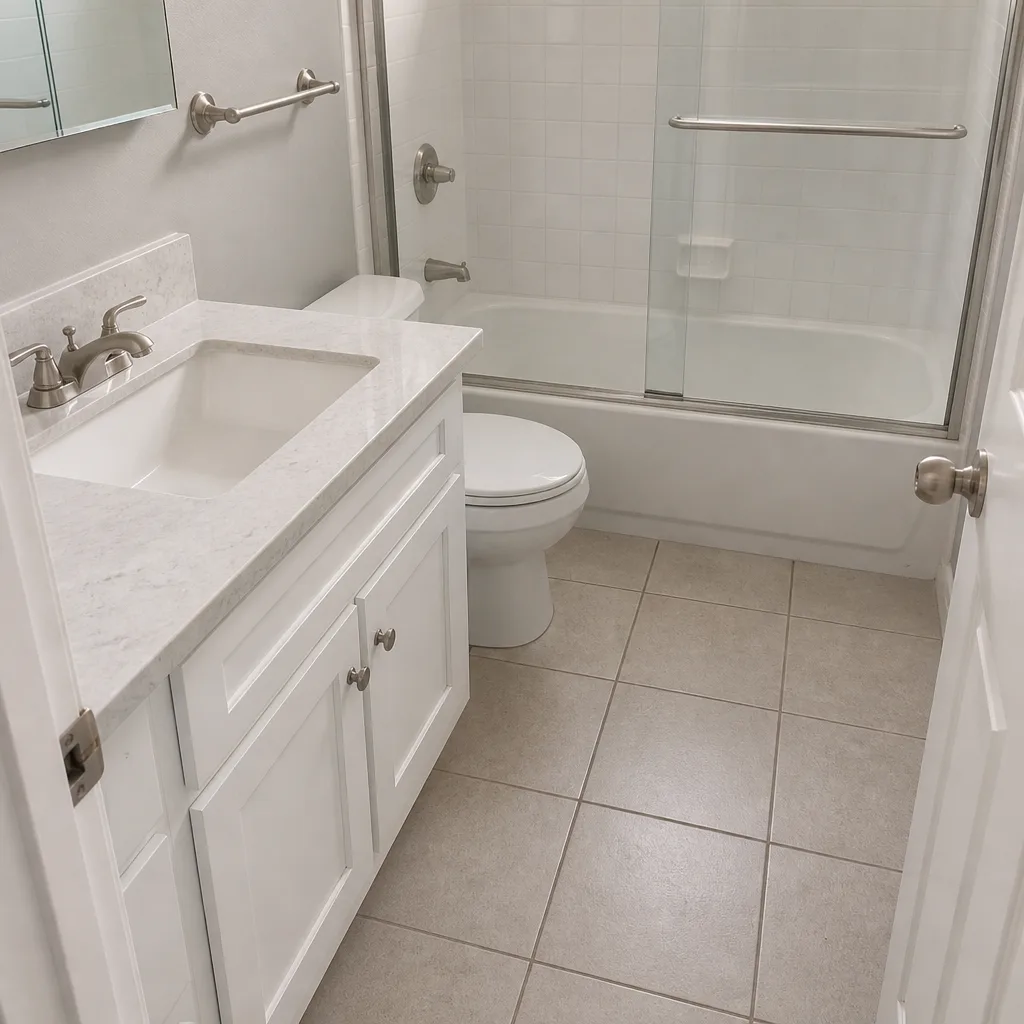
 Before
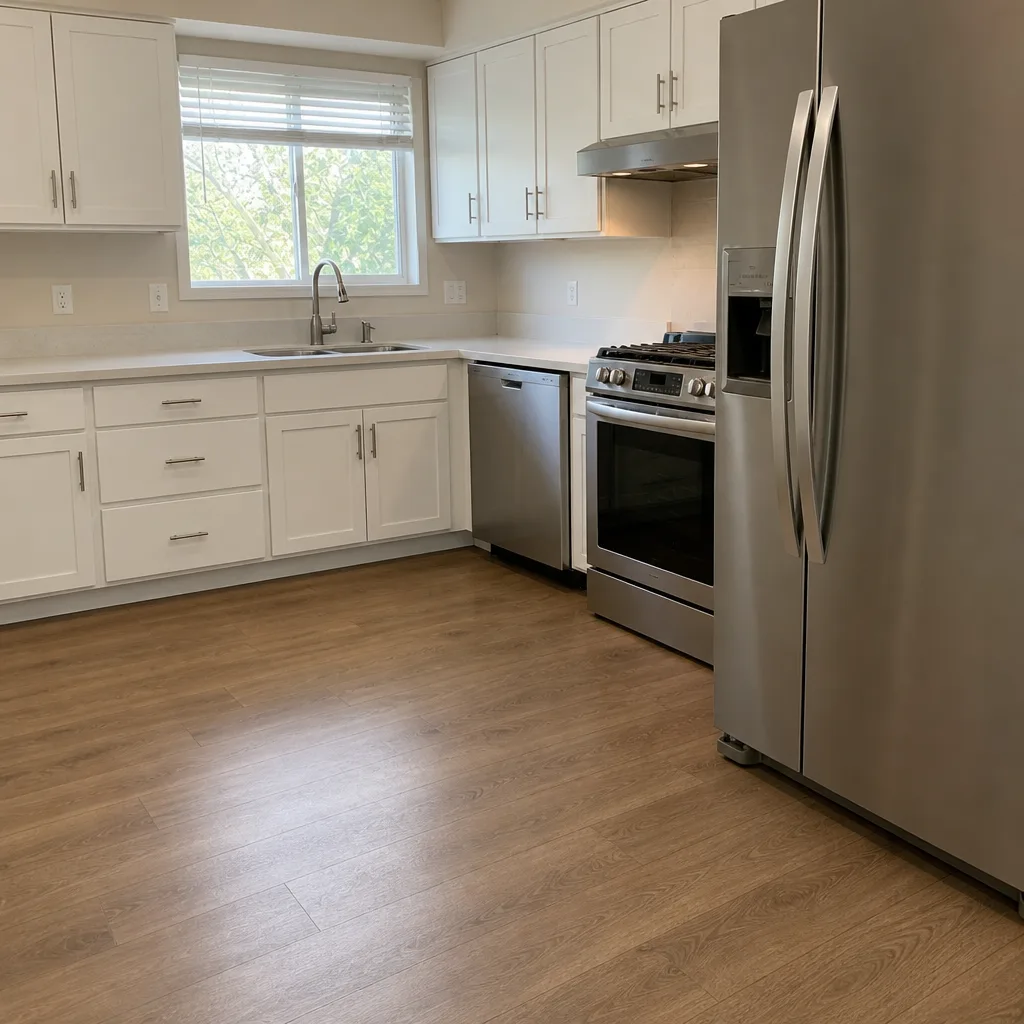 After
 Before
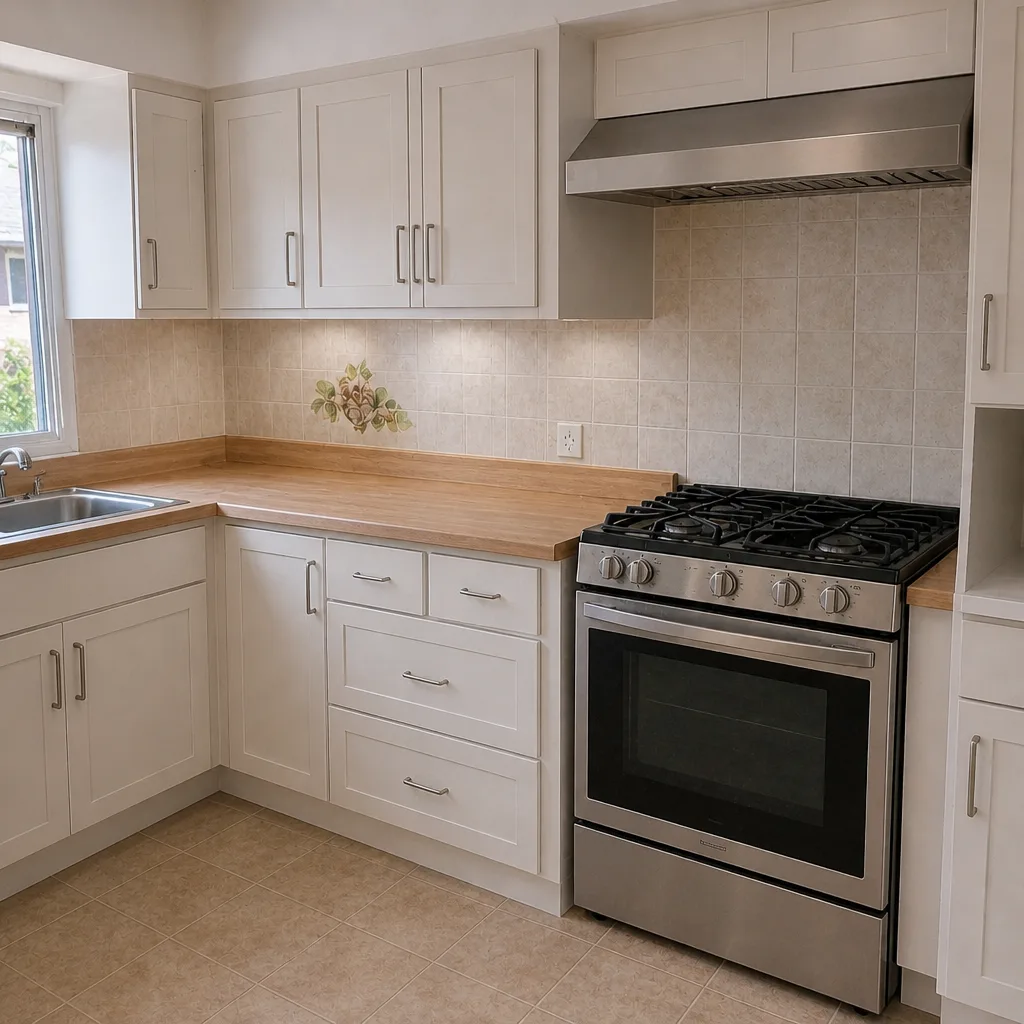 After
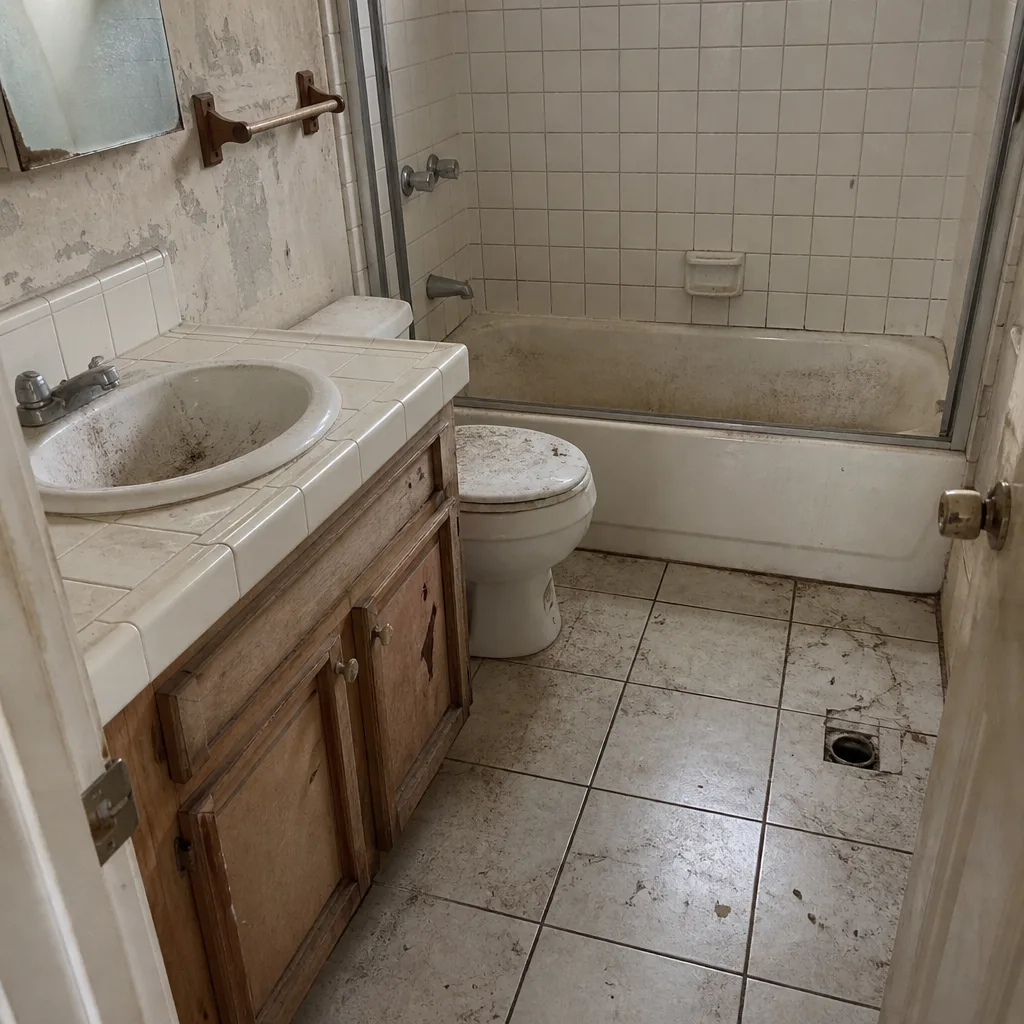 Before
 After
Frequently Asked Questions
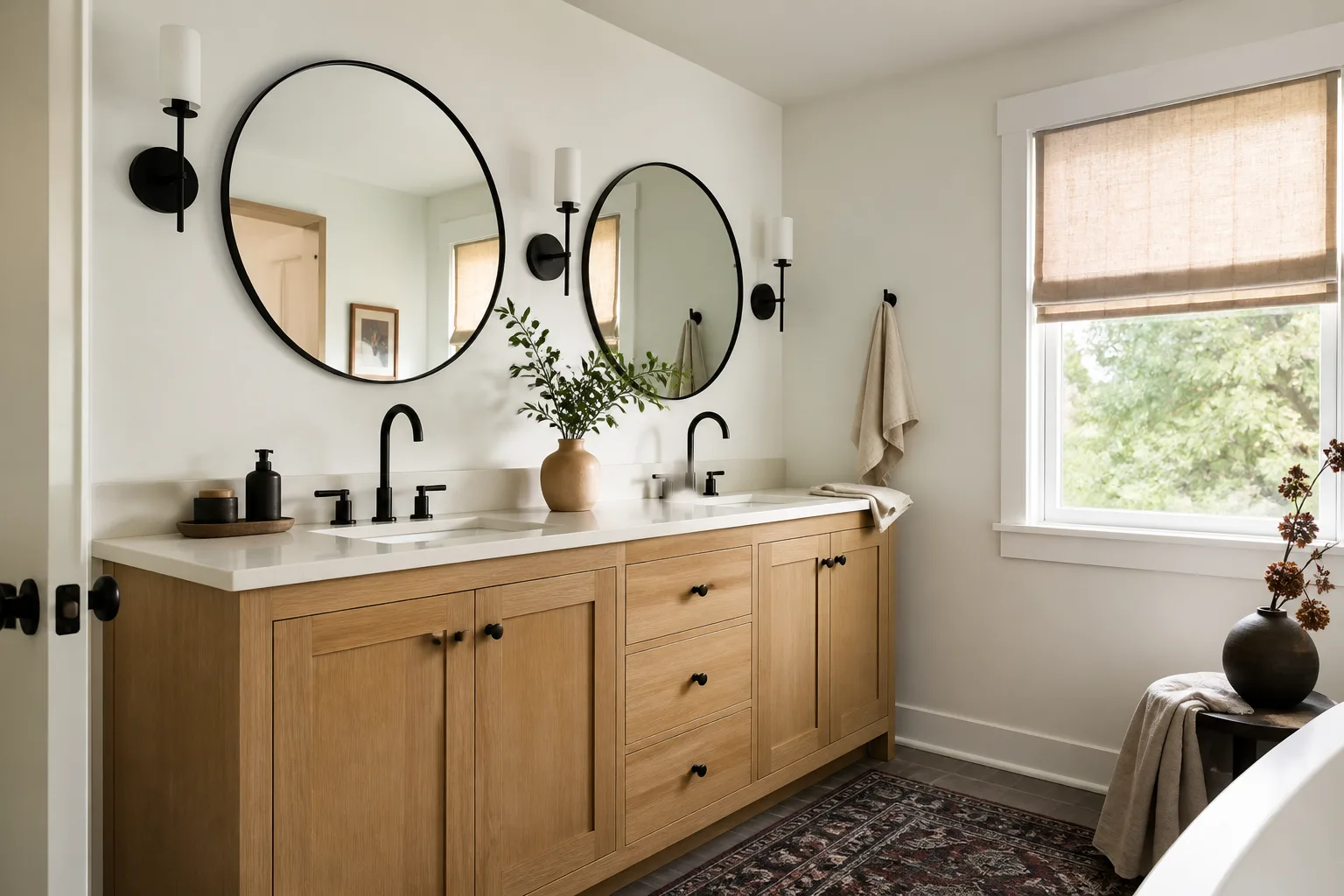
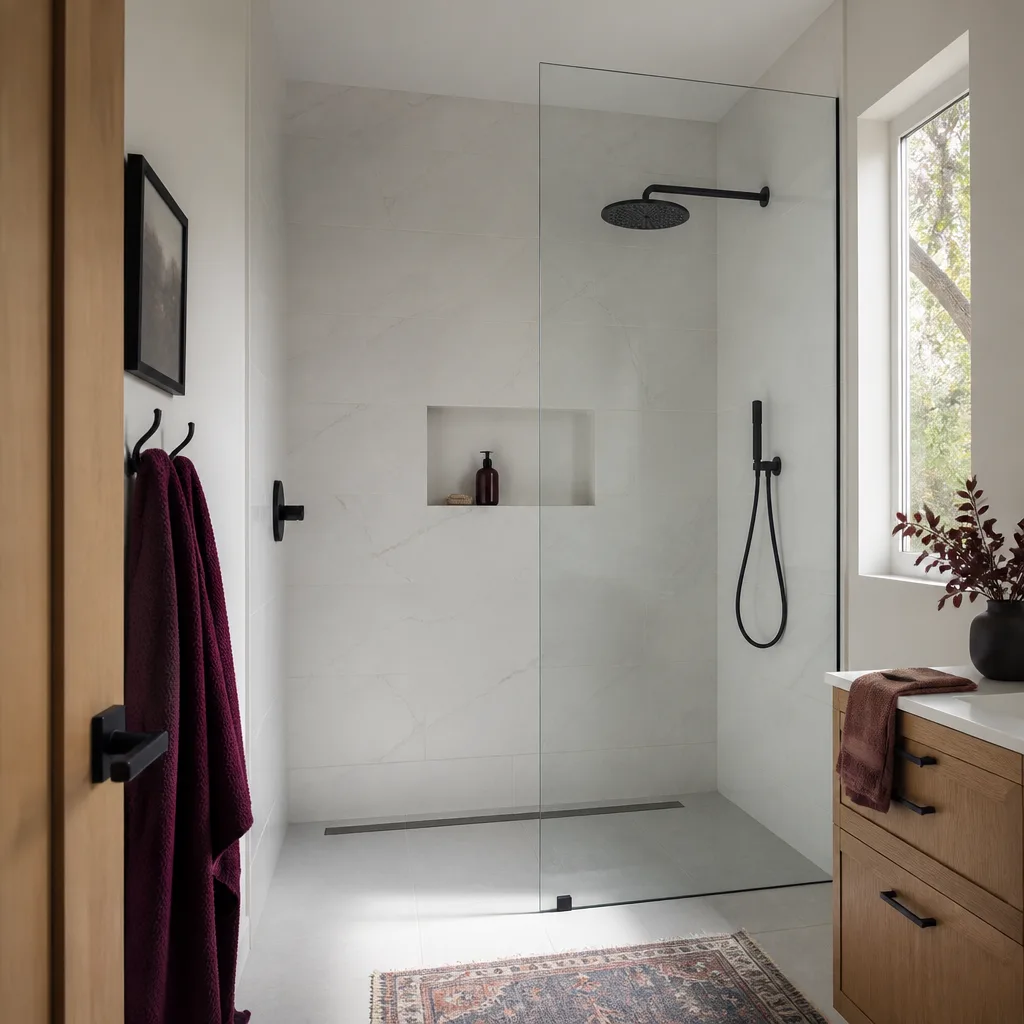
A bathroom remodel in Fullerton in 2026 runs $18,500 to $34,000 for a fixture-for-fixture renovation, with the spread driven by tile selection, whether the existing plumbing is original galvanized, and whether any wall is moved. Tubs-to-shower conversions land at the low-to-mid end of the range. A full gut with layout changes can push past $40,000. Call (844) 320-7095 for an exact written quote on your bathroom – estimates are free.
Yes for anything that touches plumbing, electrical, mechanical, structure, or a room’s footprint; cosmetic work such as paint, flooring, or cabinet swap-outs generally does not require a permit. Fullerton permit fees for a bathroom remodel run roughly $340 to $620, and $3,200 to $5,400 for a sub-500 sq ft addition. Confirm the current schedule with the City of Fullerton Building Division before you budget.
Not without a signed change order. That is the discipline under Clause 1 of our standard – the written price is agreed before anyone picks up a tool. When we open a wall and find something the bid could not have anticipated – rotted sheathing, old wiring – we stop, price the change in writing, and no work proceeds until you sign. In our experience across our restaurant-scale project volume, this is the process that keeps jobs within a few percent of the agreed cost.
The most common is hidden water damage behind a wall or under a floor. A 1950s Fullerton home frequently has original plumbing and a subfloor that has been slowly wet for decades. Budget a 10 to 15 percent contingency line on any pre-1965 renovation, and you will rarely need all of it.
Expect $78,000 to $142,000 in 2026, with the spread driven by permit scope, whether the addition touches plumbing, and the finish level. City of Fullerton permit fees for a sub-500 sq ft addition run $3,200 to $5,400 of that total. Call (844) 320-7095 for a written bid breaking out every line item before you sign anything.
A fair contractor markup on materials is 15 to 25 percent, which covers procurement, warranty handling, and the contractor’s cost of carrying inventory risk. Above 30 percent on a commodity item like drywall or concrete mix is worth a written question, and the answer is the right one when it names the product, the quantity, and the supplier. If the answer is vague, get a second opinion.
The Bottom Line
Fullerton construction costs in 2026 run 25 to 40 percent above national averages, and the reasons are local: Orange County labor, pre-1960 housing stock, and real City of Fullerton permit fees. Budget bathroom remodels at $18,500 to $34,000, room additions under 500 sq ft at $78,000 to $142,000, and carry a 10 to 15 percent contingency on any pre-1965 renovation. Read your bid line by line for material markup, allowances, and contingency. And spend the $400 on the caulk before it becomes the $6,200 stucco bill. A written price and a written scope are the two things that keep this arithmetic honest.
Ready for a written estimate on your Fullerton project? Rowan Construction Group Fullerton offers free estimates in Fullerton with a flat written price, a written scope, and permit fees named as a line item. Call (844) 320-7095 to schedule yours, and bring any existing bid for a free second opinion line by line. Planning an accessory unit alongside the main project? See our Home Additions & ADU in Newport Beach guide for the design-and-permit sequence. For hardscape and curb appeal, see Driveway & Pavers in Newport Beach. And for property-line work and privacy fencing, see Fence Installation in Newport Beach.
The Haven Standard in Practice
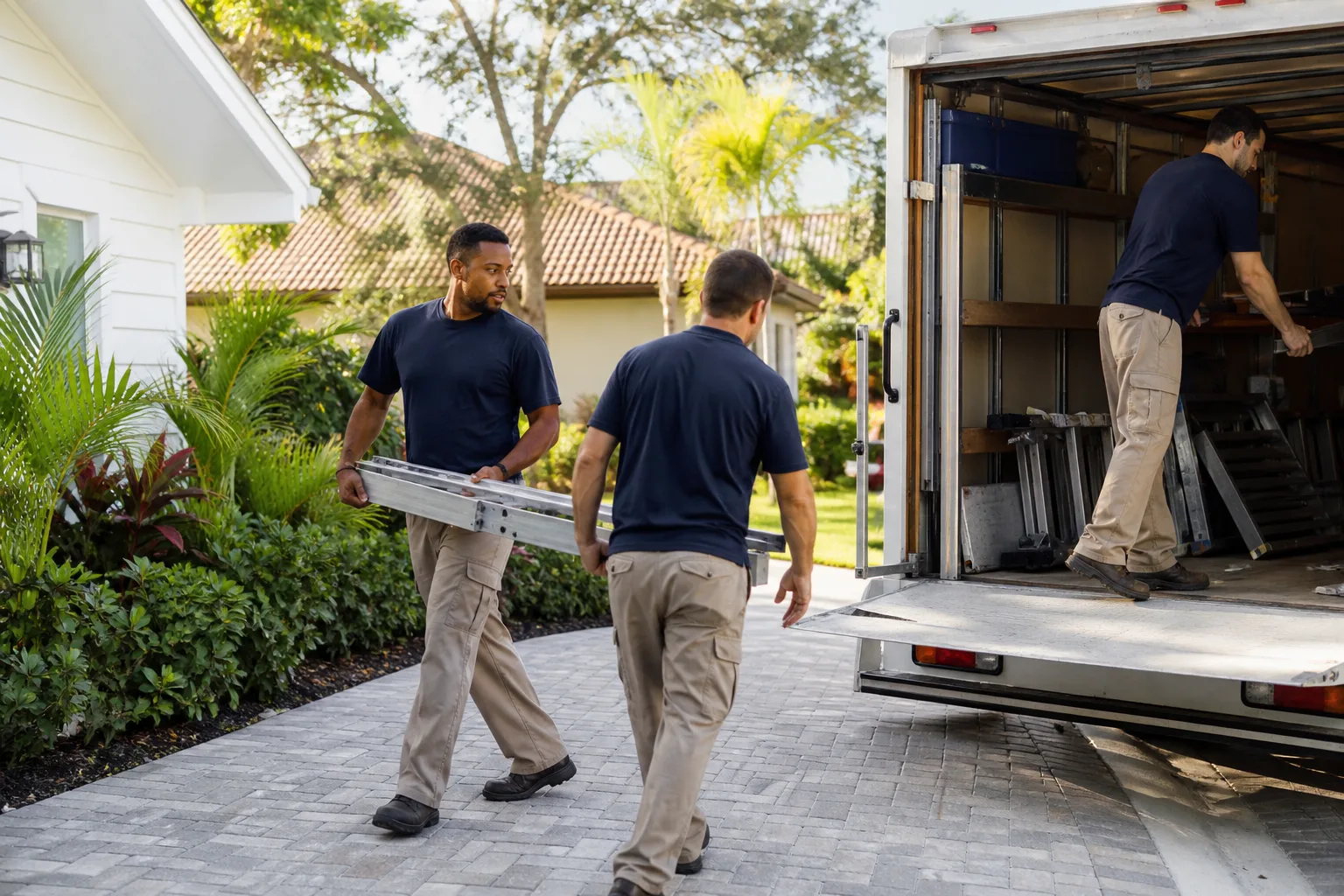
The 365-Day Done Right Promise – if it is not done right, we make it right – is printed on every written estimate. Crews are background-checked and uniformed, a live person answers calls around the clock, and every visit includes a documented photo record as a standard deliverable, not an add-on. When we open a wall or lift a shingle, the photo record shows what we found and what we did. Documentation is the whole product.
Written by the team at Rowan Construction Group Fullerton.