Last updated November 18, 2026
Free written scope consultation - allowances, timeline, and change-order rules on paper before a single trade is scheduled
How Long Does Driveway & Pavers Take? Timelines and What to Expect
A contractor who quotes you a 3-day installation is telling you one true thing and leaving out four weeks of project time you’ll need to plan around. That’s the gap we watch trip up homeowners over and over: the sales conversation centers on the days a crew spends setting pavers, while permit approval, material lead time, and the base cure window sit quietly off the calendar. This guide names every phase of a paver driveway project with a real time range so you can schedule around what’s actually coming. We’ve written it from Fullerton, where driveway work runs into some very specific local conditions.
Quick Answer
A paver driveway typically takes 3 to 6 weeks from contract signing to final inspection. The installation itself is usually 3 to 5 working days for an average two-car driveway; the rest is permit approval (3 to 15 business days at the Fullerton Building Division, depending on scope), material lead time (1 to 4 weeks by brand), demo and haul-off (1 to 2 days), and the base curing window (24 to 48 hours) before bedding sand can be screeded.
Styles & brands we work with
- Kitchen remodeling
- Bathroom remodeling
- Home additions & ADU
- Roofing
- Windows & doors
- Driveway & pavers
- Fence
Table of Contents
- The Five Phases of a Paver Driveway Project
- How Long Does Permit Approval Take in Fullerton?
- Material Lead Time by Brand
- What a Base Curing Window Is and Why It Matters
- Scheduling Around Fullerton’s Santa Ana Winds and First Rain
- Red Flags in Contractor Timelines
- How to Write a Timeline Into Your Contract
- Common Mistakes to Avoid
The Five Phases of a Paver Driveway Project
Every paver driveway breaks into five phases, and each one has its own time range. When a bid collapses everything into “installation,” it hides four of the five. Here’s the shape of the project.
- Permit application and approval. 3 to 15 business days at the Fullerton Building Division, depending on whether the project changes the driveway’s footprint, alters drainage, or sits in a zone requiring an encroachment review.
- Material order and delivery. 1 to 4 weeks. Belgard and Techo-Bloc stock common colors quickly; specialty blends or large-format pieces from a limited run take longer.
- Demo and haul-off. 1 to 2 days for a standard residential driveway, longer if the existing slab is thick or has a raised curb poured into it.
- Base installation and cure. 1 to 2 days of grading and compaction, then 24 to 48 hours of cure before bedding sand goes down.
- Paver setting, cutting, and joint sand activation. 2 to 3 days for a typical two-car drive, with the final step being polymeric joint sand activated by water.
Add them up and a realistic Fullerton paver driveway lands between 3 and 6 weeks. A project quoted at “3 days” is quoting phase five alone. Rowan Construction Group connects you with independent local professionals who work from a written, line-item scope, so each of these phases gets named before the contract is signed. The local pro is licensed and insured as California requires.
How Long Does Permit Approval Take in Fullerton?
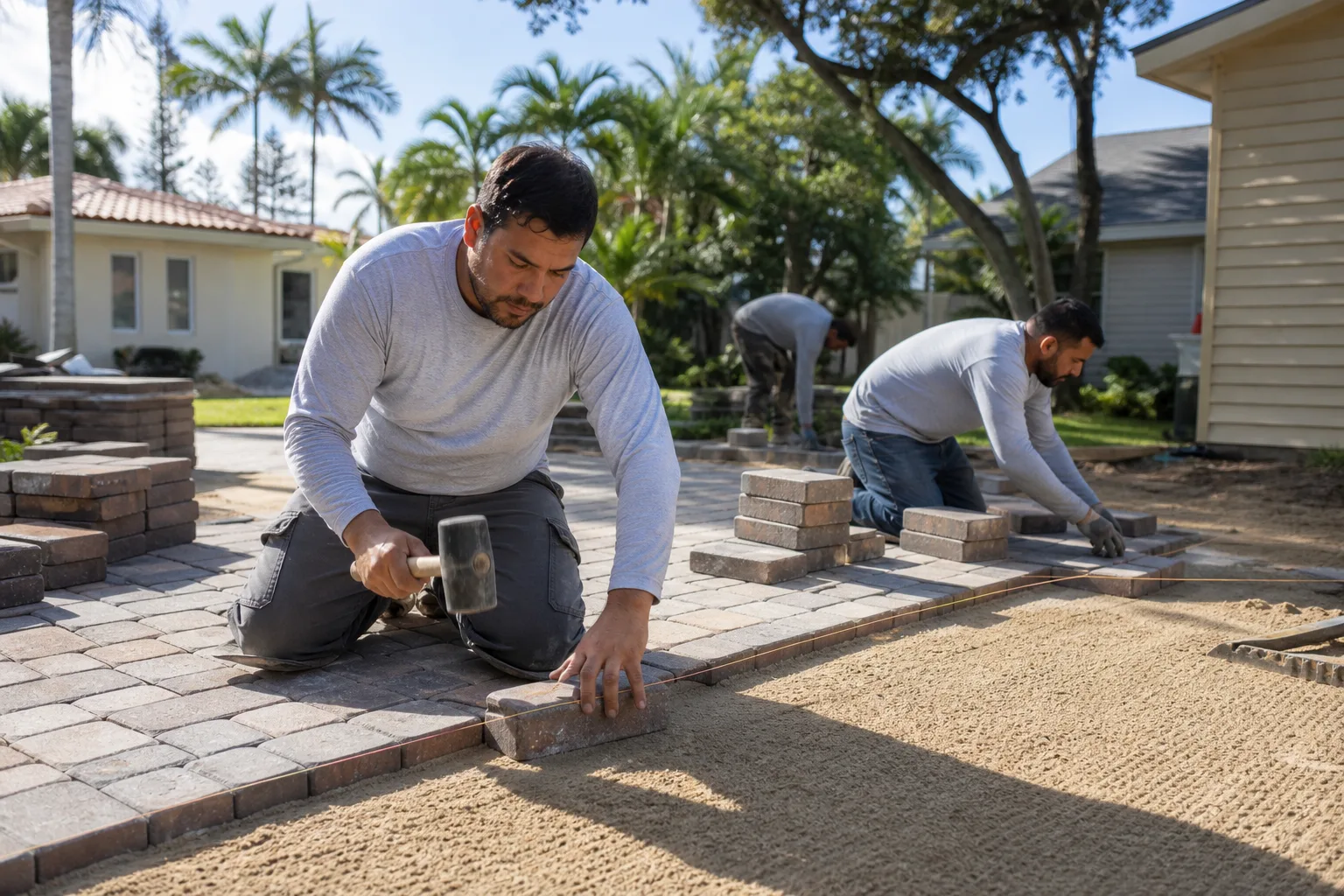
In Fullerton, plan review for a residential driveway runs 3 to 15 business days for most projects. The longer end applies when the scope touches drainage, lot grading, or the property line, which triggers a second look.
Why a driveway needs a permit at all: replacing a surface with a different material or changing its slope can affect how stormwater leaves the lot. Fullerton sits in a region where a hard rain in January can move serious volume, and a driveway that discharges water onto a neighbor’s foundation is a code problem, not a cosmetic one. Because of that, the city wants to see grade and drainage on the plan.
The practical timing impact:
- Straight replacement, same footprint, same material class. Typically the short end of the range.
- Changed footprint, widened apron, or added drainage channel. Longer review, sometimes with a follow-up question cycle.
- Permit submitted without a plan. The clock doesn’t start until the plan is accepted.
Here’s where the “start within 72 hours” promise in a competing bid usually comes from: the contractor intends to skip the permit. We’ve seen crews working on unpermitted driveways in Fullerton, and the risk lands on the homeowner. The work has to be re-opened for inspection, or worse, torn out. If a written quote includes permit pulling as a line item, the crew is respecting the process. Our Rowan Construction Group Fullerton home page lays out how we handle permits across every trade.
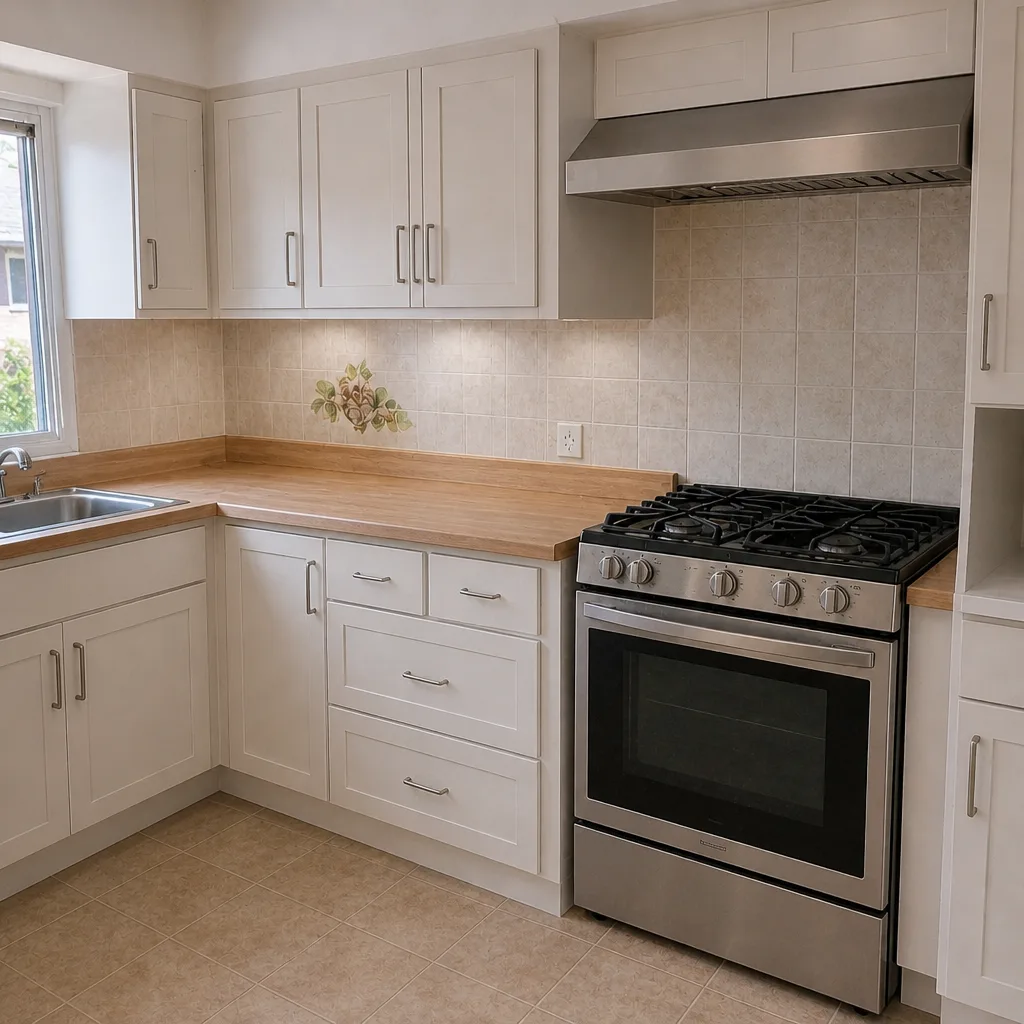
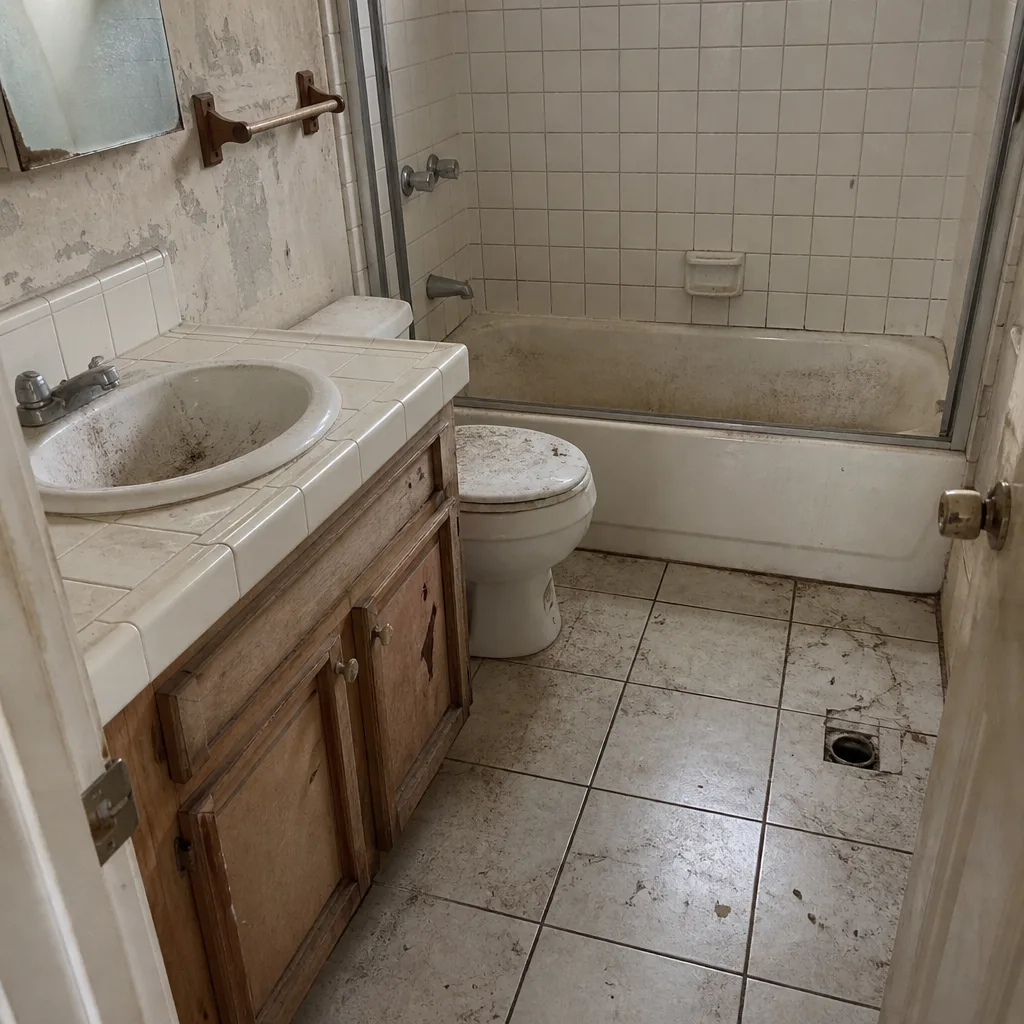
See the difference
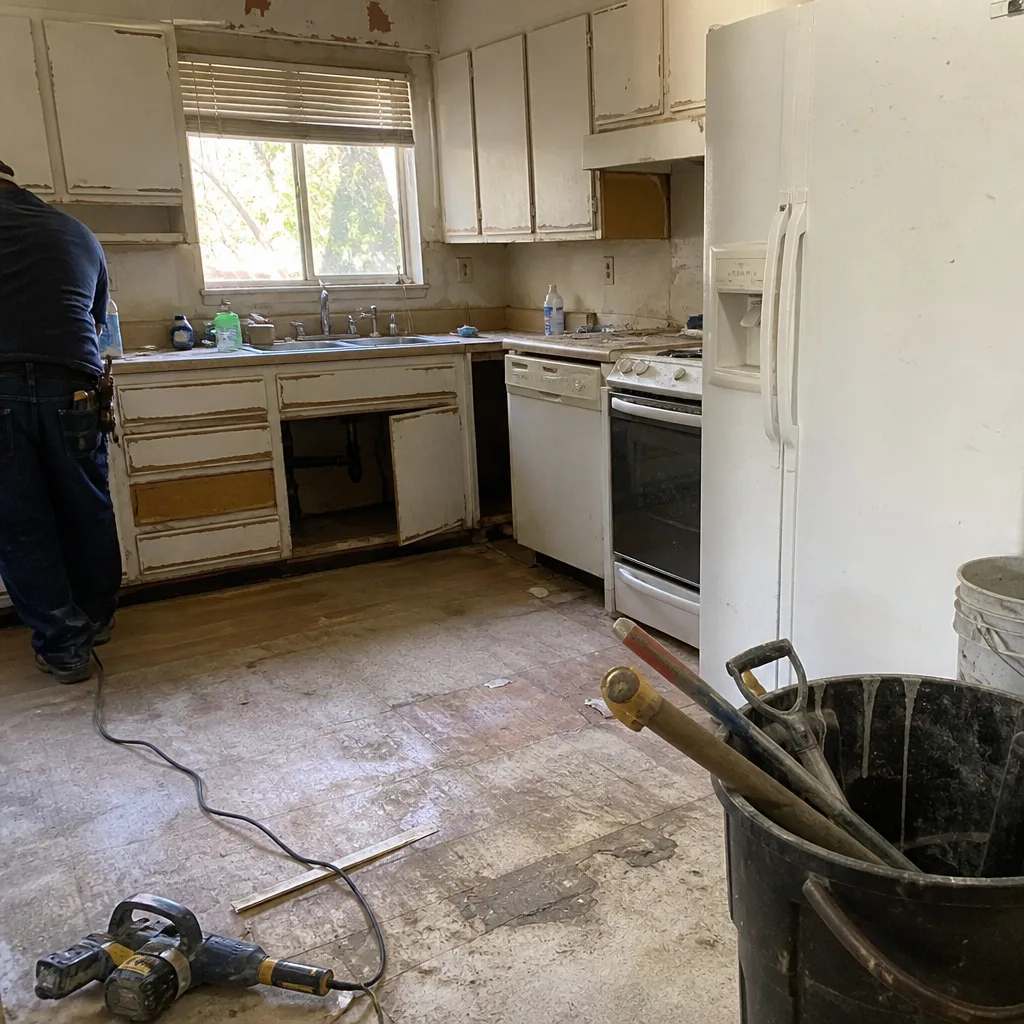 Before
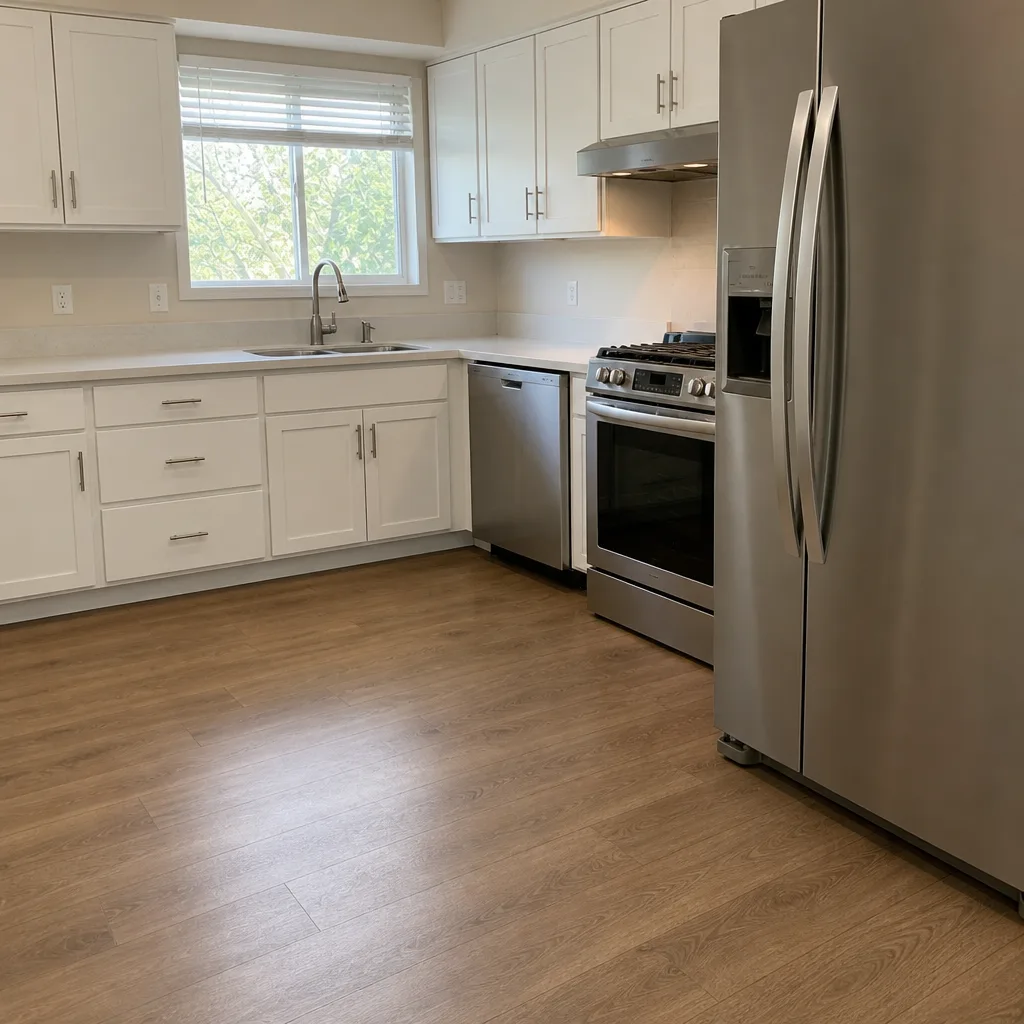 After
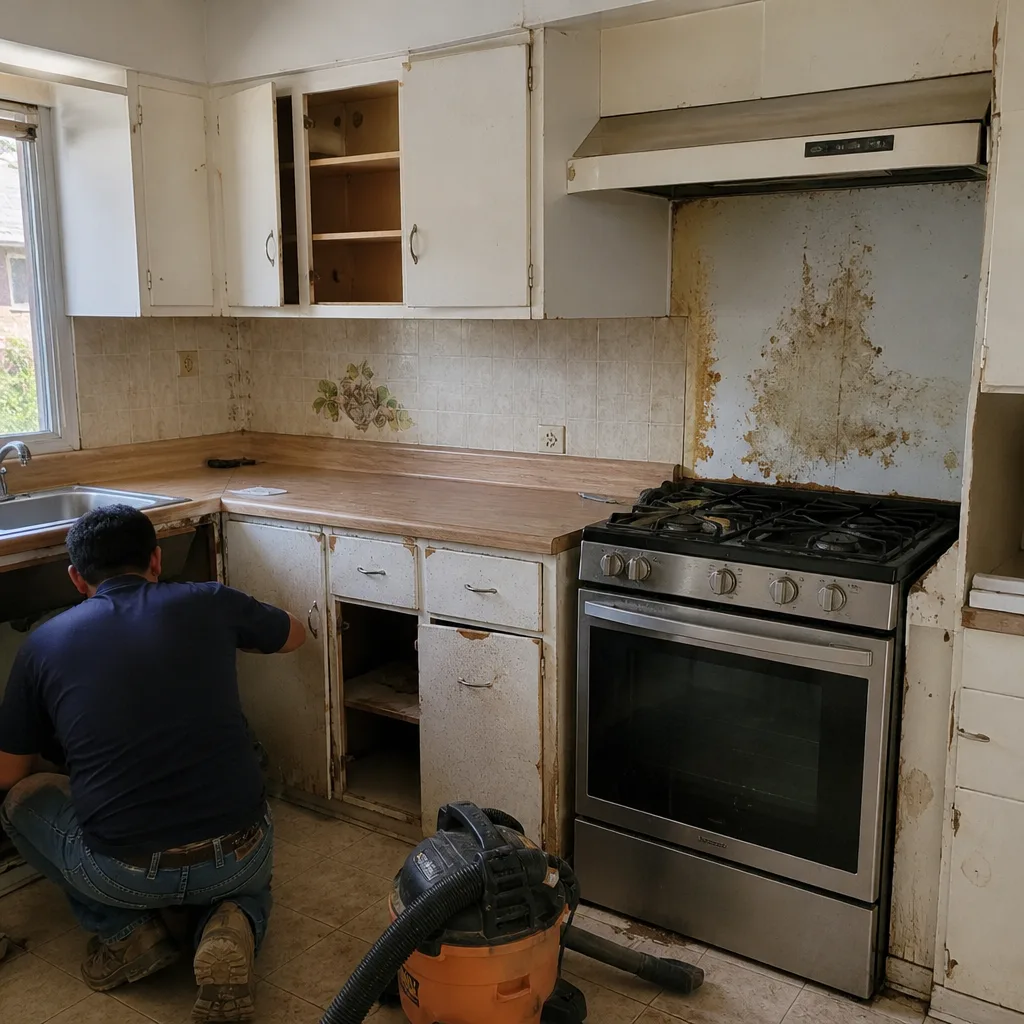 Before
 After
 Before
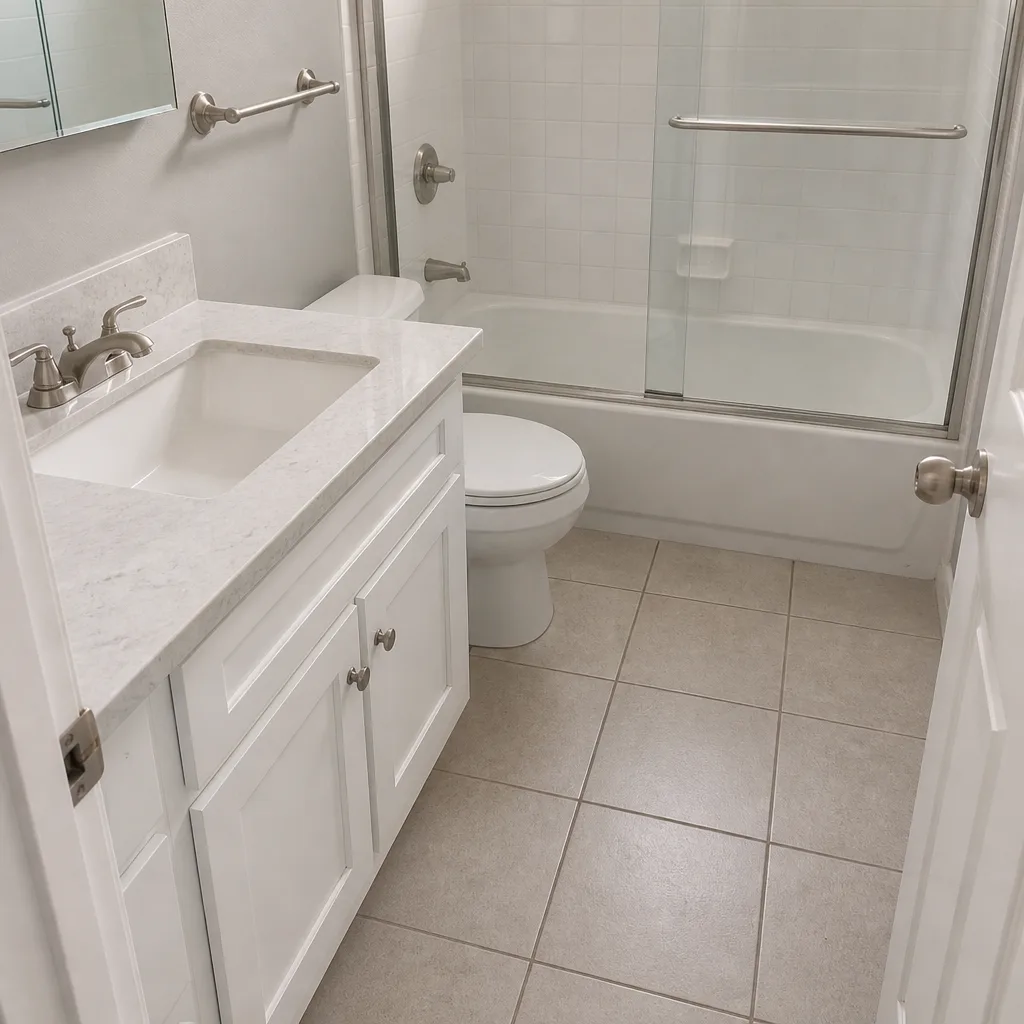 After
Material Lead Time by Brand
Material lead time is the phase most often left out of a verbal timeline, and it can be the longest. Once a project enters permit review, the material clock should already be running.
- Belgard. Wide distribution and common color families (Ashbury, Dublin Cobble) generally deliver in 1 to 2 weeks for standard quantities. Custom tumbled finishes can run longer.
- Techo-Bloc. Popular profiles (Blu 60, Borealis) usually arrive within 1 to 3 weeks. Special-order colors and border accents add time.
- Large-format or specialty pieces. When a designer specifies an oversized slab or a single-run color, lead times can reach 3 to 4 weeks. This is where “3 weeks” becomes “5 weeks.”
If a Fullerton driveway project runs into a February rain pattern, material sitting uncovered on the property needs pallets that can be tarped. Warehouse slab in the front yard, flat, unsecured, and it will stain or crack. For homeowners in Fullerton’s north end, where lots tend to slope, staging space is tighter than it looks.
Newer prefab construction brands occasionally come up in the conversation when homeowners are planning an accessory unit or covered structure that changes what the driveway leads to. Boxabl and Dvele both build off-site, which shifts some material scheduling into factory time. If your driveway project sits alongside a bigger plan, our guide to Home Additions & ADU in Newport Beach shows how those timelines interlock with paved access.
What a Base Curing Window Is and Why It Matters
Compacted Class II road base needs 24 to 48 hours to consolidate before bedding sand is screeded over it. That’s the curing window, and skipping it is the single most common way a paver driveway fails early.
Here’s what actually happens. Class II base is a crushed aggregate graded to lock together under vibration. When the crew grades it and runs a plate compactor over it, the particles settle and the moisture in the mix begins to redistribute. The base doesn’t reach its final bearing capacity the instant compaction ends. It needs a settle period, and a rain event during that window can actually help as much as it threatens, because the moisture finishes the consolidation job.
Screed bedding sand over a base that hasn’t consolidated and you’ll get voids. Voids turn into ruts. Ruts show up as settled pavers six or twelve months after the crew leaves, and the homeowner blames the pavers rather than the base. So when a contractor quotes “3 days, all in,” ask how the base cure is handled. Either the schedule includes the settle period, or the pavers go down over a base still in motion.
Under our 365-Day Done Right Promise, if a base or joint fails within the first year, we make it right. That’s a different kind of promise from a handshake, and it’s the reason the cure window is written into the schedule, not skipped for speed. The written price is delivered before any work begins, and no change proceeds without a signed change order.
Scheduling Around Fullerton’s Santa Ana Winds and First Rain
Fullerton’s climate has two scheduling hazards most homeowner guides ignore: Santa Ana wind weeks in October through December, and the first meaningful rain, which typically arrives between late November and January. Both affect when joint sand can activate successfully.
Joint sand is the last 20 percent of the job and the one most weather-sensitive. Polymeric joint sand activates when water is added; the polymer cures as it dries. There’s a short window where wind can blow unactivated sand out of the joints before the water hits, and a longer window where rain can reach it before curing. A crew setting pavers the day before a Santa Ana wind event needs to tarp or delay; in our experience, the run of wind weeks is when joint sand failures cluster.
The first real rain system (as opposed to the marine layer) is another decision point. Setting pavers in the dry week before rain is fine if joint activation happens before the moisture. Setting them the same afternoon the storm lands is a rework risk.
For homeowners in Fullerton, the practical timing advice:
- Late spring through early fall (April to September) is the cleanest window, with joint sand able to cure without a rain interruption.
- October and November can be excellent for installation but require watching the wind forecast for the joint-sand stage.
- December through February works, but crews should build slack into the schedule for weather and hold the joint step until a dry window opens.
Homeowners in Fullerton with a driveway that slopes toward a fence or gate often tie the paver work to fencing. Our guide to Fence Installation in Newport Beach explains why sequencing the two together can save a full step.
Red Flags in Contractor Timelines
A bid that promises installation to start within 72 hours of contract signing is almost always pointing to one of two things: the permit was skipped, or the material was pre-bought on spec and is sitting on a pallet somewhere. Neither is a shortcut you want.
Here’s what a timeline red flag actually looks like:
- “Two-week total” without a permit line. Paver work in Fullerton with a changed surface requires plan review. No permit on the written scope means no plan submitted.
- Material “in stock” for a custom color. Belgard and Techo-Bloc both have lead times on anything beyond their standard lines. No lead time quoted usually means no specific material specified.
- Verbal timelines with no written milestones. “About three weeks” doesn’t survive the first rain delay. Written dates do.
- No mention of the base cure. Either the crew doesn’t have a base step planned, or they’re compressing the schedule at the paver’s expense.
- Deposit required before itemized scope. The no-hassle upfront pricing rule is simple: written price, written scope, before any work starts, every time. Anything less and you’re funding a wish list.
We also watch for the bid that prices pavers but quotes concrete timing. Those are different trades. If a contractor’s timeline includes “pour day,” ask who’s actually setting the pavers. The two trades don’t share a calendar.
Free second opinions on any written estimate are standing practice here. Bring a competitor’s quote and we’ll review it line by line at no charge, including the timeline.
How to Write a Timeline Into Your Contract
A project timeline should live in the contract as written milestone dates, not as “approximately” or “about.” Here’s what we recommend a homeowner insist on.
- Named phases with dates. Permit submission date, expected approval date, material order date, demo start, base cure dates, paver setting dates, joint sand activation date, and final inspection.
- Delay clause in writing. What happens when rain or wind adds a day? Who bears the cost, and at what threshold is a change order drafted?
- Change order signature required. Clause 1 of The Haven Standard, which Rowan operates under, is straightforward: no work proceeds on a change until the change order is signed. That protects the timeline as much as the budget.
- Documented photo record. Every visit includes a photo record as a standard deliverable, so you have evidence of what was on the base and in the joints at each stage.
- Written warranty on the finished work. The 365-Day Done Right Promise is printed on every page and backed by a terms page, not an asterisk.
Background-checked, uniformed technicians and a live person answering calls around the clock make the timeline easier to manage mid-project. When something does shift, you get a call, not a voicemail. Our crews have up to 19 years of experience across the trades, and that shows in how tightly the schedule holds.
Common Mistakes to Avoid
- Booking based on a verbal timeline and no written scope. Verbal milestones disappear when a crew has fourteen other jobs. Written dates with a named material brand survive.
- Scheduling the project into the Santa Ana wind weeks without a joint-sand plan. Fullerton’s October through December wind pattern can strip unactivated joint sand. A crew that doesn’t mention the wind week doesn’t have a plan for it.
- Assuming the quoted “3 days” includes demo and haul-off. Old concrete that’s two layers thick, or a slab poured into a curb, takes a full extra day. Ask what’s included.
- Comparing a permit-included bid against a permit-skipped bid as if they were equal. The 3 to 15 business day plan review at the Fullerton Building Division adds cost and time. A bid without it is incomplete, not cheaper.
- Skipping the free second opinion on a written estimate. Line-by-line review catches timeline gaps and material substitutions before signing. We offer it at no charge on any competitor bid.
- Letting the material sit uncovered on the lot for weeks. Slab and paver pallets stain or crack in the rain. Ask where material will be stored and how it’s protected.
- Assuming paving is a one-step project. A proper Driveway & Pavers in Newport Beach project follows the same five-phase sequence, and any bid that skips phases is one to ask about.
When to Call a Professional
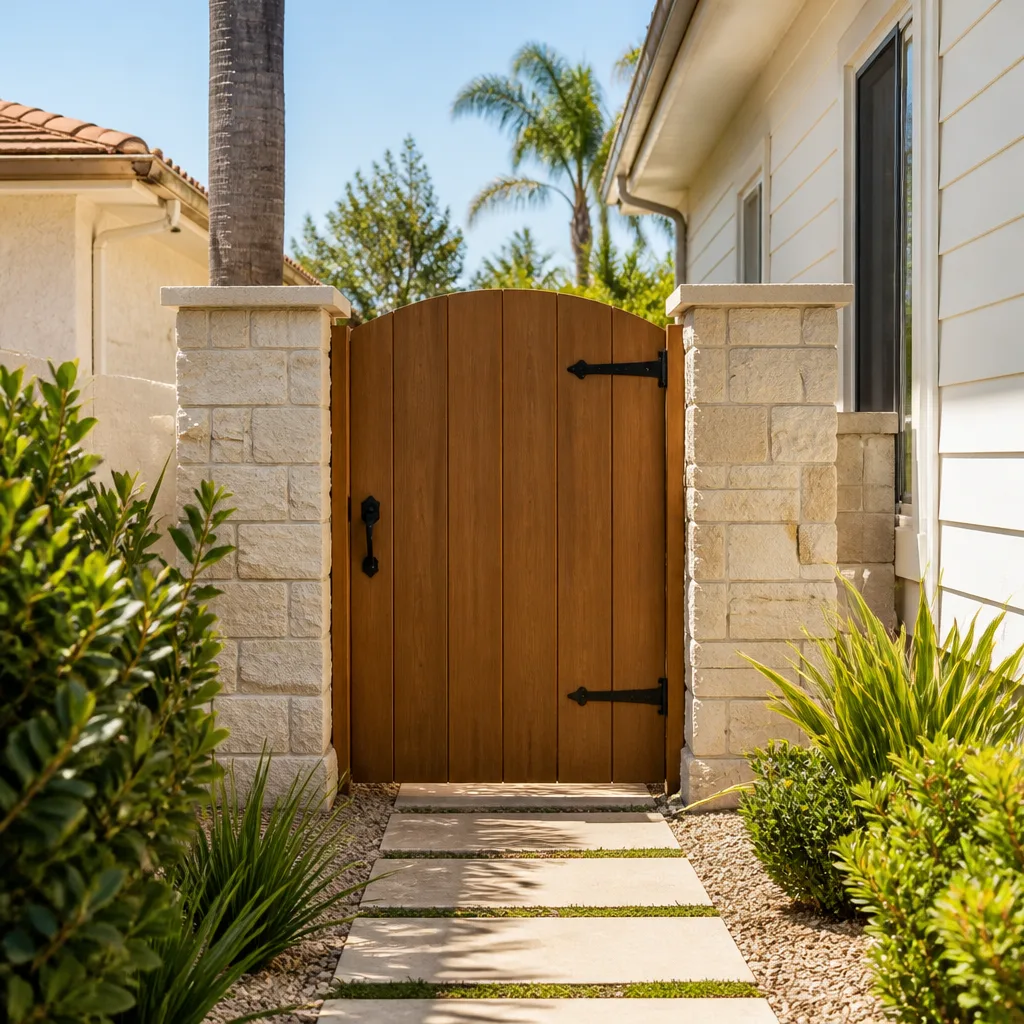
A paver driveway is not a weekend project, and the danger points are concentrated in exactly the phases homeowners are tempted to rush: base grading and the use of plate compactors. A 24 to 48 hour base cure window isn’t optional, and a base run without proper compaction will fail within a year. When your existing driveway has sunk, cracked, or failed to shed water, the diagnosis matters as much as the installation. We also recommend a licensed pro when the project involves a permit change, a drainage question, or a footprint change that touches the property line.
Rowan Construction Group Fullerton offers free estimates in Fullerton. Call (844) 320-7095 to schedule yours. The written price comes before any work starts, and the local pro is licensed and insured as their state requires.
Frequently Asked Questions
The installation itself is typically 3 to 5 working days for an average two-car driveway, but the full project runs 3 to 6 weeks from contract signing to final inspection, including permit approval, material lead time, demo, and the base cure window. Call (844) 320-7095 for a written timeline on your specific project.
Plan review typically runs 3 to 15 business days for a residential driveway. The longer end applies when the plan touches drainage, grading, or the property line, which triggers a secondary review cycle. A written quote should name permit pulling as a line item so the scope reflects the process.
Not under The Haven Standard: no work proceeds on a change until a signed change order is presented. The written price you receive before work begins is a flat price with a written scope and written warranty. That’s been Rowan’s discipline across 4,000-plus projects. Call (844) 320-7095 for a fixed quote.
Yes. Permits for driveway construction, including plan review at the Fullerton Building Division, are handled by the local pro before any work starts. Skipping the permit is one of the reasons a competing bid can promise a 72-hour start; the homeowner carries that risk.
A base curing window is the settle period compacted Class II road base needs before bedding sand is screeded over it. It takes 24 to 48 hours for the aggregate to consolidate and reach bearing capacity. Skipping it produces voids, ruts, and settlement in the pavers within the first year.
Two windows matter: Santa Ana wind weeks from October to December, which can blow unactivated joint sand out before it’s wet; and the first significant rain from late November through January, which can interrupt curing. Setting pavers in the dry window before a storm works fine if the joint-sand activation lands before moisture arrives. Call (844) 320-7095 for a free estimate with weather-season timing built into the written schedule.
The Bottom Line

A paver driveway is a 3 to 6 week project, not a 3 day installation. The five phases – permit approval (3 to 15 business days in Fullerton), material lead time (1 to 4 weeks), demo and haul-off (1 to 2 days), base cure (24 to 48 hours), and paver setting with joint sand activation (2 to 3 days) – each earn their place. A contractor who can name each phase with a written date is the one to trust. A contractor who collapses it all into one number is hiding four. Rowan Construction Group Fullerton delivers a written timeline with a written price before work starts, backed by the 365-Day Done Right Promise.
Call (844) 320-7095 to schedule your free estimate. Every visit includes a documented photo record as a standard deliverable, the price is written before anyone picks up a tool, and the timeline is on paper from day one.
Written by the team at Rowan Construction Group Fullerton.