Last updated November 18, 2026
Free written scope consultation - allowances, timeline, and change-order rules on paper before a single trade is scheduled
The Complete Driveway & Pavers Guide for Fullerton Homeowners
Fullerton sits on expansive clay soils that can shift up to 2 inches seasonally – a base depth that works in coastal Newport Beach will crack a Fullerton driveway within two winters. That single fact explains why two neighbors can pay the same $18,000 for a paver driveway and one is fine after 30 years while the other has rocking stones and weeds by year four. This guide works backward from the two decisions that actually determine longevity – how deep the base is compacted and what goes in the joints – and connects everything else to them: soil type, brand-level pricing, what a Fullerton permit application really requires, and how to read a contractor’s bid line by line. We’ve delivered thousands of projects across seven trades; here’s what we’ve learned about getting a driveway right in this city.
Quick Answer
A driveway paver installation in Fullerton typically runs $14 – $24 per square foot, or roughly $11,000 – $22,000 for a standard two-car driveway, and the number that decides whether it lasts 30 years or fails early is base depth – Fullerton’s Montebello clay and Hesperia sandy loam require different excavation and compaction depths, which move cost by $2 – $4 per square foot. Get the base engineered for the actual soil under your driveway, spec the right polymeric jointing sand for Santa Ana wind conditions, and pull the permit when impervious surface coverage triggers it.
Styles & brands we work with
- Kitchen remodeling
- Bathroom remodeling
- Home additions & ADU
- Roofing
- Windows & doors
- Driveway & pavers
- Fence
Table of Contents
- Why Fullerton’s Soil Changes Everything About Your Paver Base
- Base Depth and Compaction: The Decision You Only Make Once
- Belgard, Calstone, or Pavestone? What Each Brand Actually Costs
- What a Compliant Fullerton Paver Permit Actually Contains
- How to Read a Paver Bid Line by Line
- Polymeric Sand vs. Standard Jointing Sand in a Fullerton Climate
- What Maintenance Actually Looks Like in Fullerton
- Full Driveway Cost Breakdown for Fullerton
Why Fullerton’s Soil Changes Everything About Your Paver Base
Fullerton is not one soil type. Drive through the flat neighborhoods around downtown and you’re likely on Montebello clay – a heavy, expansive soil that swells when it absorbs winter rain and shrinks in summer heat, moving up to 2 inches seasonally. Head toward the north and east edges of the city, up against the foothills, and you’ll find Hesperia sandy loam, which drains faster but still needs careful compaction because it can settle unevenly under a loaded driveway.
That difference isn’t academic. It drives three things a homeowner pays for:
- Excavation depth. Expansive Montebello clay typically requires a deeper, more rigorously compacted aggregate base – often 6 – 8 inches of Class II base over a geotextile separator – so seasonal movement is spread across layers instead of concentrated under individual pavers. Sandy loam can sometimes use a shallower base, but settling risk means compaction passes matter as much as depth.
- Geogrid and fabric. On clay, a woven geotextile between subgrade and base reduces migration of fines and helps bridge seasonal movement. On sandier soils, the emphasis shifts toward edge restraint and drainage.
- Cost swing. The realistic difference between a clay-appropriate base and a sandy-loam-appropriate base is $2 – $4 per square foot on a Fullerton driveway – the biggest silent variable in any bid you’ll receive.
When we review a competitor’s written estimate as part of our free second-opinion service, soil-appropriate base prep is the first line we check. A quote that says “base prep included” without specifying depth, aggregate type, and compaction method tells you nothing about whether it will hold up in Fullerton’s clay.
Base Depth and Compaction: The Decision You Only Make Once
If you make only one decision carefully, make it this one. Pavers are the visible layer, but the base is what carries the load – the vehicle, the seasonal movement, the drainage. When a driveway fails, the pavers aren’t usually the problem. The base underneath them is.
Here’s the sequence a properly built Fullerton driveway follows:
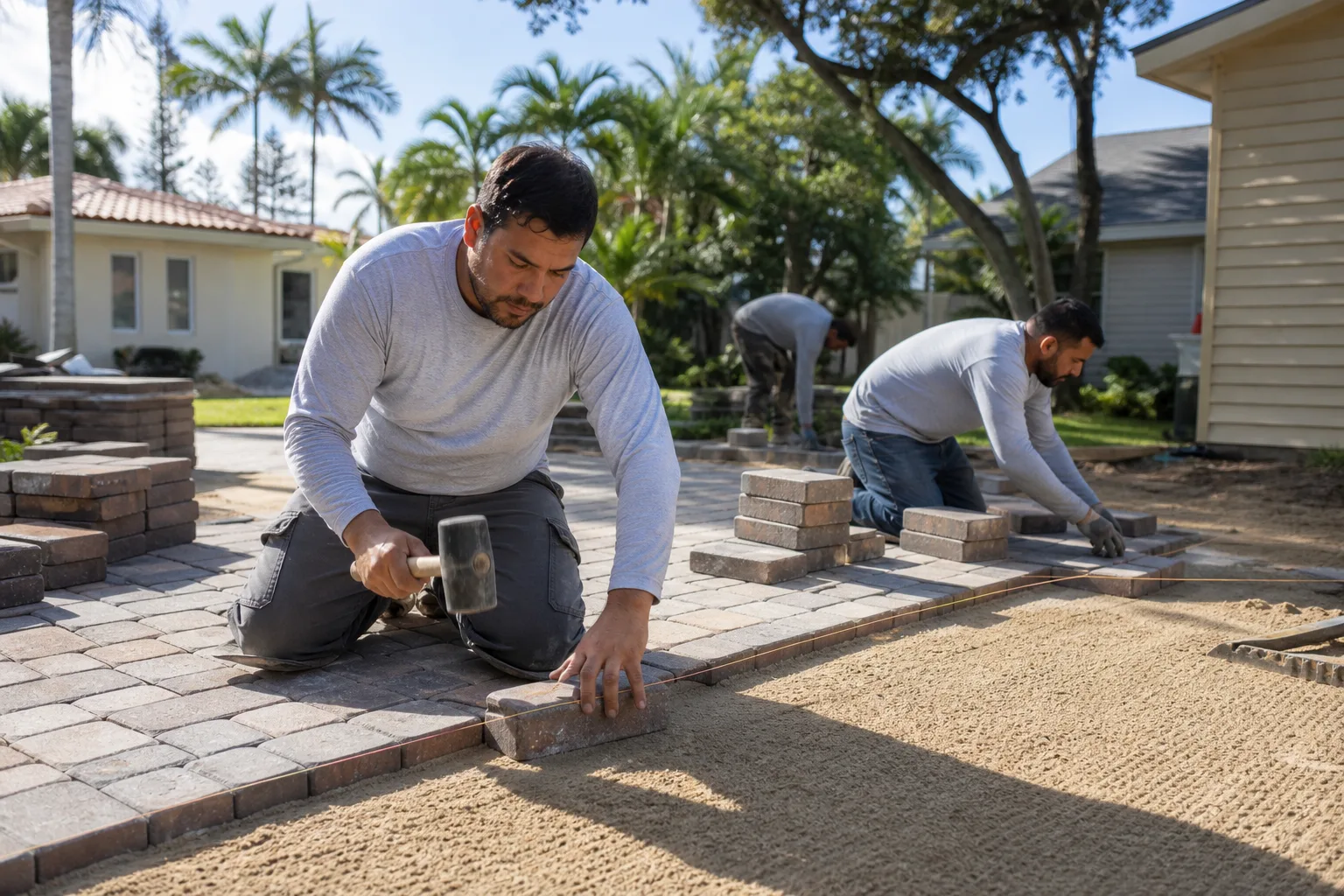
- Excavate to design depth. On Fullerton’s expansive clay, plan on 8 – 12 inches of total excavation including the paver thickness and bedding layer.
- Proof-roll and compact the subgrade. The native soil gets compacted in lifts (typically 2 – 4 inches at a time) with a plate or vibratory compactor and moisture-conditioned as needed. Skimping here is invisible until it isn’t.
- Lay geotextile separator. A woven fabric on clay subgrade keeps base fines from pumping into the soil and stabilizes the whole assembly.
- Place Class II aggregate base. Typically 6 – 8 inches for a residential driveway, compacted in 2-inch lifts to 95% relative compaction. Ask for the compaction percentage in writing.
- Set edge restraints. Paver edges need rigid restraint – aluminum or steel edge or a concrete curb – or the field spreads outward under load.
- Bedding course and pavers. A 1-inch layer of coarse sand, screeded flat, then pavers laid per manufacturer pattern.
- Joint sand and compaction. Polymeric sand swept into joints and the field compacted to lock everything in place.
That compaction percentage matters. A driveway compacted to 85% will feel solid on installation day and start rocking after two Fullerton wet seasons. Ask your contractor to state the percentage, the base aggregate specification, and the lift thickness in the written quote. If the number isn’t on the page, the price is a guess. Under Clause 1 of the Haven Standard, the price and specification are written before any work begins – this is exactly why.
Belgard, Calstone, or Pavestone? What Each Brand Actually Costs
“Budget to premium” is not a price range. Concrete, clay, and concrete-with-color are different products with name-brand price bands you can compare before you call anyone. In Fullerton’s current market, materials run roughly as follows (material only, per square foot, installed cost adds labor and base):
| Brand & Product | Material Cost / sq ft | Common Fullerton Use |
|---|---|---|
| Pavestone (entry concrete pavers) | $3.50 – $6 | Sidewalk strips, utility pads, budget full drives |
| Calstone (concrete pavers, mid) | $5 – $9 | Standard residential drives, driveway aprons |
| Belgard (premium concrete pavers) | $7 – $13 | Full driveway builds, front yard hardscape |
| Clay brick pavers (imported) | $8 – $16 | Heritage-look driveways, historic neighborhoods |
On a 500-square-foot driveway, that material spread is roughly $1,750 at the bottom to $6,500 at the top – before base prep and labor. Labor in Fullerton typically runs $5 – $9 per square foot for standard installation, and base prep another $4 – $8 depending on soil class, excavation depth, and site access. That’s why the same “installed” quote can land anywhere from $14 to $24 per square foot.
Two brand notes worth naming: Belgard’s structural paver lines have thicker profiles that handle driveway traffic better than a wall-grade unit, and Calstone’s tumbled finish is a common choice for Fullerton homes built between 1955 and 1975 where the streetscape already has aged concrete. Bring a photo of your house’s next-door neighbors’ driveways to your estimate – material choice should sit next to context, not float in a showroom.
What a Compliant Fullerton Paver Permit Actually Contains
Not every paver job in Fullerton needs a permit, and the line is set by impervious surface coverage and drainage, not the type of paver. As a rule of thumb, if you’re expanding your impervious footprint – a new driveway where there was lawn, widening an apron, or changing drainage that runs toward a neighbor or the street – expect a permit. Replacement of an existing driveway in the same footprint with the same drainage story is often exempt, but that’s a question for the city, not a guess. Call the Fullerton planning counter on a specific address before you assume.
When a permit does apply, a full application typically includes:
- A scaled site plan showing existing and proposed driveway, lot lines, structures, and the direction of drainage.
- An impervious surface calculation as a percentage of the lot – a number the city cares about because of stormwater runoff.
- A drainage plan showing where water goes and how it stays on-site or reaches the approved discharge point.
- Material and cross-section detail – paver type, bedding, base depth, and edge restraint.
What a proper permit process buys you isn’t paperwork for its own sake. It’s a documented engineering record that the driveway was designed for the site, and a building inspector’s photo of the base before the pavers went down. That’s evidence you’ll want if you ever sell the house.
How to Read a Paver Bid Line by Line
The best way to compare paver bids is not by the bottom line. It’s by the line items that low bidders quietly delete. Here’s what a well-built Fullerton estimate looks like, and what each line should cost separately:
- Demolition and haul-off. Removing the old surface, breaking concrete, and disposing of it – should be its own line. Often disappears from “cheap” quotes.
- Excavation and soil handling. Including the removal of clay or sandy loam spoil, which earns its own line because it costs money to haul.
- Base prep. Aggregate type, depth, compaction percentage, and geotextile. Should be separate from material. If it’s folded into a single “base prep included” line, you’ve lost the ability to verify what’s underneath.
- Material. Named brand and product line, not “pavers.”
- Labor. Installation only, at a stated per-square-foot rate.
- Edge restraint and drainage. Curbs, edge metal, drain grates if needed.
- Permit and inspection fees. Named as a line, not hidden in “other.”
- Warranty. Written and specific. “Craftsmanship warranty” without a duration and a terms page isn’t a warranty.
When you see a low bid, the discount is almost always living in three places: shallower base, no geotextile, and no written compaction spec. Those three invisible cuts are exactly the ones that fail first in Fullerton clay.
Polymeric Sand vs. Standard Jointing Sand in a Fullerton Climate
Joint sand is not a cosmetic detail. It’s what binds the field, blocks weed growth, and prevents the pavers from shifting individually. In Fullerton, the right choice is shaped by two local conditions: warm dry summers that can crack a poorly installed polymeric joint, and Santa Ana wind events that blow fine sand out of joints on dry, unsealed installs.
Standard jointing sand (washed, fine-grain) is cheaper – roughly $0.25 – $0.60 per square foot installed – but blows out over time, needs annual top-ups, and invites weeds in undisturbed beds. It’s viable on covered patios or very sheltered driveways, rarely on an exposed Fullerton driveway.
Polymeric sand uses a binder (either cementitious or a polymer resin) that sets hard in the joint once wetted. Expect $0.80 – $1.50 per square foot installed. Two brands hold up well in Fullerton conditions: Techniseal HP2 for a firm, rain-resistant joint, and Alliance Gator Maxx for stabilized joints with strong wind resistance. Both require a clean joint and proper wetting – a crew that installs polymeric sand in direct sun without following the wetting sequence will end up with a crust that fails within the first winter.
If you own a Fullerton home with a driveway that faces west into afternoon sun and takes Santa Ana wind gusts from the north, polymeric sand is the correct default, and a resin-based formulation applied correctly beats a cementitious one that can shrink and crack in a dry summer.
What Maintenance Actually Looks Like in Fullerton
A correctly built paver driveway in Fullerton is not a “no maintenance” surface, but the annual work is modest and predictable:
- Top up joints every 2 – 3 years. Even polymeric sand erodes somewhat at the pavement edge where wind and water work hardest. A bag of matching polymeric sand and a 20-minute sweep is the whole job.
- Rinse off debris before the rainy season. Fullerton clay soil washes across driveways from planters; that fine silt deposits in joints and holds moisture. A hard rinse in October saves a cleaning in December.
- Check edging. A spreading edge shows up as a widening gap at the curb. Fix the restraint before it becomes a field-wide problem.
- Weed-check in spring. Any weed that comes up between pavers means a joint has failed somewhere. Pull it, reset the joint, and note where the failure occurred.
- Sealing is optional. Not every paver needs sealer in Fullerton. Efflorescence, wind-driven dust, and color fade are the reasons to seal; sealing too early, on a paver with residual moisture, is a common failure.
What you shouldn’t have to do is re-level pavers or chase rocking corners. If that’s happening, the base was wrong, and no amount of maintenance fixes a base problem from the top.
Full Driveway Cost Breakdown for Fullerton
Pricing a Fullerton paver driveway honestly means quoting the base separately from the material and labor, because they vary independently. Here’s the range we see most often across Fullerton neighborhoods – a 500-square-foot two-car driveway is the reference point:
| Line Item | Cost / sq ft | Notes |
|---|---|---|
| Demolition and haul-off | $1.50 – $3.00 | Higher if existing concrete is thick or access is tight |
| Base prep (excavation, aggregate, geotextile, compaction) | $4.00 – $8.00 | Clay-heavy sites at the high end |
| Paver material | $3.50 – $13.00 | Pavestone to Belgard premium |
| Installation labor | $5.00 – $9.00 | Pattern complexity and access affect the rate |
| Joint sand (polymeric) | $0.80 – $1.50 | Standard jointing sand cheaper but not suited to exposed drives |
| Edge restraint, drainage | $1.00 – $2.50 | Varies with site slope and existing drainage |
| Permit fees | $300 – $900 | Fullerton fees vary with scope |
Total installed range for a 500-square-foot Fullerton driveway: roughly $11,000 – $22,000, with the biggest swing being brand choice and base depth. A typical mid-market install using Calstone with site-appropriate base lands near $16,000 – $18,000.
Common Mistakes to Avoid
- Accepting a “base prep included” line. Two bids with identical bottom lines can specify wildly different base depths. Insist on a written aggregate type, depth, compaction percentage, and geotextile spec – if it’s missing, the price is unverifiable.
- Using coastal base depths in Fullerton. A base engineered for Newport Beach’s sandy coastal soils will crack in Fullerton’s expansive clay within two winters. Local soil knowledge is not optional.
- Skipping polymeric sand to save money. The $0.80-per-square-foot upgrade is the cheapest insurance against joint failure and weed infiltration you’ll ever buy. Standard jointing sand on an exposed Fullerton driveway is a maintenance bill in waiting.
- Installing in direct summer sun without wetting polymeric sand correctly. Santa Ana wind and 95-degree afternoons cause a prematurely cured crust that fails the following winter. Install during cooler hours and follow the wetting sequence exactly.
- Skipping edge restraints. A field of pavers with no fixed edge spreads outward over two seasons. It’s a $1 – $2.50-per-square-foot line item that some low bids quietly omit.
- Pulling no permit for a footprint expansion. Adding impervious surface without a drainage calculation is the fastest route to a city code notice – and to a driveway you can’t sell without disclosing.
- Choosing material from a showroom photo. Pick pavers next to a photo of your actual house’s streetscape. Palette matches matter in Fullerton’s mid-century neighborhoods more than a single tile ever shows.
When to Call a Professional
Call a licensed contractor before you demo anything if: your existing driveway shows seasonal cracking that opens and closes across the year (a strong sign of an under-built base on clay); you’re expanding the impervious footprint and need a drainage plan; you’re on a slope that drains toward your house or a neighbor; the driveway serves a vehicle heavier than a passenger car; or a prior installation is rocking, sinking, or has pavers spreading at the edges. Any of those cases needs engineering and a written scope before a shovel touches dirt – a DIY repave just puts a fresh surface over a failing base. Rowan Construction Group Fullerton offers free estimates in Fullerton – call (844) 320-7095, and if you already have a written bid from another contractor, we’ll review it line by line at no charge.
For customers comparing our work to other Fullerton contractors, it’s worth understanding how the written price and the signed change order work. Under Clause 1 of the Haven Standard, every project is priced in writing before any work begins – no “we’ll see,” no markup surprises. No change proceeds without a signed change order. And the 365-Day Done Right Promise backs the finished work: if it isn’t done right, we make it right. Every crew wears ID and is background-checked, calls are answered by a live person 24/7, and every visit includes a documented photo record as a standard deliverable – useful if you ever resell and need evidence of what’s under the driveway.
See the difference
 Before
 After
 Before
 After
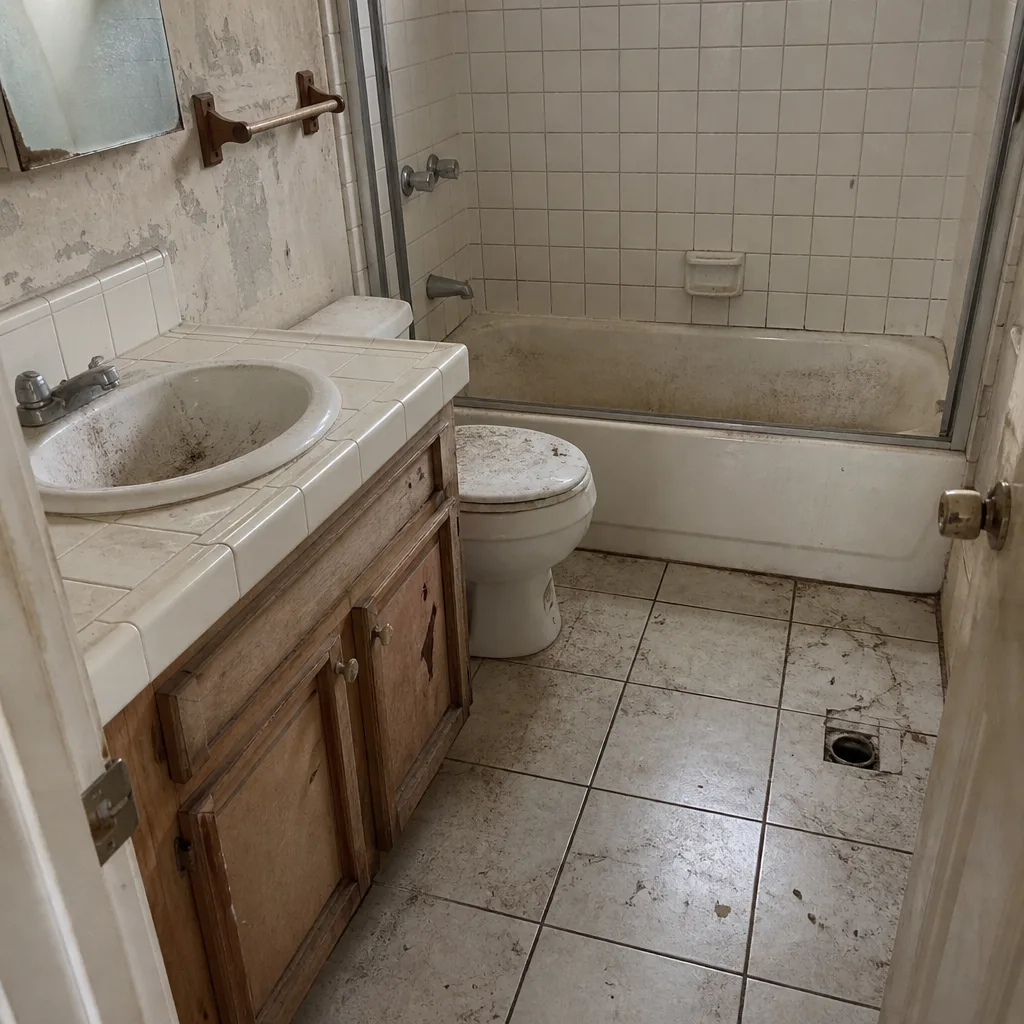 Before
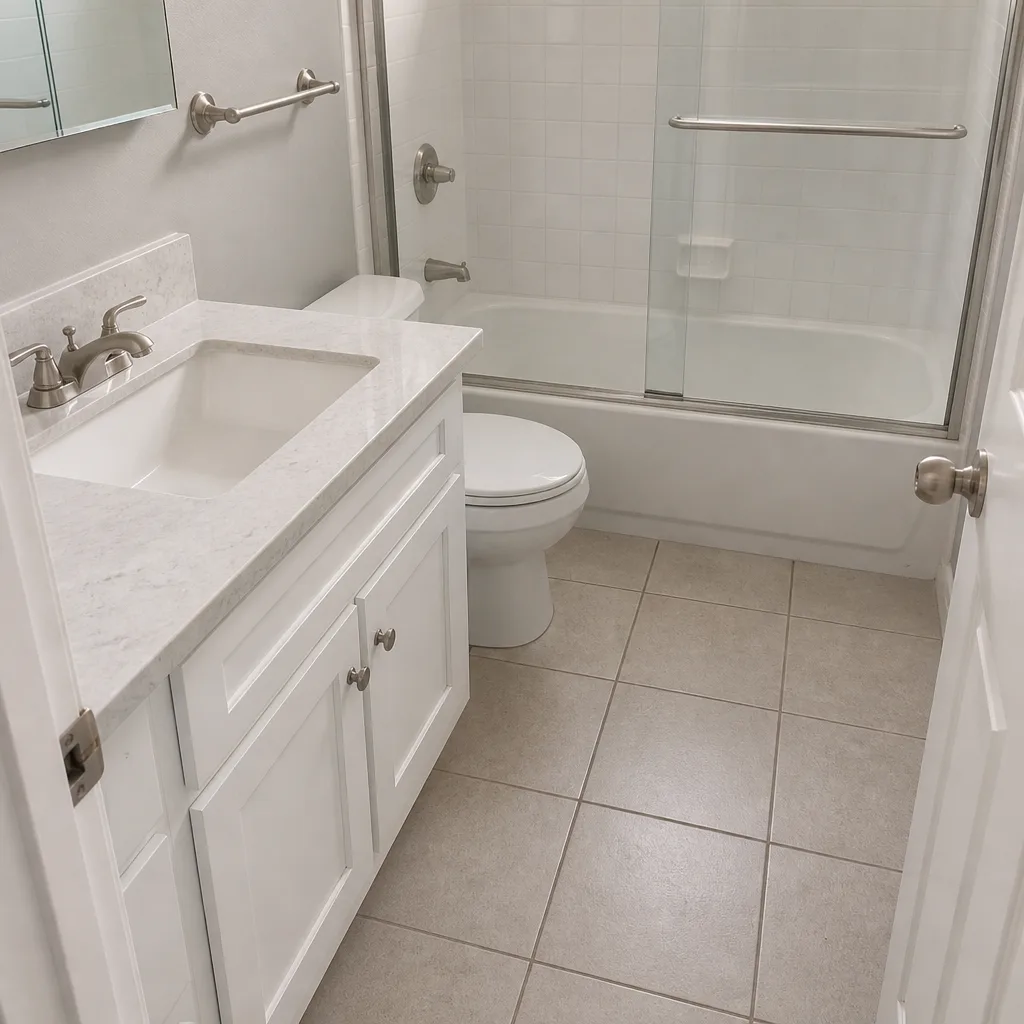 After
Frequently Asked Questions
A paver driveway in Fullerton typically costs $14 – $24 per square foot installed, or roughly $11,000 – $22,000 for a 500-square-foot two-car drive. The spread comes down to brand choice (Pavestone at the low end, Belgard premium at the top) and base depth, which varies by soil type. Call (844) 320-7095 for a written line-item quote – estimates are free.
It depends on whether you’re expanding impervious surface or changing drainage, not on the paver brand. Replacement in the same footprint with the same drainage often doesn’t require a permit, but footprint expansions, aprons, and re-routed drainage typically do, and the application needs a scaled site plan and impervious surface calculation. Call the Fullerton planning counter with your address for the definitive answer before you commit to a design.
On Fullerton’s Montebello clay, plan on 6 – 8 inches of compacted Class II aggregate base over a geotextile separator, compacted to 95% relative compaction. Hesperia sandy loam sites can sometimes use a shallower base, but compaction passes still matter. On sites where the base depth is unspecified in a bid, expect $2 – $4 per square foot of uncertainty in the final cost and in the driveway’s lifespan.
Polymeric sand is the correct default for an exposed Fullerton driveway. Standard jointing sand blows out under Santa Ana wind events and invites weeds; polymeric sand binds the joint and holds up better against seasonal movement. Techniseal HP2 and Alliance Gator Maxx both hold up well when installed correctly. Expect $0.80 – $1.50 per square foot installed for the upgrade.
Not with a properly written quote. Under Clause 1 of the Haven Standard, the price is written before the work begins, and no change proceeds without a signed change order. That discipline has kept our projects within a few percent of the agreed cost across thousands of jobs. If a contractor won’t put the compaction spec, material brand, and base depth in the written quote, that’s the moment to walk.
A standard 500-square-foot driveway typically takes 3 – 6 working days: 1 – 2 days for demo and excavation, 1 – 2 days for base prep and compaction, and 1 – 2 days for pavers and jointing. Permit review is a separate timeline. Sites with tight access, deep excavation, or complex drainage run longer. Call (844) 320-7095 to schedule a free estimate and get a written timeline for your specific site.
The Bottom Line
Two decisions make or break a Fullerton paver driveway: base depth matched to actual soil, and jointing sand matched to actual climate. Everything else – brand choice, pattern, color, price – is downstream of those two. Montebello clay and Hesperia sandy loam demand different base engineering, and the $2 – $4 per square foot that gets spent on it is the difference between a driveway that lasts 30 years and one that’s rocking by year four. Read bids line by line, insist on written compaction specs, and treat polymeric sand as the default, not an upgrade. For neighbors comparing contractors in Fullerton, our home page covers how we quote every trade – and for projects in the surrounding area, see our guides to Driveway & Pavers in Newport Beach and Home Additions & ADU in Newport Beach for the coastal-versus-inland distinctions.
Related Guides
If your driveway project sits next to a fencing job, our Fence Installation in Newport Beach guide walks through the site prep and material selections that pair well with paver installation. For an overview of every trade we offer – kitchen and bathroom remodeling, roofing, windows and doors, fence installation, and home additions including ADUs – visit the Rowan Construction Group Fullerton home page. Our roofing work uses GAF and Owens Corning systems on Fullerton homes, and the same written-price and signed-change-order discipline applies to every trade we quote.
Get a Free Written Estimate in Fullerton
The best way to know what your driveway will actually cost is to have the base, material, labor, and permit line items written down for your specific site. Call Rowan Construction Group Fullerton at (844) 320-7095 for a free estimate. Bring a competitor’s quote if you have one – we’ll review it line by line at no charge and tell you where the differences live. Every job we quote comes with a written scope, a written warranty, and the 365-Day Done Right Promise. Call today to schedule.
Written by the team at Rowan Construction Group Fullerton.