Last updated November 18, 2026



Free written scope consultation - allowances, timeline, and change-order rules on paper before a single trade is scheduled
DIY vs Professional Construction: The Fullerton Homeowner’s Decision Guide
Here’s the part most DIY guides leave out. A Fullerton homeowner who wires a bathroom circuit without a permit isn’t just risking a fine. They’re creating a material defect disclosure item that their real estate attorney will flag at every future sale of that property until the work is either retroactively permitted and inspected or torn out. The cost of getting it wrong doesn’t arrive as a citation. It arrives years later, on a transfer disclosure statement, when a buyer’s inspector finds the open junction box you forgot about.
This guide treats the DIY versus professional question honestly: not as a skills test, but as a question of permit exposure, liability transfer, and resale paperwork. We’ll cover what California’s owner-builder permit actually allows, a trade-by-trade feasibility matrix, where DIY genuinely saves money in Fullerton and where it costs more, and how a hybrid model works when you want to self-perform the finishes. The goal is a decision you can defend to an inspector, a buyer, and your own insurance carrier.
Quick Answer
In Fullerton, DIY is a smart choice for finish painting, landscaping prep, and cosmetic tile work. It is a poor choice for framing, waterproofing, electrical, and plumbing, because those trades typically require a permit, sit behind a wall once finished, and create disclosure obligations under California Civil Code if done without one. The real dividing line is not skill. It is whether the work requires a permit and whether the mistake is visible after the fact.
Styles & brands we work with
- Kitchen remodeling
- Bathroom remodeling
- Home additions & ADU
- Roofing
- Windows & doors
- Driveway & pavers
- Fence
Table of Contents
- What California’s Owner-Builder Permit Actually Allows (and Restricts)
- The Fullerton DIY Feasibility Matrix, Trade by Trade
- Where DIY Saves Money in Fullerton vs. Where It Costs More
- How Your Insurance Responds to Unpermitted DIY Work
- The Resale Disclosure Problem Nobody Warns You About
- The Hybrid Model: Contractor Pulls Permits, You Do Finishes
- How Permits and Inspections Work in Fullerton
- Common Mistakes to Avoid
What California’s Owner-Builder Permit Actually Allows (and Restricts)
California lets a homeowner act as their own “owner-builder” on their primary residence. That means you can legally pull permits in your own name, hire your own subs, and skip the general contractor if you meet the rules. It sounds liberating. The rules are stricter than most DIY blog posts admit.
Here’s what an owner-builder permit legally allows:
- You can pull building permits for improvements on a residential property you own and intend to occupy.
- You can perform the work yourself or hire licensed subcontractors directly.
- You can serve as the responsible party for scheduling and passing inspections.
And here’s what it restricts:
- The property must be your primary residence, not a rental or investment property.
- You cannot sell, convey, or otherwise transfer the property within one year of completing the work without disclosing the owner-builder arrangement to the buyer in writing.
- You assume the general contractor’s liability for any worker safety issues, unlicensed subcontractors you hire, and warranty obligations on the work.
- Some lenders and title companies treat owner-builder projects differently at refinancing.
The resale limitation is the one most guides bury. California Business and Professions Code Section 7044 requires the one-year disclosure. But the practical effect lasts longer: an owner-built improvement that never passed final inspection becomes a discoverable defect for many years, regardless of the one-year disclosure window. In Fullerton neighborhoods like Sunny Hills and the historic tracts near downtown, where homes date back to the 1920s and 1950s, inspectors see a lot of owner-builder remodels from decades past. The paper trail matters for the next buyer, not just the current one.
The Fullerton DIY Feasibility Matrix, Trade by Trade
Not every trade is equal. The honest way to sort them is by three measures: does it require a permit, how high is the skill threshold, and what happens if it fails. Here’s how the trades sort for a typical Fullerton home:
Paint and Finish Work
Permit required: No. Skill threshold: Low. Cost of failure: Cosmetic. This is the safest DIY territory. Interior and exterior painting, staining, and trim work are legitimate avenues for saving. Fullerton’s dry summers and mild winters are forgiving to paint, and a homeowner with decent prep habits can match a professional result on a single room.
Landscaping Prep and Planting
Permit required: Usually no. Skill threshold: Low to moderate. Cost of failure: Cosmetic. Grading and drainage that changes water flow toward the foundation crosses into permit territory, but planting, mulching, and simple hardscaping are homeowner-appropriate. Fullerton sits on the edge of the Santa Ana River flood plain and clay-heavy soils in parts of the city drain slowly. Get the drainage design reviewed even if you self-perform the install.
Tile Work
Permit required: Cosmetic tile, no. Shower and wet-area tile, generally yes as part of a bathroom remodel. Skill threshold: Moderate. Cost of failure: Water damage, mold, subfloor rot. Tile on a backsplash is DIY-friendly. Tile in a shower is not, because the waterproofing membrane behind it is the actual system and it fails invisibly.
Drywall
Permit required: Only if part of a permitted scope that requires inspection. Skill threshold: Moderate. Cost of failure: Cosmetic to moderate. Hanging and finishing drywall is learnable. Blending a new wall into an existing textured wall in an older Fullerton home is where the amateur/Pro line shows up in the light.
Framing
Permit required: Yes. Skill threshold: High. Cost of failure: Structural. This is where DIY stops making sense. Framing errors don’t announce themselves until a load path fails or an inspector red-tags the wall. Fullerton homes built before 1960 often contain original framing that meets older code, and any new work has to tie into it correctly.
Electrical
Permit required: Yes, for anything beyond replacing a fixture or switch. Skill threshold: High. Cost of failure: Fire, injury, disclosure obligation. And here’s the safety caveat that matters: panel work, circuit additions, and anything involving the service entrance are genuinely dangerous. A live panel can kill you. This is not a DIY trade, and any guide that walks you through a panel change is giving bad advice.
Plumbing
Permit required: Yes, for relocating fixtures, new drains, or gas lines. Skill threshold: High. Cost of failure: Water damage, gas leak, disclosure obligation. Swapping a faucet or a toilet is within reach. Re-piping or moving a drain line is not, and gas work is a trained-professional-only area without exception.
Where DIY Saves Money in Fullerton vs. Where It Costs More
The intuition that DIY always saves money is wrong in a specific, predictable way. Here’s where the savings are real and where they hide.
Where DIY genuinely saves
- Finish painting: A single interior room runs roughly $400 to $900 professional, or $80 to $150 in materials for the DIY version. Over a full house refresh, the gap is $4,000 to $8,000.
- Landscaping prep and planting: Demolition, hauling, planting, and mulching save in the $1,500 to $3,500 range versus a full professional install.
- Cosmetic tile (backsplash, powder room floor): $500 to $1,200 saved on a small area.
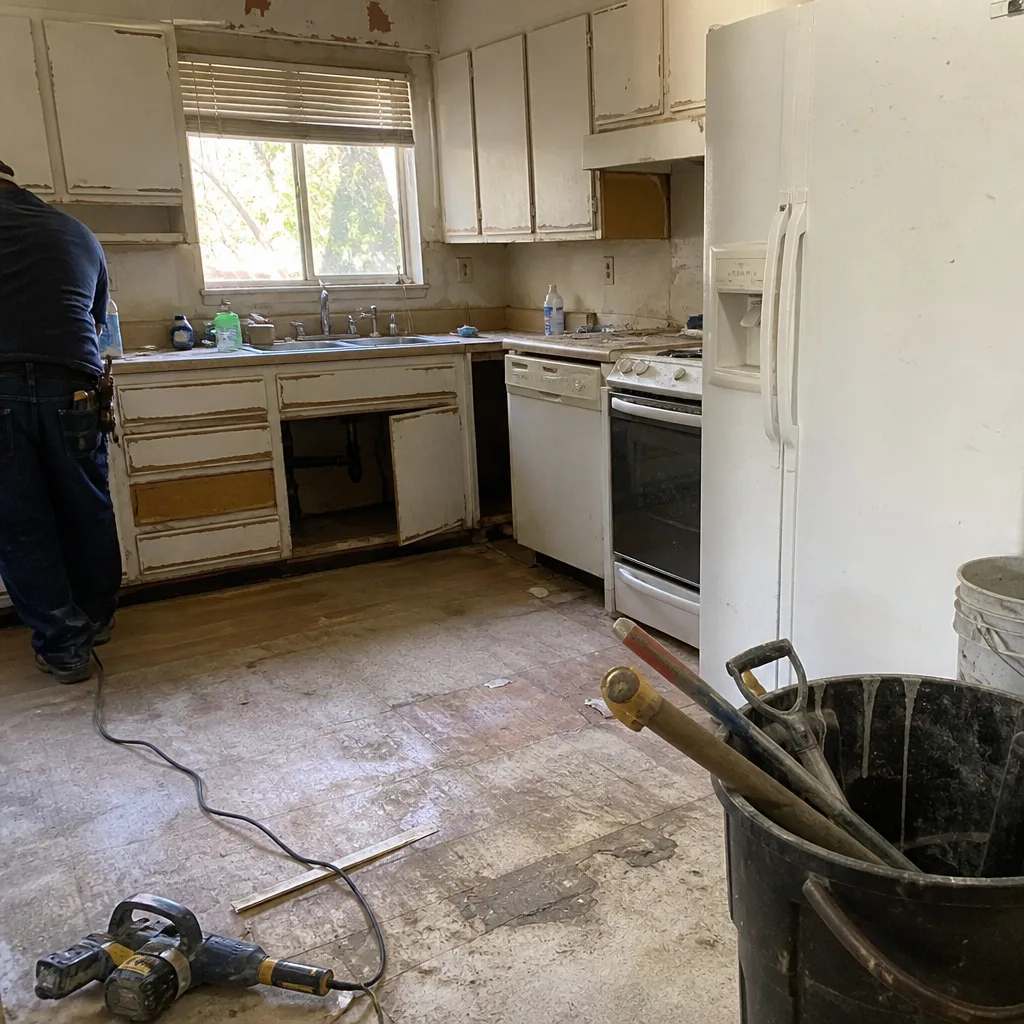
- Demolition and debris removal before a remodel: Pulling old cabinets, tile, and flooring yourself saves labor, provided the contractor approves the demo scope in writing first.
- Painting garage doors, fences, and trim: $300 to $800 saved per exterior element.
Where DIY costs more than it saves in Fullerton
- Framing: A single framing error can trigger a re-inspection, red tag, and redo, adding $3,000 to $8,000 to a project that started as a “quick” DIY job.
- Shower and wet-area waterproofing: A failed membrane means tearing out tile, subfloor, and sometimes the adjacent drywall. A $2,000 DIY shower becomes a $12,000 repair.
- Electrical: Corrections after a failed inspection easily run $1,500 to $4,000, and the failed wiring has to be removed and redone, not patched.
- Plumbing rough-in: Repairs after a failed drain test start around $1,200 and climb fast if the leak has been running behind a wall.
- Anything behind a wall: Once the drywall closes, every dollar of savings comes with the question of whether the work will be found.
Notice the pattern. The trades where DIY savings are real are the ones where the mistake is visible and fixable. The trades where DIY costs more are the ones where the mistake hides. That’s the line, and it’s worth defending in your own project planning, whether you’re refreshing a 1950s ranch in Fullerton or adding a bathroom in a newer build.
How Your Insurance Responds to Unpermitted DIY Work
Homeowner policies in California typically respond to accidents. They respond differently when the accident traces to work that was never permitted or never inspected.
Most standard Orange County homeowner policies contain language along these lines: the policy covers sudden and accidental water damage from a plumbing system, but excludes damage from work that was “improperly installed” or that failed to meet “building code or ordinance.” The specific exclusions vary by carrier and by policy form, but the pattern is consistent. If your DIY shower pan fails and the resulting water damage reaches the framing, the carrier will ask who installed it and whether a permit was pulled. If the answer is “me, no permit,” coverage is at risk.
Here’s what that looks like in practice:
- Fire from an unpermitted electrical circuit: Most policies exclude fire damage caused by code violations or unpermitted work, and the burden is often on the homeowner to prove the work was compliant.
- Water damage from a DIY plumbing rough-in: Sudden damage from pipe failure is usually covered. Gradual damage from a slow leak is usually not, and the adjuster’s report will note whether the installation was permitted.
- Structural collapse from improperly removed walls: Very likely excluded. Deleting a load-bearing wall without an engineer’s sign-off is one of the clearest paths to a denied claim.
- Damage caused during DIY work to a neighbor’s property: Still covered under the liability section of most policies, but the claim will follow you at renewal.
The safest way to keep coverage intact on any renovation is to have a licensed professional pull the permit and pass the inspection. That creates a paper trail the carrier can read. It’s also why we recommend a written second opinion on any existing estimate before work starts – a line-by-line review catches scope gaps that show up later as change orders or insurance disputes.
The Resale Disclosure Problem Nobody Warns You About
California’s transfer disclosure statement requires a seller to disclose “any significant defects or malfunctions” in the property, and that includes material defects in permitted or unpermitted work. The disclosure follows the property, not the owner who performed the work. If a Fullerton homeowner DIYs a bathroom electrical circuit without a permit, the disclosure obligation transfers with the deed.
There are three practical consequences:
- The buyer’s inspector will find it. Modern home inspections catch unpermitted work with surprising regularity – open junction boxes, missing GFCI protection, and shower pans that weren’t properly waterproofed show up in inspection reports routinely.
- The buyer’s lender may require corrections. If the property goes into escrow with a mortgage, the appraiser or underwriter can flag unpermitted work and require it be brought into compliance before closing.
- Your real estate attorney will flag it. If the disclosure isn’t made and the buyer later discovers the issue, the exposure is not just the cost of the repair. It’s the cost of a lawsuit about what you knew and when you knew it.
The cleanest defense is documentation. A permit, an inspection record, and a written scope of work with a warranty are what separates a well-maintained Fullerton home from one that becomes a negotiating discount at sale. In our experience across thousands of projects, the disclosure question doesn’t fade with time. It just gets more expensive.
The Hybrid Model: Contractor Pulls Permits, You Do Finishes
You don’t have to choose between full DIY and a full professional remodel. The hybrid model is legitimate, common in Fullerton, and worth structuring carefully.
Here’s how a hybrid project typically runs:
- The licensed contractor pulls the permits in their name and assumes liability for the structural, electrical, plumbing, and mechanical scopes.
- The contractor handles the rough-in – framing, plumbing, electrical, insulation – and schedules the inspection sequence, which typically requires multiple intermediate inspections.
- The homeowner self-performs finish tasks – paint, landscaping, cabinet installation if you’re comfortable, decorative tile, light fixture swapping.
- The contractor returns for final inspection and signs off on the completed scope.
- The homeowner receives a written scope document that records which tasks the contractor performed and which tasks the homeowner performed, which matters for future resale.
The contractor’s liability policy almost always requires this arrangement to be documented in writing. If the homeowner’s finish work causes a defect that requires the contractor to return, the contractor’s insurer will ask whether the defect was within the contractor’s scope. A clear written scope protects both parties.
This is where a written price and a written scope carry the project – not enthusiasm, not a verbal agreement over the phone. If you’re considering an addition or an ADU on your Fullerton property, the hybrid model is often the most cost-effective path, and you can see how we structure it in our Home Additions & ADU in Newport Beach work.
How Permits and Inspections Work in Fullerton
Fullerton’s building department is diligent and reasonably fast, but it doesn’t skip steps. The sequence for a typical remodel looks like this:
- Pre-application review – larger additions and second-story work typically require a plan check before any permit issues.
- Permit application with plans, a scope of work, and structural calculations if applicable.
- Rough inspection after framing, plumbing, and electrical are in but before insulation and drywall go up.
- Intermediate inspection after insulation and drywall, before or during finish work.
- Final inspection after all finishes, fixtures, and systems are complete, which is what generates the sign-off that matters at resale.
Fullerton homes near the historic districts often trigger extra review if the project changes the exterior envelope or the streetscape. The Fullerton Planning Department is friendly about pre-submittal meetings, and if you’re considering an exterior addition, one of those meetings is worth the hour.
Common Mistakes to Avoid
- Assuming cosmetic work needs no permit. Cosmetic work usually doesn’t, but replacing a shower or moving a vanity drain does. The Fullerton building department’s counter will tell you which category your project falls into; guessing is unnecessary.
- Pulling an owner-builder permit for a flip or rental. The owner-builder exception is for primary residences. Using it on a property you don’t live in creates a false declaration on the permit.
- Forgetting the one-year resale disclosure. California Business and Professions Code Section 7044 applies to owner-builder work. Sellers who skip this open themselves up to a claim years later.
- Hiring unlicensed subs directly. As owner-builder, you become the general contractor and therefore the party liable for the subs’ work and worker safety. The savings vanish if there’s an injury or a lien.
- Skipping the independent inspection before drywall closes. The rough-in stage is when defects are exposed and cheap to fix. Once the wall is up, they become a demolition project.
- Self-performing wet-area waterproofing on a tile shower. This is the single costliest DIY mistake we see in older Fullerton homes. The membrane is invisible, the failure is invisible, and the repair is not.
- Not documenting the split of work in a hybrid project. Without a written scope, the contractor’s insurance and yours will each point at the other party when a defect surfaces.
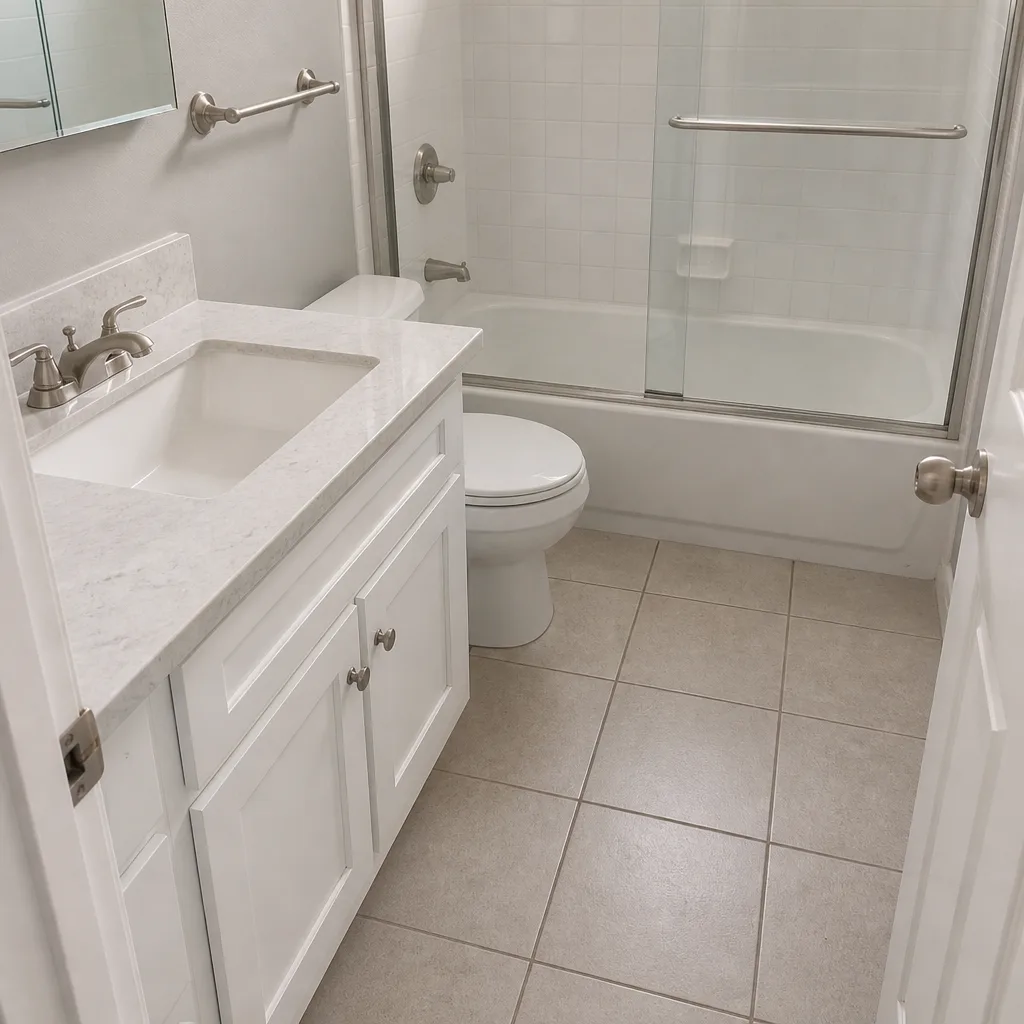
See the difference
 Before
 After
 Before
 After
 Before
 After
When to Call a Professional
Call a licensed professional when the work requires a permit, when the work goes behind a wall, or when the cost of failure is structural. In practical terms for a Fullerton homeowner, that means framing, electrical, plumbing, HVAC, gas lines, roof structure, foundation, and any wet-area waterproofing. These are the trades where the safety caveat is genuine – a live electrical panel, an open gas line, and a decompressed structural load are not learning experiences you want to have.
For finish painting, landscaping, cosmetic tile, and cabinet installation, the DIY path is legitimate, and the savings are real. The balance usually comes down to a question worth asking early: does this project need a paper trail I can hand to a buyer? If yes, the licensed path is the one worth taking. Rowan Construction Group Fullerton offers free estimates in Fullerton – call (844) 320-7095.
Frequently Asked Questions
Yes, if the work touches plumbing, electrical, or structural systems. Cosmetic tile, paint, and fixture swaps typically don’t require permits, but replacing a shower pan, moving a drain, or adding a circuit does. Call the Fullerton building department’s permit counter or a licensed contractor to confirm your specific scope before you start.
Yes, on your primary residence as an owner-builder. The restrictions are real: the property must be owner-occupied, you cannot sell within one year without disclosing the owner-builder arrangement, and you assume the general contractor’s liability for worker safety and subcontractor work. A written scope and a licensed contractor on the structural and mechanical scopes both protect you.
Sometimes. Standard Orange County homeowner policies typically exclude damage caused by code violations, improperly installed components, or gradual leaks. Sudden accidental damage is usually covered, even from unpermitted work, but the carrier’s adjuster will note whether the installation was permitted. Check your own policy’s exclusion language before you start a project.
You must disclose it under California’s transfer disclosure requirements. The buyer’s inspector and lender can require corrections before closing, and the exposure follows the property, not just the seller who did the work. Retroactive permitting or a tear-out is the cleanest fix, and both are more expensive after the fact than pulling the permit in the first place.
Yes, and this is the standard hybrid model. The licensed contractor pulls the permit and handles structural, electrical, and plumbing scopes, and the homeowner handles paint, tile, and Landscaping. Get the split documented in a written scope – the contractor’s insurance policy usually requires it, and it protects both parties if a defect surfaces later.
A mid-range full bathroom remodel in Fullerton runs roughly $22,000 to $45,000 depending on the size, finish level, and whether the plumbing layout moves. A cosmetic refresh with new tile, fixtures, and paint runs $8,000 to $15,000. Call (844) 320-7095 for an exact quote – estimates are free, and we provide a written price before any work starts.
The Bottom Line

The DIY versus professional decision in Fullerton is not primarily about skill. It’s about permit exposure, liability transfer, and resale disclosure. Do the finish work yourself when the mistake is visible and cheap to fix. Hire a licensed professional when the work requires a permit, hides behind a wall, or can fail in a way that follows the property. The hybrid model is the smart path for many Fullerton homeowners, provided the split is in writing and the contractor pulls the permits. If you’re considering a project that crosses the line, start with a free written estimate rather than a verbal one.
Call Rowan Construction Group Fullerton at (844) 320-7095 for a free estimate. We put the price in writing before anyone picks up a tool, and we’re happy to review a competitor’s quote line by line at no charge. If your project pairs with an exterior scope, you can also see how we handle your Fullerton home, Driveway & Pavers in Newport Beach, and Fence Installation in Newport Beach.
Written by the team at Rowan Construction Group Fullerton.