Last updated November 18, 2026



Free written scope consultation - allowances, timeline, and change-order rules on paper before a single trade is scheduled
Fence Installation Warning Signs Every Homeowner Should Know
The most common fence installation problem in California – a contractor who takes the deposit and disappears – is almost always preceded by a quote with no line-item material spec and no CSLB license number. The paper trail exists before a single post goes in. Most homeowners don’t read it, because the numbers look fine and the contractor seemed friendly. In our experience reviewing written estimates for Fullerton homeowners, the same three omissions show up on the bids that go wrong: no license number, no brand-and-grade material callout, and no permit line. This guide teaches you to read a fence bid the way an inspector reads a structure – line by line, before work starts.
Quick Answer
The clearest fence installation warning signs live in the quote, not the finished fence: a missing CSLB license number, vague material descriptions like “cedar fence” instead of a named grade and dimension, no post-depth or concrete spec, and no permit line item. If any of those four are absent, treat the bid as a warning regardless of how low the price is. A written quote with those four items present is the single best predictor that the job finishes where it started.
Styles & brands we work with
- Kitchen remodeling
- Bathroom remodeling
- Home additions & ADU
- Roofing
- Windows & doors
- Driveway & pavers
- Fence
Table of Contents
- 1. How to Read a Fence Quote Like an Inspector
- 2. What a Legitimate Fence Quote Must Contain
- 3. Why a Missing Permit Line Is a Structural Warning
- 4. How to Verify Insurance Is Current (Not Just a PDF)
- 5. Payment Schedule Red Flags in California
- 6. What to Inspect Within 30 Days of Installation
- 7. Fullerton-Specific Fence Problem Signs
How to Read a Fence Quote Like an Inspector
A fence bid is a document that either protects you or exposes you, and the difference is entirely in what’s written down. When we review an estimate for a Fullerton homeowner, we read it in four passes. First, the header: contractor name, CSLB license number, address, and the date. Second, the scope: total linear feet, fence height, material named by brand and grade, and gate count. Third, the structural spec: post spacing, post depth, post diameter, and concrete mix. Fourth, the terms: deposit amount, payment schedule, permit responsibility, and warranty language.
Most homeowners only compare the bottom line. That’s the mistake. Two bids for the same 120 linear feet can land $1,800 apart and only one of them is honest – the cheaper one often excludes haul-away, gate hardware, or the permit, or specs a thinner post that won’t survive a Fullerton summer without bowing.
Here’s the read-it-in-this-order method we suggest to every homeowner:
- Find the CSLB license number. If it’s not on the page, stop reading and look it up another way before you engage.
- Circle every material description. If any line says “wood fence” or “cedar” without a grade and dimension, that’s the vague line that will get downgraded later.
- Look for a post-depth number. Industry standard for a 6-foot privacy fence in Southern California soil is 24 to 36 inches depending on wind exposure.
- Check the concrete line. A specific mix (like a 3,000 PSI bag mix) tells you the contractor thinks about set time and cure. A blank line tells you they don’t.
- Find the permit line. If it isn’t there, ask who’s pulling it. If the answer is “you don’t need one,” that’s a Fullerton-specific warning – the city has height limits and setback rules that apply to most replacements.
This is the reading method a structural inspector would apply to the fence itself in a year. You’re applying it in an hour. Our Rowan Construction Group Fullerton home page describes how every written quote we deliver follows the same document structure, on every trade, before anyone picks up a tool.
What a Legitimate Fence Quote Must Contain
Every fence quote worth signing has the same five elements, and any of them missing is a reason to ask questions before you sign. Not “maybe sign” – ask, and get the answer in writing on the quote itself, not in a text message that disappears.
The five non-negotiable line items:
- CSLB license number – The California State License Board issues contractor licenses and the number must appear on any bid over $500. You can verify it on the CSLB website in under a minute. A contractor who leaves it off is either unlicensed or inexperienced enough not to know the rule. Neither is a good sign.
- Named material brands and grades – The quote should say something like “1×6 dog-ear Western Red Cedar, #1 grade” or “Boral composite, Chardonnay profile.” Not “cedar fence.” Not “composite.” The grade (#1 vs. #2) alone can shift the material cost by 20% and the lifespan by five years. We source from over fifty vetted brands across our trades, and a fence bid we write names the exact brand, profile, and grade for each line – the same discipline applies whether the material is Boral composite or a Western Red Cedar plank.
- Post depth and spacing specification – “4×4 posts 24 inches deep set in 3,000 PSI concrete, spaced at 8 feet on center” is a spec. “Posts installed to code” is a promise with no number behind it.
- Concrete mix specification – Fast-set vs. bag mix vs. ready-mix changes cure time, which changes how long the fence can’t be touched. It also matters for sandy Fullerton soils where drainage is uneven.
- Gate hardware and swing direction – Self-closing hinges, latch type, and gate height are all line items. If they’re not listed, they’re either cut from the final invoice or downgraded to a $12 spring latch that fails in a year.
If you’re installing a fence as part of a larger exterior project – a new driveway leading up to a new fence line, for example – the same discipline applies. See our page on Driveway & Pavers in Newport Beach for how a written spec changes a hardscape bid.
Why a Missing Permit Line Is a Structural Warning
A quote with no permit line is not a paperwork oversight. It’s a structural warning, and in Fullerton it’s often a warning that the contractor plans to skip the permit and hope nobody notices. The consequence is on you, the property owner, not the contractor. If the fence is reported or discovered during a later inspection, the city can order it removed at your cost – no matter who built it.
Fullerton, like most Orange County cities, regulates fence height by zone. Front-yard fences generally cap at 42 inches in most residential zones, and rear and side yard privacy fences cap at 6 feet unless an encroachment permit or variance is approved. A 7-foot fence in the wrong place is a code violation regardless of how well it was built. Replacements in the same footprint are usually exempt, but new fence lines, height changes, and corner-lot configurations often need a permit. The contractor who knows this will have a permit line on the quote.
The three questions to ask when a permit line is missing:
- Will this fence require a permit under Fullerton’s height and setback rules for my zone?
- If yes, who is pulling it, and will it appear on the written quote as a line item?
- If no, what is the exemption that applies, and can I have it in writing?
An honest contractor answers all three in five minutes. A contractor who deflects, or says “we don’t bother with permits for fences” is telling you exactly how the rest of the job will be run.
How to Verify Insurance Is Current (Not Just a PDF)
Any contractor can email you a certificate of insurance. Some of them email you a certificate that expired eight months ago. The only way to know it’s current is to call the insurer directly, using the phone number on the certificate – not the number the contractor gives you. That’s the whole test, and it takes four minutes.
Here’s the verification process we recommend to every homeowner who asks:
- Ask for both certificates. General liability insurance and workers’ compensation insurance are separate policies. A fence crew of two needs both. If any crew member is an employee (not a 1099 subcontractor), workers’ comp is legally required in California.
- Read the certificate for expiration dates. Certificates typically expire annually. Look at the effective date and the expiration date, and confirm today’s date falls inside.
- Look for the “Certificate Holder” field. If your name and address aren’t listed, ask the contractor to update it – it takes them one email.
- Call the insurer. The number is on the certificate. Ask them: “Is this policy active today, and does it cover fence installation work at my address?” If the insurer doesn’t confirm, the certificate is either stale or fake.
- Ask for a waiver of subrogation. It’s a line that protects you if the insurer pays a claim related to your property. Many contractors don’t offer it unless you ask.
Rowan Construction Group Fullerton crews arrive background-checked and uniformed, and every crew member’s credentials are verified before they’re dispatched – but the insurer call is still worth four minutes of your time on any bid, ours included. If a contractor gets defensive at the insurer call, that’s the warning sign.
Payment Schedule Red Flags in California
California’s contractor license law puts a hard cap on deposits for home improvement contracts: no more than 10% of the contract price or $1,000, whichever is less. That single sentence eliminates half the fence scams in the state. If a contractor asks for a 50% deposit before materials are delivered, they are either breaking the law or about to break it.
Here’s the payment schedule any legitimate fence quote should follow:
- Deposit: capped at 10% of the contract total or $1,000, whichever is less. This covers materials ordering and permit filing.
- Progress payment (optional): only after materials are delivered to your address. You should see the lumber, posts, and hardware before a check moves.
- Substantial completion payment: the bulk of the balance, paid when the fence is standing, gates swing, and cleanup is done.
- Final payment: a small holdback released after your 30-day inspection (more on that below).
Red flags that end the conversation:
- “We need 50% down to hold your spot.” No legitimate fence contractor needs a 50% deposit – and holding a spot is urgency theatre, not a real constraint.
- “Cash only, no receipt.” Every legitimate payment leaves a paper trail.
- “The deposit is for materials, but we don’t do progress payments.” If materials are on your property, you can see them. If you can’t see them, the deposit isn’t for materials.
- “Sign this waiver so we can start today.” No waiver should be signed on a fence contract the day it’s presented.
Every Rowan written price is a flat price with a written scope and written warranty, and no work proceeds on a change until a signed change order is on file – Clause 1 of the Haven Standard, and the reason our projects finish within a few percent of the agreed number.
What to Inspect Within 30 Days of Installation
The 30-day window after a fence goes up is when workmanship defects show themselves. Wood shrinks as it cures. Concrete cures and settles. Gates that swung smoothly on day one begin to bind on day thirty. If you don’t inspect during this window, most fence warranties still cover the defect – but you lose the leverage of the punch list.
Here’s the inspection checklist we use on every Rowan fence installation, and the one we recommend to homeowners on any fence:
- Post plumb. Hold a 4-foot level against each post. Industry tolerance is 1/8 inch of deviation per 4 feet of height. A post that leans more than that will lean further with every wet season.
- Panel gap consistency. Walk the fence line. Pickets should have even gaps – typically 1/4 to 1/2 inch depending on the design. One uneven gap is a data point; a repeating pattern means the posts are off-spacing.
- Gate swing. Open and close the gate slowly. It should swing through its full arc without binding and latch with a single push. Binding by day 30 usually means the hinge post has shifted, which means the concrete didn’t cure properly or the post wasn’t set deep enough.
- Post-top stability. Push each post from the side with about 30 pounds of pressure. A correctly set post shouldn’t move. Any wobble is an early sign the concrete is failing.
- Hardware security. Check that all fasteners are galvanized or stainless (not electroplated), that every hinge screw is fully seated, and that the latch is aligned with the strike plate.
- Ground clearance. The bottom rail should be 2 to 4 inches above grade so the wood doesn’t wick moisture. Fences that sit on the dirt in Fullerton’s dry climate still absorb moisture from morning irrigation.
Take dated photos on day one and day thirty. Every Rowan visit includes a documented photo record as a standard deliverable, not an add-on – so you’ll have the day-one set in hand before we leave.
Fullerton-Specific Fence Problem Signs
Some fence warning signs are universal. Others are specific to Fullerton’s climate and housing stock. Fullerton’s older neighborhoods – the bungalows near downtown, the mid-century tracts off Chapman Avenue, the hillside properties toward Hillcrest Park – have three fence conditions that show up over and over.
- Dry-rot at the base, not the top. Fullerton’s evening marine layer keeps the ground plane moist through much of the year while the sun bakes the upper fence. The base of an old fence rots before the top does. If a contractor’s quote doesn’t address post replacement at the base specifically, they’re planning to reuse your rotted posts – which will fail within two summers.
- Sandy soil and shallow posts. The sandy alluvial soils in parts of Fullerton don’t hold a shallow post the way clay does. This is why the 24-36 inch depth spec matters here more than it does elsewhere in Orange County. A 20-inch post in sandy soil will lean in the first Santa Ana wind event.
- Height limits on corner lots. Fullerton corner lots face two streets, which means two front-yard setbacks and sometimes two height limits. A contractor who shows up ready to install 6-foot fence on a corner lot without checking the sight-line triangle at the intersection is signaling they don’t handle the permit.
- Shared property lines. Many Fullerton lots still have the old block-wall dividing line with a wood topper. Replacements have to respect the wall’s structural capacity as a footing. If the bid doesn’t mention the block wall, ask how the new posts will be anchored.
Whether you’re replacing a fence line or planning a larger exterior renovation around it – a new fence line paired with a Home Additions & ADU in Newport Beach project, for example – the paperwork discipline is the same. See Fence Installation in Newport Beach for how we approach the coastal-corrosion side of the same problem.
Common Mistakes to Avoid
- Signing a bid that quotes “wood fence” without grade or dimension. The word “wood” isn’t a spec. It’s a placeholder the contractor will downgrade at the lumber yard. In Fullerton, that means #2 cedar at best, sometimes Douglas fir for a “cedar” fence line.
- Accepting a PDF insurance certificate as proof. Certificates expire and some are never updated. Call the insurer using the number on the certificate – four minutes, no exceptions.
- Ignoring the permit line because the fence is “just a replacement.” Fullerton replacement exemptions are real, but they depend on the fence staying inside the original height and footprint. Change either, and you may need a permit. Get the answer in writing.
- Paying a 50% deposit to “hold” a spot. California caps the deposit at 10% or $1,000, whichever is less. Any contractor who asks for more is either ignorant of the law or breaking it. Neither should build your fence.
- Skipping the 30-day inspection. Most defects – plumb drift, gate binding, panel gap inconsistency – show up between week two and week four. The 30-day window is the window you have the most leverage.
- Letting a contractor talk you out of written change orders. “We’ll figure out the extra cost at the end” means the extra cost is whatever they decide when the fence is already half up.
- Not asking about the old fence disposal. Haul-away is a line item. When it’s missing, you’re often the one driving the old panels to the transfer station, which is a 3-hour project in Fullerton traffic.
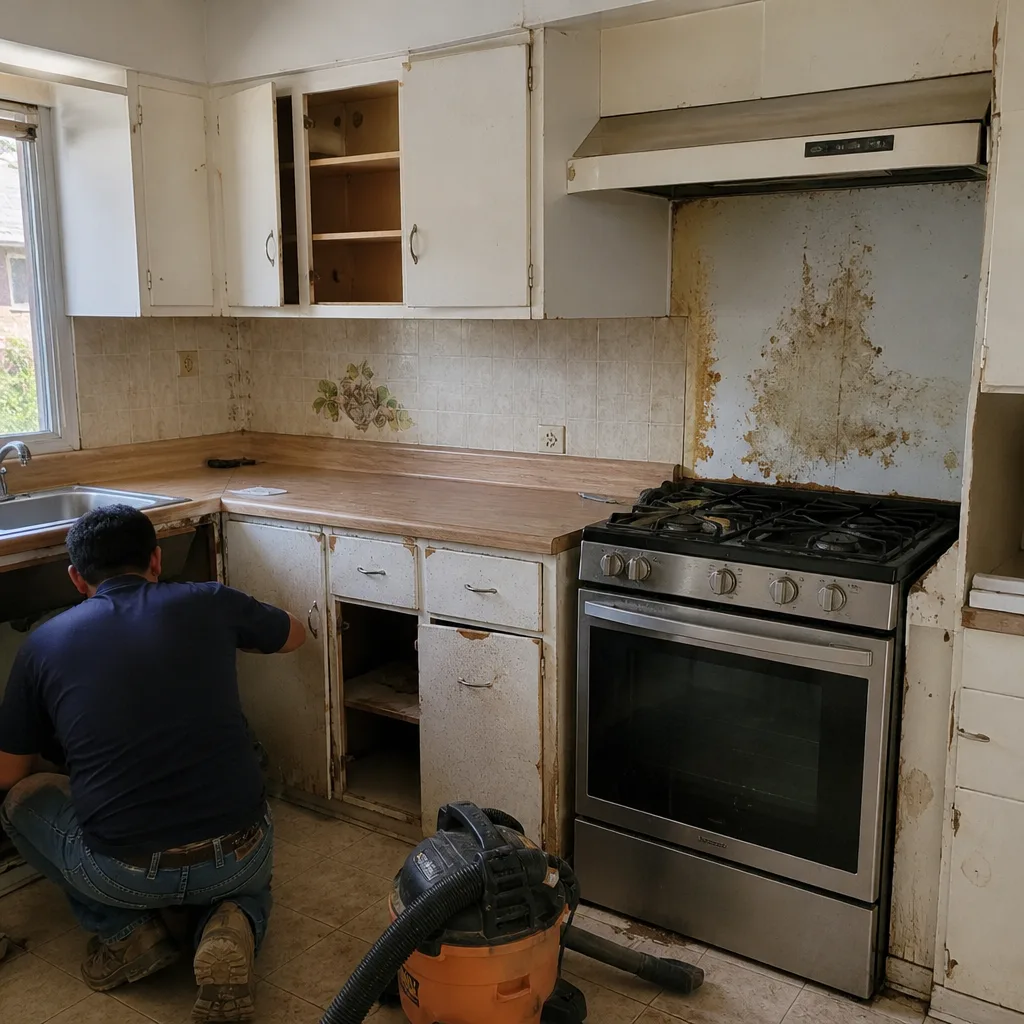
See the difference
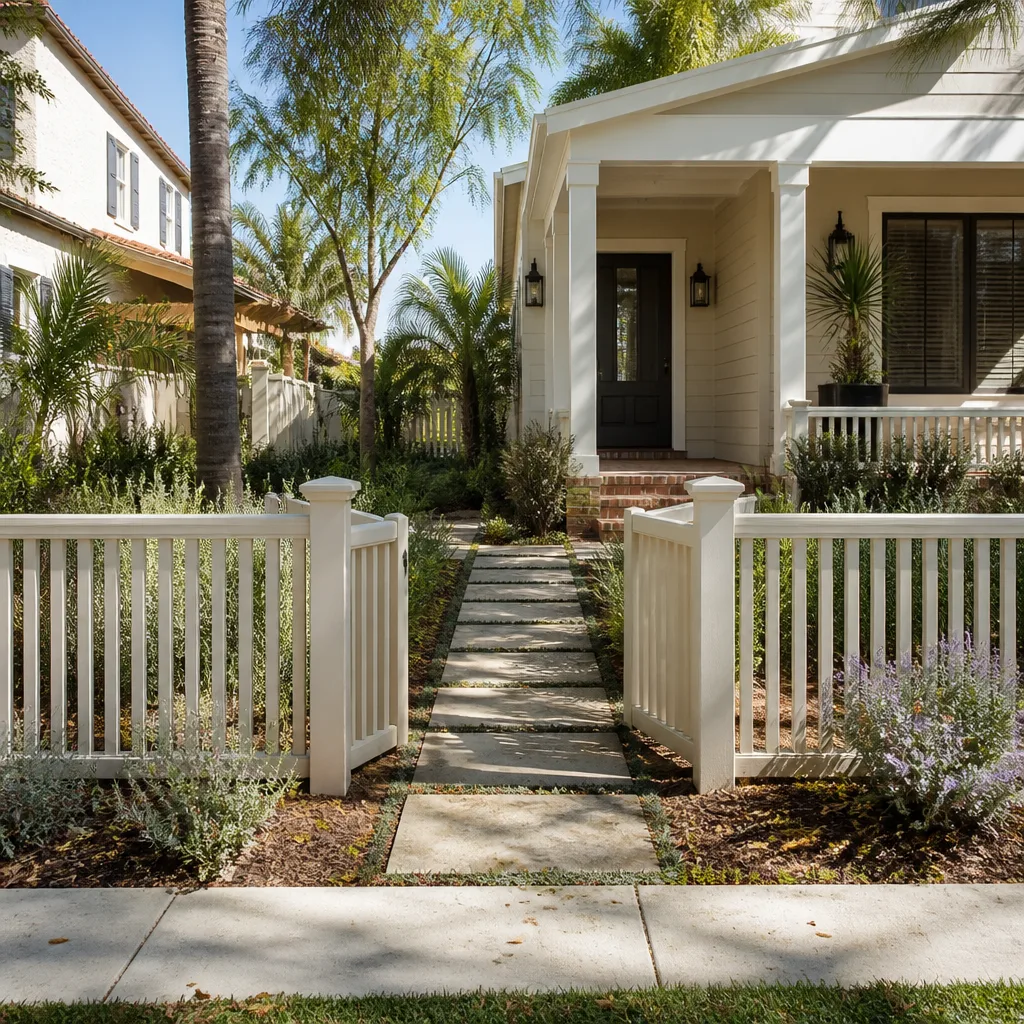
 Before
 After
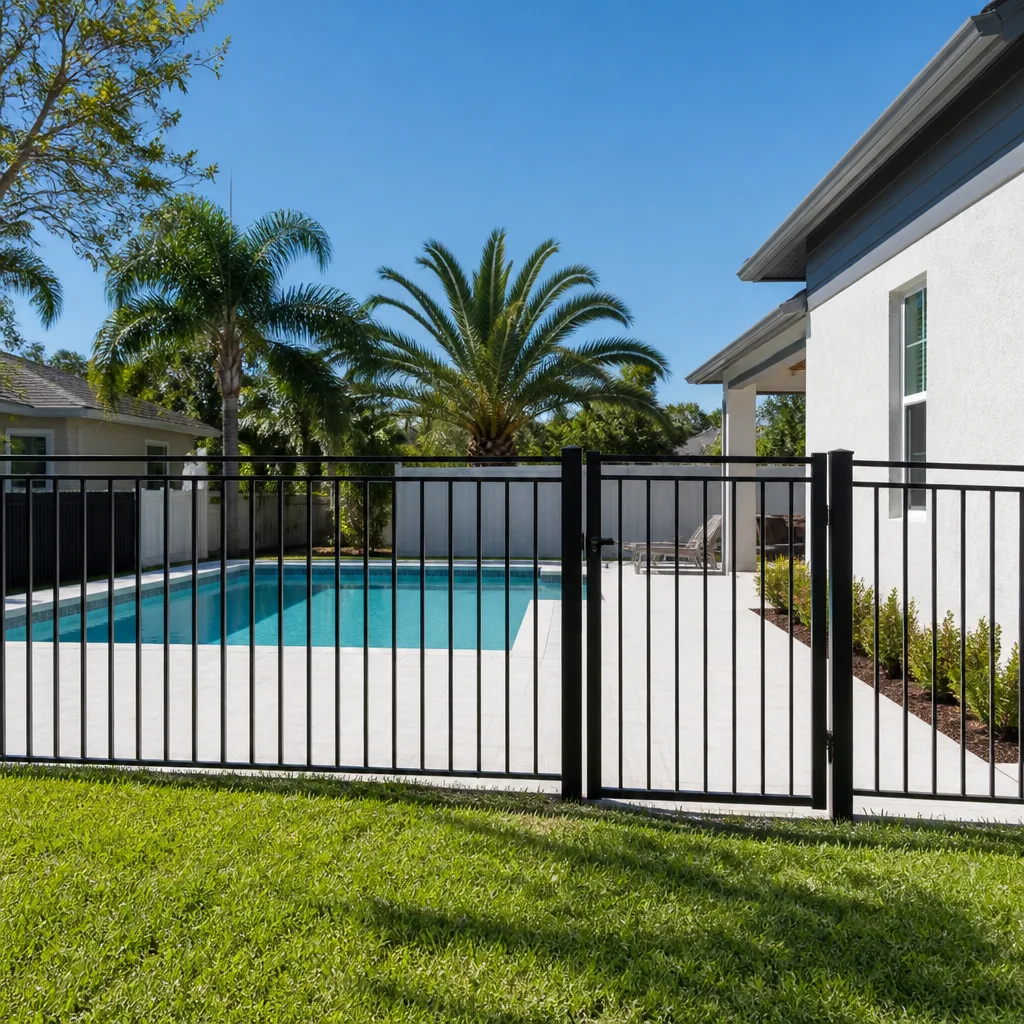
 Before
 After
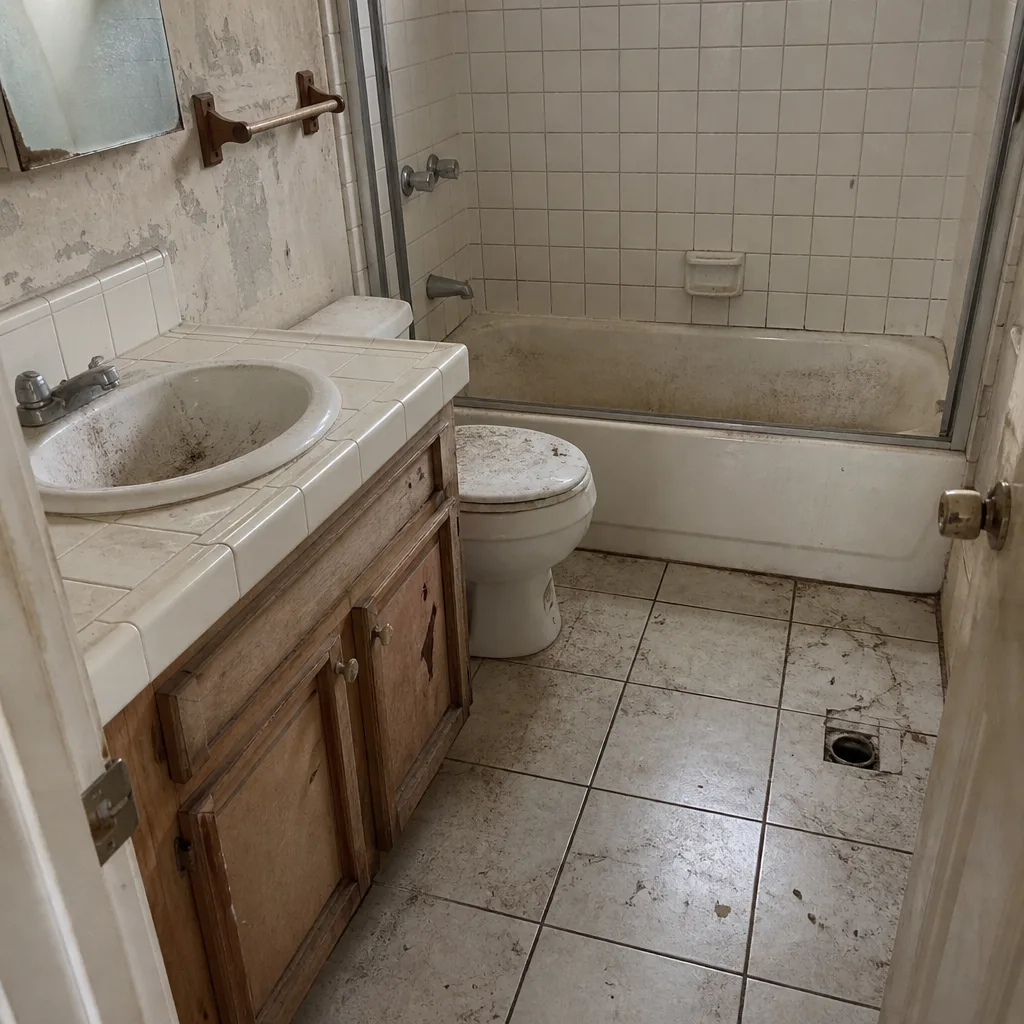 Before
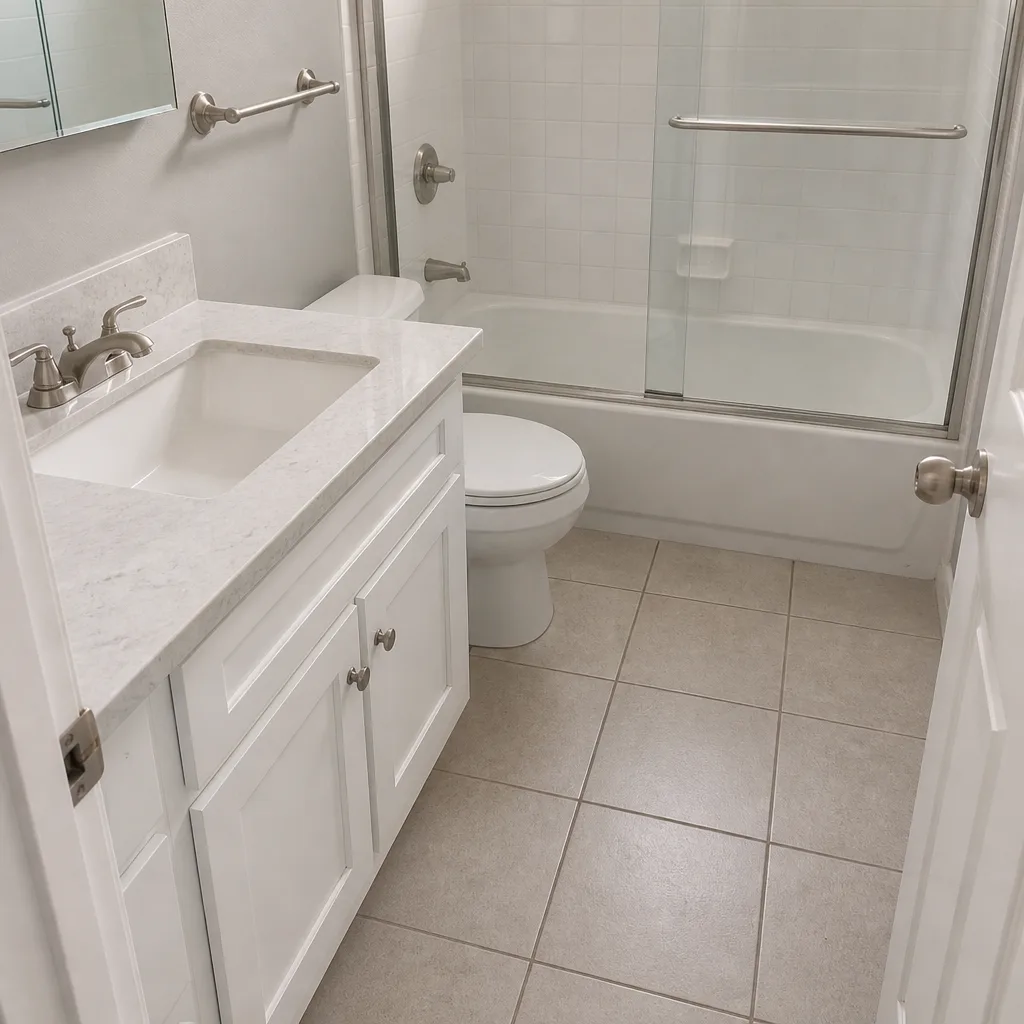 After
When to Call a Professional
There are fence installations a determined homeowner can manage – a short side-yard panel on flat, clear ground with permits already in hand. There are many more that should be handled by a licensed contractor: any fence over 6 feet, any shared property line, any fence on a sloped lot toward Hillcrest Park, any fence requiring a permit under Fullerton’s height rules, any fence with a gate on an active driveway, and any fence line within reach of overhead utilities. The consequences of a bad install – post lean, gate binding, code violations that require removal at your expense – are all more expensive to fix than to prevent.
Rowan Construction Group Fullerton offers free estimates in Fullerton – call (844) 320-7095. Every Rowan quote is a flat written price with a written scope and written warranty, backed by the 365-Day Done Right Promise: if it isn’t done right, we make it right. We’ll also review any competitor’s written estimate line by line, at no charge, through our Free Second Opinion offer.
Frequently Asked Questions
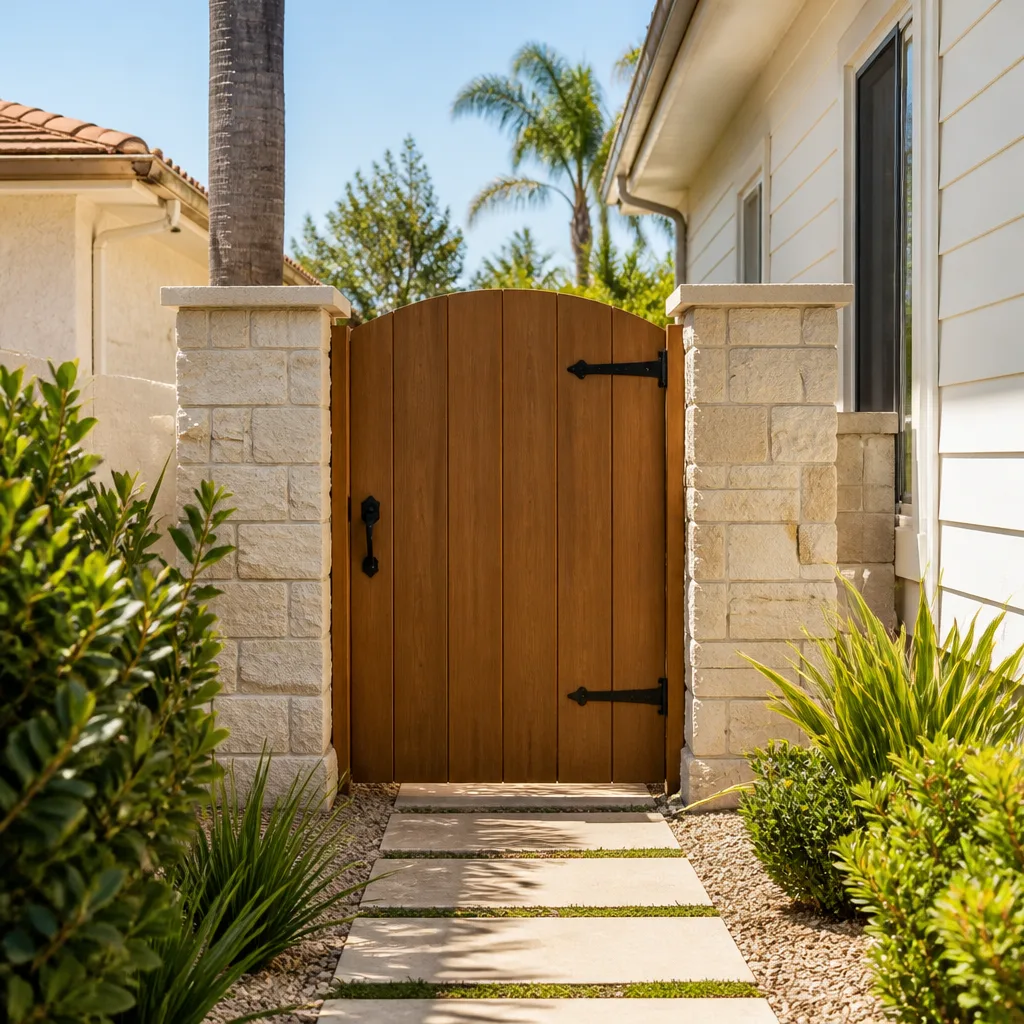
A legitimate fence quote in Fullerton should contain five non-negotiable items: the CSLB license number, named material brands and grades (like “1×6 dog-ear Western Red Cedar, #1 grade”), a post depth and spacing spec, a concrete mix spec, and a permit line. If any of the five are missing, ask for them in writing before signing – and don’t accept a verbal addendum.
Fence installation in Fullerton typically runs $38 to $65 per linear foot for a 6-foot cedar privacy fence, including removal of the old fence, posts, concrete, and hardware – a 120-foot run lands in the $4,500 to $7,800 range depending on grade and gate count. Composite fences run higher, typically $55 to $85 per linear foot. Call (844) 320-7095 for an exact quote – estimates are free and delivered in writing.
The only reliable way to verify a contractor’s insurance is current is to call the insurer directly using the phone number printed on the certificate of insurance, not the number the contractor gives you. Ask whether the policy is active today and whether it covers fence installation at your address. Any defensive reaction to that call is a warning sign in itself.
Some fence replacements in Fullerton qualify for a permit exemption – but only when the new fence stays inside the same height and footprint as the old one. New fence lines, height changes, and corner-lot configurations usually require a permit under Fullerton’s zone-specific height limits (generally 42 inches in front yards and 6 feet for rear and side privacy fences). Ask the contractor which exemption applies to your specific fence, and get the answer in writing.
California contractor license law caps the deposit on a home improvement contract at 10% of the contract price or $1,000, whichever is less. Any request for a higher deposit – including the common “50% down to hold your spot” practice – is a violation. Call (844) 320-7095 for a written quote that follows the legal deposit cap.
Standard concrete mix takes 24 to 48 hours to reach enough strength that the posts won’t shift, and full cure takes 28 days. A contractor who wants to hang panels the same day the posts are set is skipping the cure window. Ask for the cure schedule in writing before the crew starts, and confirm the fence won’t be leaned on for the first week.
Not on a Rowan project. Every Rowan fence quote is a flat written price with a written scope and written warranty before any work begins, and no work proceeds on a change until the change order is signed – Clause 1 of the Haven Standard. If the ground conditions or property-line surprises are real, they get a written change order with a signed price, not a verbal “we’ll sort it out at the end.”
The Bottom Line
Fence installation fraud and workmanship failure both leave a paper trail before the trucks arrive. The CSLB license number, the named material grade, the post depth spec, the concrete mix spec, the permit line, the deposit cap – each one is a check against a specific failure mode. Read the quote in the order we’ve described and you’ll catch 80% of the bad bids before you sign. If you’re ready to compare a written Flat price against a bid you already have, Rowan Construction Group Fullerton will review it line by line for free.
Call (844) 320-7095 to schedule your free estimate. Every Rowan estimate includes a written price, a written scope, a written warranty, and a documented photo record after every visit – backed by the 365-Day Done Right Promise.
Written by the team at Rowan Construction Group Fullerton.