Last updated November 18, 2026



Free written scope consultation - allowances, timeline, and change-order rules on paper before a single trade is scheduled
Home Additions & ADU Warning Signs Every Homeowner Should Know
The most expensive ADU problems start as paperwork. We’ve reviewed enough plan sets and change orders to know that the project failures costing Fullerton homeowners $20,000 or more usually trace back to a single missing line item, a permit pulled by the wrong party, or a change order that got “approved” over the phone. A contractor who offers to “handle permits” without listing the permit fee as a pass-through line in the contract has a known failure mode: the permit gets pulled late, pulled incorrectly, or skipped entirely. This guide covers the contract clauses, permit omissions, and construction-phase signals that predict which projects will go sideways, priced by the damage each one typically produces.
Quick Answer
An ADU or home addition warning sign is any gap in the written record: no itemized permit fees, no soils investigation line, no signed change order before extra work, or no certificate of occupancy at the end. If the paperwork doesn’t name the price, the scope, and the inspection sequence before ground breaks, the build is being managed on trust instead of terms. In Fullerton, where older lots and mixed zoning make utility and soils surprises common, that gap is where project costs go wrong.
Styles & brands we work with
- Kitchen remodeling
- Bathroom remodeling
- Home additions & ADU
- Roofing
- Windows & doors
- Driveway & pavers
- Fence
Table of Contents
- Contract red flags with dollar consequences
- How to verify your ADU contractor’s license and bond
- Permit warning signs in the plan set
- Design red flags: what the drawings should show
- Physical warning signs during construction
- Post-construction red flags before final payment
- Common mistakes to avoid
- Frequently asked questions
What Contract Red Flags Have Real Dollar Consequences?
The clauses that matter most are the ones that decide who pays when reality intrudes. A written price means nothing if the contract leaves room to reprice the moment a soils report shows up. Here’s what we look for when a homeowner asks for a free second opinion on a competitor’s written estimate in Fullerton.
1. No soils investigation line item
Expansive or undocumented soils are routine across North Orange County, and a geotechnical report often runs $1,500 – $3,000 up front. If the contract omits it, the investigation happens after crews mobilize and the footing design changes. Retroactive soils work typically adds $3,000 – $8,000 to the foundation alone, plus weeks of permit review.
2. No allowance for utility connection fees
Separate-meter ADUs require a utility riser diagram. In Orange County, utility connection fees – including any electrical panel upgrade – generally range from $1,500 to $12,000 depending on the panel and meter configuration. The contract should itemize this as a pass-through line, or state that the panel upgrade is included at a fixed price. Either way, the number needs to be visible before signing.
3. Change order language that doesn’t require written approval
Under Clause 1 of the Haven Standard, no work proceeds on a change until the change order is signed. If a contract says changes are “to be determined on site” or “agreed verbally during construction,” you’ve signed away the price. Every change order should state the scope, the dollar amount, and the schedule impact.
How Do You Verify an ADU Contractor’s License and Bond?
Every ADU or home addition contractor must hold a current California B-license (general building contractor), be bonded, and carry workers’ compensation. All three are checkable in less than five minutes through the California State License Board.
- Pull the CSLB license record. Look for an “Active” status, a “Clean” or acceptable disciplinary history, and a classification that includes the B-license. A C-37 (concrete) or C-15 (flooring) license does not authorize a full addition.
- Confirm the bond is current. The CSLB record lists the bond amount and expiration. A lapsed bond means a claim against defective work has no backstop.
- Verify workers’ compensation coverage. Ask for the certificate naming your property address, or check the CSLB record for the exemption line. A contractor claiming exemption while running crews is a problem.
- Match the contracting entity to the plan set. The general contractor on your building permit should match the entity on your contract. If they don’t, the chain of liability broke before the first inspection.
Why does a subcontractor pulling their own permits matter?
If an electrical or plumbing sub pulls a permit under their own license on your ADU, the general contractor isn’t responsible for that scope’s inspection sequence. That creates a chain-of-liability gap: two licensees, two inspection calendars, and no single party accountable when the rough-in and framing inspections collide. A B-licensed general contractor should pull the master building permit and coordinate all sub-permits.
What Permit Warning Signs Are Visible Before Ground Breaks?
Permits are a public record, so the signals are visible to anyone who looks. The trick is knowing where to look and what “missing” looks like. We check these on every review we run in Fullerton.
- Permit numbers absent from the contract. If a contractor can’t name the permit number on the plan set at signing, the permit hasn’t been pulled. On a full addition, that’s typically a $2,000 – $6,000 fee tied to square footage and valuation.
- A permit listed as “allowance” instead of pass-through. An allowance assumes we’ll see what happens. A pass-through line states the actual fee paid. Allowances are how a $40,000 job becomes a $55,000 job.
- No revision history in the file. If the plan set was revised three times before submittal, ask what changed. Structural revisions late in plan check are often a sign of an engineer who didn’t see the site.
- Separate sub-permits pulled by trade subs. See above – the general contractor should hold the master permit, and sub-permits should reference it.
- Inspection schedule not written into the contract. Every full addition has an ordered inspection sequence: foundation, rough framing, rough plumbing and electrical, insulation, drywall, final. If the schedule isn’t in writing, someone will be guessing when the framing inspection is called.
Which Design Documents Should Show Exactly What?
Plan sets are where the design red flags hide. We look at these documents first, because revising a plan set after plan check typically costs $2,000 – $5,000 in fees and adds four to eight weeks. For a sense of how the design phase compares across projects, our team publishes the design-to-drawings sequence on the Home Additions & ADU in Newport Beach page, though the document standard applies in Fullerton the same way.
Utility riser diagram
A separate-meter ADU requires an approved utility riser diagram – typically electrical and gas – showing how the new meter connects to the main service. If the plan set omits it, the utility company will reject the submittal, and the utility connection fee and any panel upgrade have to be redrawn and resubmitted. That’s the $1,500 – $12,000 line above, hitting at the worst possible moment.
Ceiling heights documented on section views
California building code sets minimum ceiling heights for habitable rooms, and sloped ceilings require a documented height at the low point. If the section views don’t show ceiling heights, the inspector will measure the built condition. A framing adjustment at that stage costs $3,000 and up.
Title 24 and CalGreen compliance forms
The energy compliance form (Title 24) and the CalGreen checklist must be part of the permit submittal, not a follow-up. A plan set missing these will sit in plan check until the designer produces them, and the delay runs the same four to eight weeks.
Structural calculations signed by the engineer of record
Ask to see the engineer’s stamp on the structural calc page, along with the soils report reference. If a plan set shows a stamped cover sheet but the calculations are unsigned, the review will catch it.
What Do Physical Warning Signs During Construction Look Like?
Once the permits are pulled and the crew mobilizes, the signals shift to the site. These are the ones we see most often in Fullerton, where older parcels, mature landscaping, and tight lots change how construction has to be sequenced.
- Foundation formwork doesn’t match the approved plan dimensions. Measure with a tape. If the forms are off by more than two inches on a footing, it’s a change order that should be documented before the pour, not after.
- Framing inspection scheduled before rough grading is signed off. Rough grading must be signed off before framing is inspected. Apex-to-curb grading on a sloping Fullerton lot, especially in the older hillside blocks near Raymond and the northeast tracts, is where this sequence breaks.
- Subcontractors can’t name the permit number on request. This is the fastest test. Ask the electrician which permit they’re working under. If they shrug, they’re likely on the master permit and not coordinating with the GC.
- Materials on site without a delivery ticket. Sourcing depth matters here. A written quote that names KraftMaid or Wellborn cabinets, Cambria or Caesarstone countertops, GAF or Owens Corning roofing – as many of ours do – is a quote you can audit at the curb.
- No photo record from prior visits. Every visit should end with a documented photo record. If no one is photographing the condition of the substrate, the framing, and the rough-in before it gets closed up, the evidence is gone.
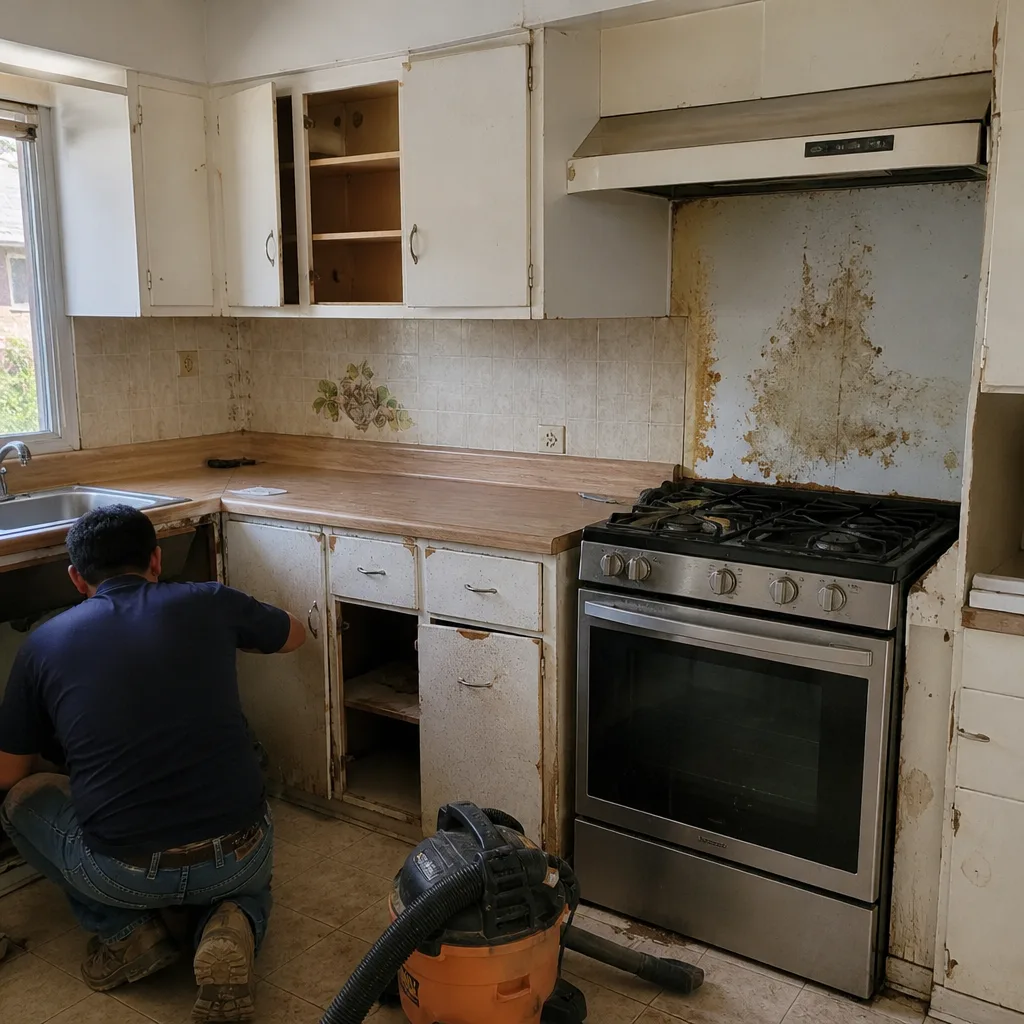
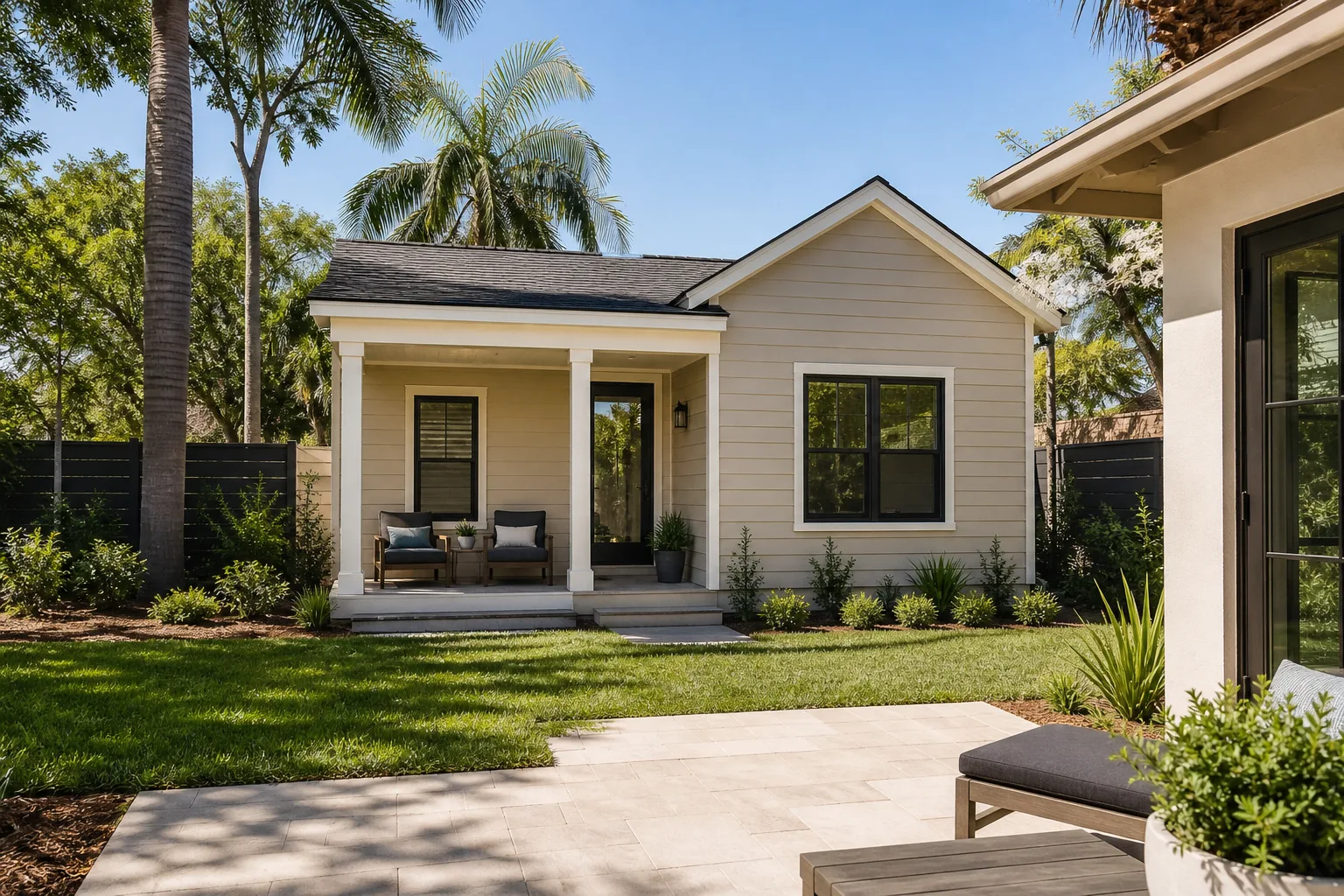
See the difference
 Before
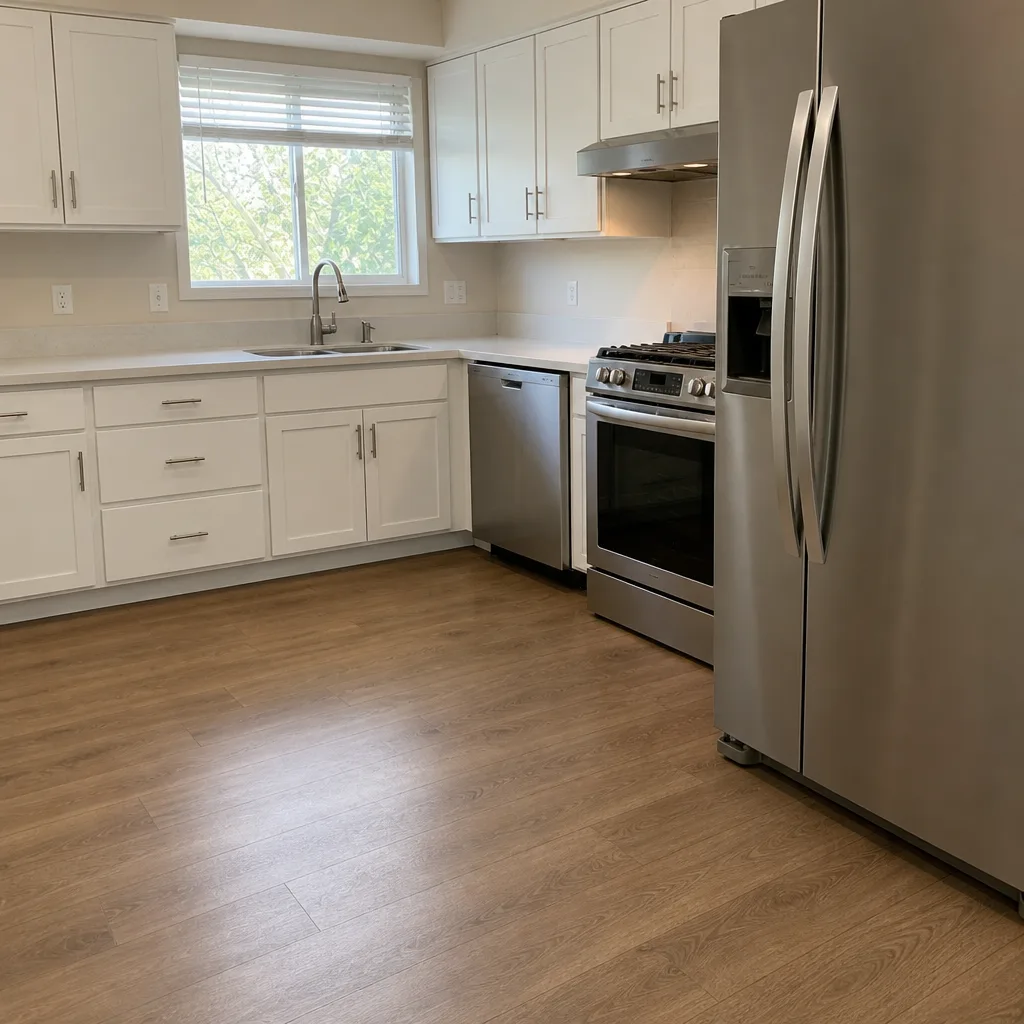 After
 Before
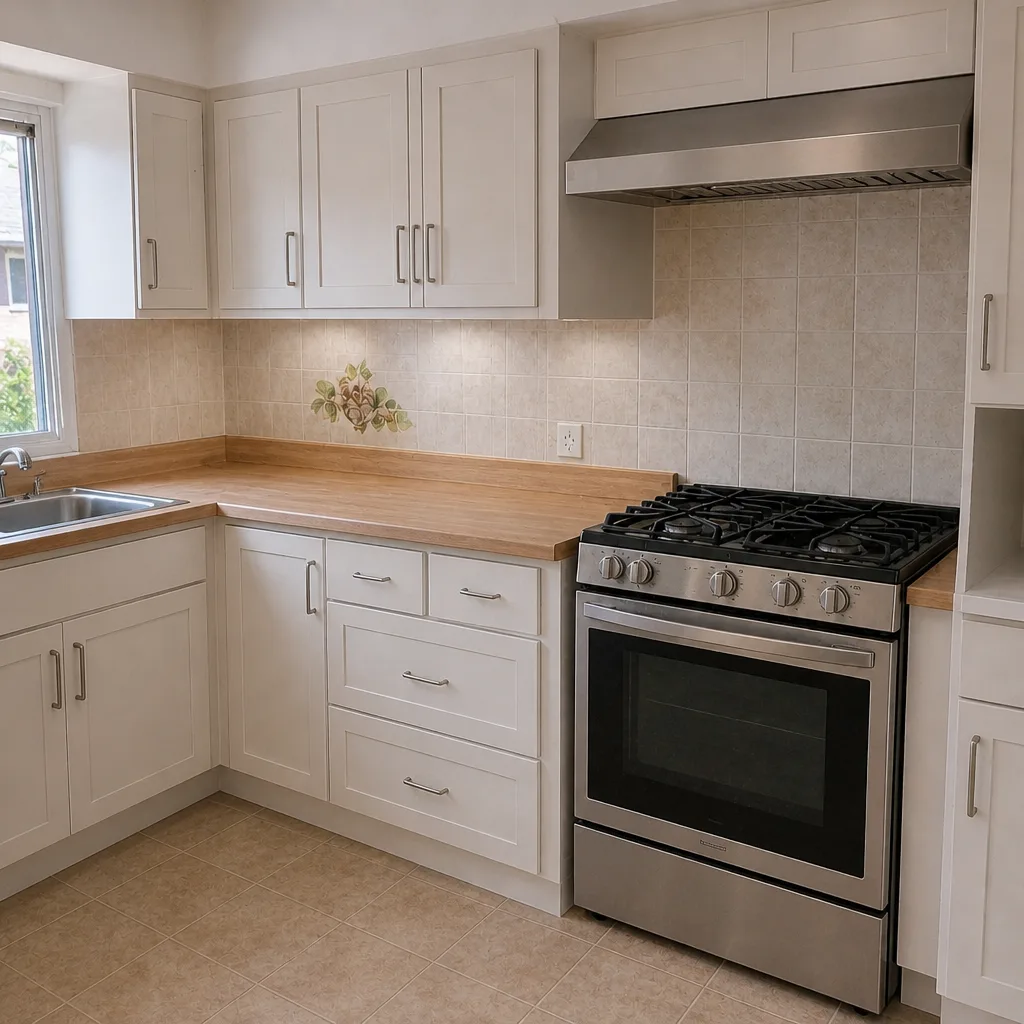 After
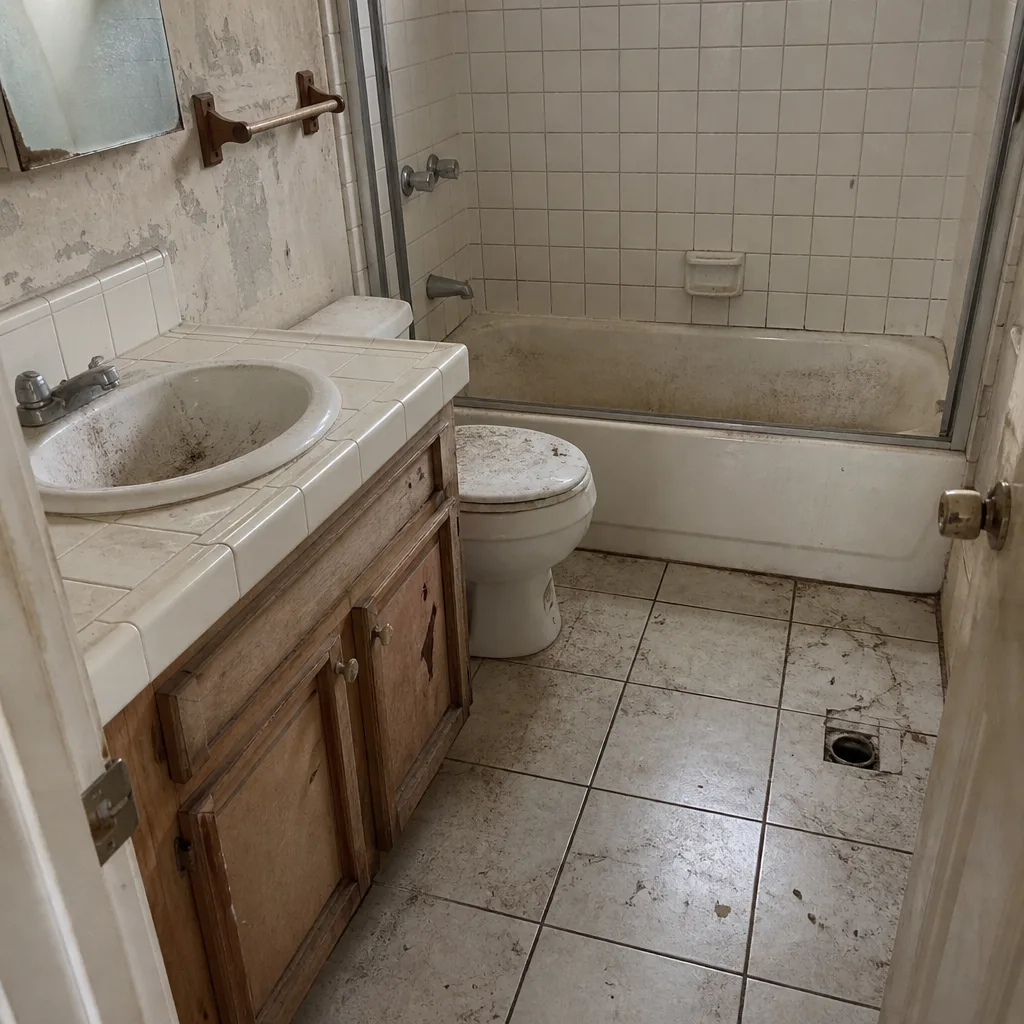 Before
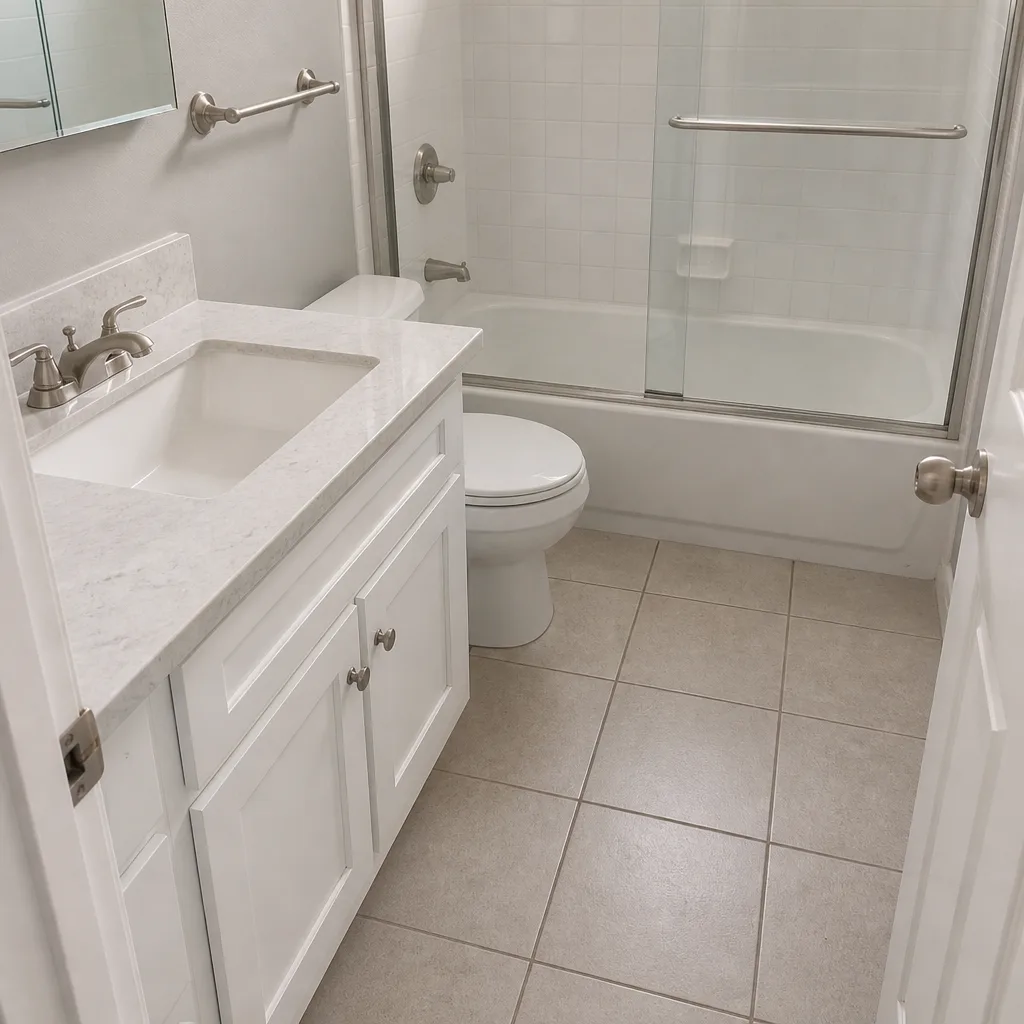 After
Are Energy Compliance and Green Code Forms Easy to Check?
Title 24 and CalGreen forms are a single-page submittal you can verify in minutes. Ask the contractor to show the Title 24 compliance form in the permit set and to name which measures are being met – envelope, fenestration, HVAC, indoor air quality. If the answer is “the designer handles that,” ask to see the form before the permit is submitted. Under the Haven Standard, the written price is one document, but the compliance forms are the evidence the price is real.
Which Red Flags Appear Before You Sign the Final Payment?
The end of an ADU is where the last of the leverage sits with the homeowner, so hold it. Final payment should never release before the following are in hand.
- Certificate of occupancy. The ADU isn’t finished until you hold the CO in hand. A CO that arrives “by email next week” is not a CO.
- Punch list in writing, not verbal. Every punch item should be numbered, dated, and re-inspected in writing. A verbal punch list is a verbal warranty.
- Lien releases from every subcontractor and material supplier. Get a signed conditional waiver and release for each one. If a framer or a countertop supplier isn’t released, the lien attaches to your property, not the contractor’s.
- Written warranty matching the promise. Take whatever warranty is printed on every page and match it against the signed contract. Under the 365-Day Done Right Promise, if it isn’t done right, it gets made right, and the terms page – not an asterisk – is what you’re relying on.
We’ve seen Fullerton homeowners release final payment on a separate-meter ADU before the utility hookup was verified. The electrical utility connection had been run to a panel that never passed inspection, and the fix ran $8,000. That is what the final-payment leverage exists to prevent.
Common Mistakes to Avoid
- Accepting “call for a quote.” A written price before any work starts is a standard line, not a courtesy. If a contractor won’t put the number in writing, they’ve told you what their change orders will look like.
- Hiring a subcontractor as the general contractor. A B-license, not a specialty license, authorizes a full addition. In Fullerton’s older housing stock, a concrete contractor pulling your foundation permit leaves you holding two permits and one accountable party.
- Skipping the soils report. Fullerton’s mixed geology – older alluvial flats near Commonwealth and higher ground toward the hills – means expansive soils are not rare. The $1,500 – $3,000 report prevents the $3,000 – $8,000 retrofit.
- Taking the utility fee on faith. Ask for the panel upgrade in writing. Utility connection fees of $1,500 – $12,000 depend on the panel, and “we’ll handle it” is not a number.
- Signing a contract without a change order clause. If the contract doesn’t require signature before extra work, the change happens and the price follows. Make the signature the gate.
- Letting the punch list live in a text thread. Punch items in a text message disappear in a text message. Number them, date them, and re-inspect them.
- Releasing final payment before lien releases arrive. A conditional waiver and release from every sub and supplier, in hand, before the check leaves your account. Nothing else protects you from the supply chain.
When to Call a Professional
Call a professional if any of the following are true: you have a written estimate you don’t fully understand, a plan set in hand that you can’t verify against the permit, a permit number that doesn’t match the entity on your contract, a change order request that didn’t come with a signed document, or an inspector who flagged something on the foundation. Those are the moments when a second read on the paperwork saves more than it costs. Our team at Rowan Construction Group Fullerton offers free estimates in Fullerton and a free second opinion on any written estimate you already have. Call (844) 320-7095 to schedule yours – a written price before any work starts is our standing offer.
If the project touches other trades, the same documented-price discipline carries through. You can start with our Home Additions & ADU in Newport Beach page for the ADU sequence, compare the same discipline in Driveway & Pavers in Newport Beach for hardscape that should be quoted the same way, and see the Fence Installation in Newport Beach page for the boundary and pool-safety work that surrounds an ADU. For everything else, the Rowan Construction Group Fullerton home page lists the seven trades we quote with a written price before anyone picks up a tool. If you’re comparing materials, this is the layer where specifying a Master Halco or Ameristar gate assembly – both standard in our fence quotes – matters to the number you’ll see.
Frequently Asked Questions
A full ADU in Fullerton typically lands between $200,000 and $350,000 depending on square footage, whether it’s attached or detached, and whether a utility panel upgrade is required. Separately, plan review, permits, and inspections commonly add $8,000 to $18,000 on top. Call (844) 320-7095 for an exact written quote on your plan set – estimates are free.
Not without a signed change order. Under Clause 1 of the Haven Standard, no work proceeds on a change until the change order is signed and the price is stated in it. The questions to ask a contractor before signing are whether their contract requires written approval for a change, and whether the change order states the dollar amount and schedule impact. If not, expect the number to move. Call (844) 320-7095 to schedule a free second opinion on a competitor’s estimate.
The B-licensed general contractor pulls the master building permit and coordinates all sub-permits. The permit fee should appear as a pass-through line item in your contract, not an allowance. In Fullerton, that fee commonly runs $2,000 to $6,000 depending on the addition’s square footage and valuation. Call (844) 320-7095 if you want your current contract reviewed for the permit detail.
Check the California State License Board record for an active B-license, a current bond, and workers’ compensation coverage. Match the contracting entity on the CSLB record to the entity on your contract and the plan set. If any of the three don’t match, ask why before signing. Call (844) 320-7095 and we’ll walk through the check with you.
A detached ADU in Fullerton typically takes 8 to 14 months from signed contract to certificate of occupancy. Plan review and permit issuance commonly take 3 to 6 months, construction 4 to 7 months, and final inspection 2 to 4 weeks. If the design is complete and the soils report is already in hand, the timeline shortens. Call (844) 320-7095 to get a schedule estimate for your specific plan.
You should hold the certificate of occupancy, a numbered written punch list with re-inspections, signed conditional lien releases from every subcontractor and material supplier, and a written warranty that matches the promise. Final payment releases the leverage, so those four documents should be in hand, not promised for next week. Call (844) 320-7095 if you need a punch list reviewed before release.
The Bottom Line
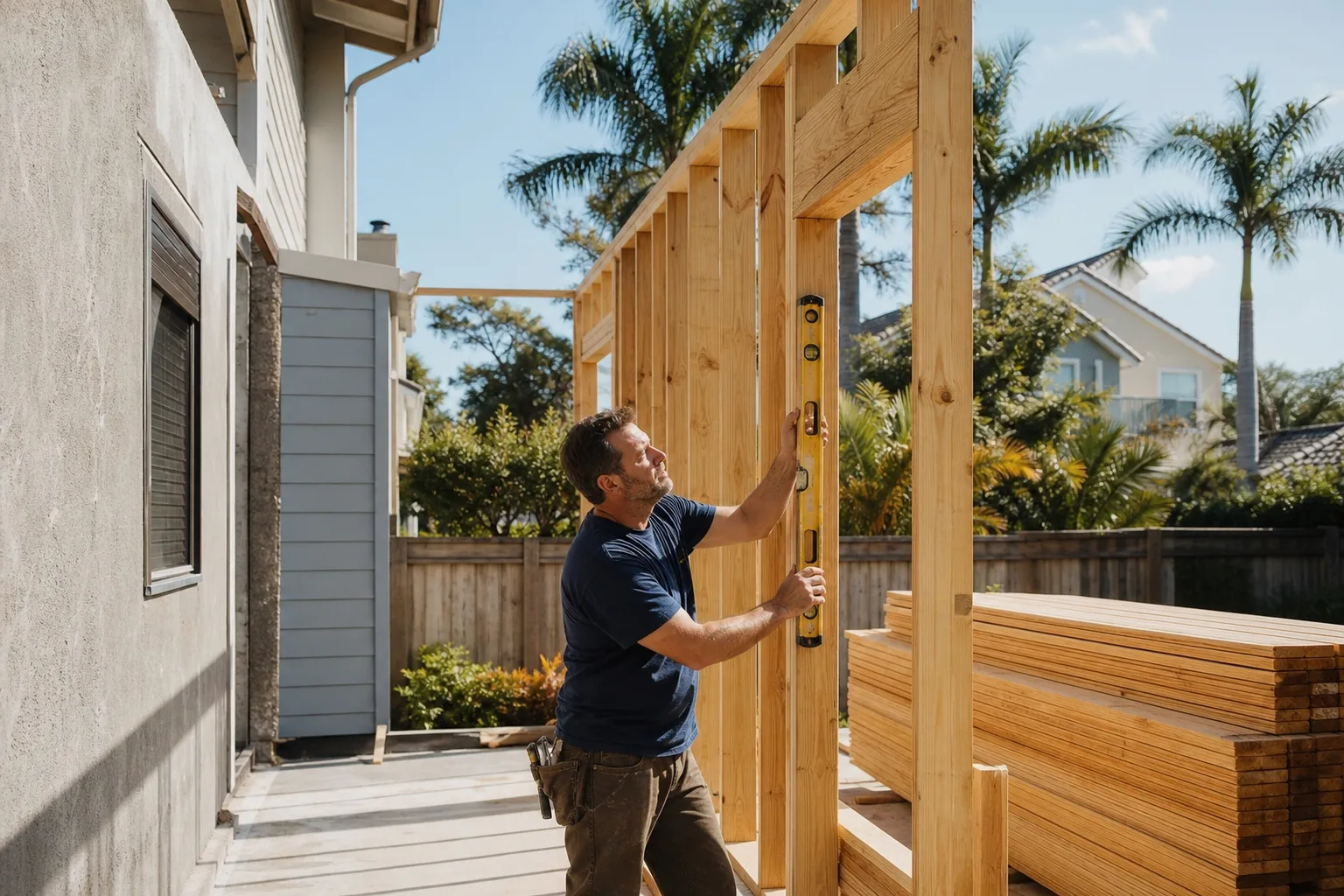
Warning signs for a home addition or ADU show up in the paperwork first. The written price, the itemized permit fee, the soils investigation line, the change order clause, the Title 24 forms, and the certificate of occupancy – each of those is a document you can verify before and during the job. If the documents aren’t in hand, the price isn’t real, and the risk is on you. The costliest failures we see in Fullerton run $8,000 to $20,000 or more, and most of them were visible before ground broke. Ask for the written price. Ask for the permit number. Hold the final payment until the documents match.
Call (844) 320-7095 for a free estimate in Fullerton. A written price before any work starts, a documented photo record on every visit, and the 365-Day Done Right Promise are standard on every Rowan Construction Group project – a free second opinion on any written estimate you’ve already received is available too. Our technicians have up to 19 years of experience, and every crew member is background-checked before arriving at your property. The local pro we connect you with is licensed and insured as their state requires.
Written by the team at Rowan Construction Group Fullerton.