Last updated November 18, 2026
Free written scope consultation - allowances, timeline, and change-order rules on paper before a single trade is scheduled
DIY vs Professional Driveway & Pavers: What’s Safe to Do Yourself
Search “how to lay pavers” on YouTube and you’ll find a hundred tutorials that make it look like a weekend job. Almost none of them show the step professionals spend about 40% of their labor hours on: base preparation. That omission isn’t laziness. Proper base prep requires a plate compactor with enough force to hit compaction density, and most rental yards don’t stock the right machine. Whether you can set a herringbone pattern is rarely the real question. Whether you can rent the equipment, specify the right aggregate gradation, and hit 95% compaction is. This guide breaks down the DIY vs professional driveway and pavers decision for Fullerton homeowners: what’s recoverable, what isn’t, and what the numbers actually look like.
Quick Answer
Laying the pavers themselves is genuinely DIY-able for a patient homeowner. The base layer is not. If you can’t rent a plate compactor rated for at least 3,000 lb/ft² of centrifugal force, buy washed crushed aggregate at the correct gradation, and verify compaction density before bedding sand goes down, hire a professional. For a 400 sq ft driveway in Fullerton, DIY lands around $2,800 to $4,200 in materials and equipment, versus $6,000 to $9,500 for a professional installation with documented compaction testing and a written warranty. The gap is smaller than most guides admit once you count the equipment line items they leave out.
Styles & brands we work with
- Kitchen remodeling
- Bathroom remodeling
- Home additions & ADU
- Roofing
- Windows & doors
- Driveway & pavers
- Fence
Table of Contents
- Why Base Preparation Is the Whole Game
- The Equipment You’ll Actually Need (and What It Costs)
- Recoverable vs. Expensive Mistakes: What’s Safe to DIY
- Calculating Materials: Where Homeowners Over- and Under-Order
- Realistic DIY Cost Breakdown for a 400 sq ft Driveway
- What a Professional Bid Should Look Like
- Slope, Drainage, and Fullerton’s Clay Soil
- Reading a Pavers Contract: The Four Things That Must Be in Writing
Why Base Preparation Is the Whole Game
A paver driveway is a flexible pavement system. The pavers are the wear surface; the base is the structure. Under the pavers sits a bedding sand layer, typically 1 inch deep. Under that sits a compacted aggregate base, usually 4 to 6 inches for a residential driveway, sometimes more depending on soil. That base distributes the load from tires and foot traffic across the subgrade so nothing shifts.
When base prep fails, the pavers don’t crack – they settle. You get ruts where the car’s tires sit, a lip at the apron, and joints that open up so sand washes out. Repair means pulling pavers, re-excavating, re-compacting, and resetting. In Fullerton, we regularly see driveway failures at installations where the base was under-compacted at construction – often because the original installer used a small handheld tamper instead of a plate compactor sized for the job.
The critical number is compaction density: 95% of maximum dry density, per standard Proctor testing (ASTM D698). Without a nuclear density gauge or a proof-rolling test with a loaded truck, you can’t visually confirm this. That’s why the compaction step is where the real gap between DIY and professional lives.
The Equipment You’ll Actually Need (and What It Costs)
Most DIY cost guides stop at materials. Here’s the equipment line item, priced from typical Orange County rental yards during the 2025-2026 season. Prices vary by brand and rental length; expect the higher end for weekend rentals.
- Plate compactor (reversible, forward/reverse): $95 to $140 per day, or $300 to $400 per week. Needs a minimum of 3,000 lb/ft² centrifugal force. A homeowner-grade tamper at 400 lb/ft² is not the same tool.
- Wet saw with diamond blade (for cutting pavers): $75 to $120 per day, plus $40 to $70 for a 14-inch diamond blade that handles 2-inch-thick concrete pavers.
- Screed rails (10 ft aluminum): $20 to $35 per day per rail; you need two.
- Wheelbarrow, hand tamper, rakes, string line, transit level: $30 to $60 per day if rented together.
- Excavation: a walk-behind mini-excavator runs $250 to $350 per day; a trencher for edge restraint is $90 to $130 per day.
For a 400 sq ft driveway that’s a 3-day project on a realistic schedule, equipment rental alone totals $600 to $950. That’s the line most DIY cost comparisons leave out.
Material brands matter too. If you’re choosing pavers at a supply yard in Fullerton, Belgard and Techo-Bloc are the two we specify most often, and both publish full spec sheets with compressive strength and water absorption rates you can compare before you buy. Skipping the spec sheet is how homeowners end up with pavers rated for a patio set on a driveway.
Recoverable vs. Expensive Mistakes: What’s Safe to DIY
Some mistakes cost you an afternoon. Others cost you the whole installation. This is the dividing line we use when advising a homeowner whether to hire out or go DIY.
Mistakes you can fix
- Paver layout and pattern errors: pull the affected courses, re-cut, reset. Cost is time, sand, and a few pavers.
- Cutting errors on border pavers: a diamond saw makes quick work of a mishit; buy 5% to 8% overage and you have spares.
- Polymeric sand finishing: if a joint blows out in the first season, re-sanding is a one-day job with a shop vac and a hose.
- Edge restraint alignment: if a spike fails in the first few months and the edge lifts, pulling and re-spiking is straightforward.
Mistakes that are expensive to fix later
- Base depth shorted by an inch or two: the whole system fails within 2-3 years. Repair means pulling every paver.
- Insufficient compaction: no visual cue. Fails silently, then settles under load.
- Wrong aggregate gradation: rounded river rock or an unscrupulous “recycled” mix doesn’t interlock; base turns to mush when wet.
- Slope wrong by even a quarter inch per foot: water pools at the garage apron and finds the slab or the house. In Fullerton’s occasional heavy winter rain, that’s a water intrusion problem, not just a driveway problem.
- Edge restraint spacing wrong: the edges spread under load, joints open, and the whole field walks.
The rule of thumb: surface work is recoverable. Structural work isn’t. Layout, cutting, and finishing are surface. Base, compaction, and slope are structural.
Calculating Materials: Where Homeowners Over- and Under-Order
Material estimates are one place a careful homeowner can do well. Here’s how to think about each line item.
Aggregate base
Base for a residential driveway is typically 4 to 6 inches compacted. Compacted depth is not the same as loose depth – aggregate compacts to roughly 75% of its loose volume, so you need about 25% more loose aggregate than the finished compacted depth. For a 400 sq ft driveway at 4 inches compacted, you’re looking at about 6.2 tons of base aggregate (assuming 1.4 tons per cubic yard, which is a typical figure for washed crushed stone). The correct material is a well-graded crushed stone – often sold as “Class II base” or “¾-inch minus.” Ask for the sieve analysis; the supply yard should have it.
Bedding sand
Bedding sand is a consistent 1 inch, and it does not compact to the same degree as base. For 400 sq ft at 1 inch, plan on about 2.5 tons. Specify washed concrete sand, not masonry sand – masonry sand is too fine and holds water.
Pavers
Order 5% to 8% overage for a simple pattern, and 8% to 12% for a diagonal, herringbone, or complex border. Below 5% you’ll run short; above 12% you’re paying to store leftovers that the supply yard may not accept back.
Where homeowners most often under-order: base aggregate. It’s expensive to haul, so people trim. Where they over-order: pavers, because of cutting anxiety. Our advice is to spec the aggregate correctly and buy the overage you actually need.
Realistic DIY Cost Breakdown for a 400 sq ft Driveway
Here’s what a 400 sq ft driveway actually costs to build yourself in Fullerton, Orange County pricing, spring 2026. These are real numbers, not the “as low as” figures you’ll see on a lead-gen site.
| Line item | Quantity | Cost |
|---|---|---|
| Pavers (Belgard or Techo-Bloc, mid-grade) | ~460 sq ft with 12% overage | $1,150 – $1,850 |
| Aggregate base – washed ¾-inch minus | 6.2 tons | $340 – $480 |
| Bedding sand – washed concrete sand | 2.5 tons | $130 – $190 |
| Polymeric joint sand | ~180 lbs | $90 – $140 |
| Edge restraint (spiked poly, 60 linear ft) | 60 ft | $110 – $160 |
| Equipment rental (plate compactor, wet saw, screed rails, trencher) | 3-day rental | $600 – $950 |
| Delivery and disposal (base, sand, spoil) | 3 loads | $280 – $420 |
| Permit (if required; see below) | 1 | $0 – $350 |
| Total DIY | $2,700 – $4,540 |
Note that equipment is the second-largest line item after the pavers themselves, and it’s missing from nearly every DIY cost calculator online. If you can’t line up the compactor for three consecutive days, the schedule adds rental days fast.
For scale, a professional installation at market rates for the same driveway typically quotes $6,000 to $9,500. For comparison between material grades and pattern options, our team walks Fullerton homeowners through numbers on our Driveway & Pavers in Newport Beach service page – the same pricing logic applies whether you’re in Fullerton or a few cities south.
What a Professional Bid Should Look Like
A real pavers contract isn’t a one-line price. Here’s what to demand from any contractor bidding a driveway in Fullerton – and what the quotes you’re comparing should show.
- Base depth spec, in inches, compacted. “4 inches compacted ¾-inch minus” or similar. If the bid says “proper base,” it’s not a bid.
- Compaction test documentation. Either a Proctor test result or a documented proof-roll with a loaded dump truck. Ask for the number: 95% Standard Proctor density is the spec.
- Aggregate specification by name and gradation. Class II base, washed, sieve analysis on file.
- Edge restraint type and spike spacing. Typically 12-inch intervals; some systems specify tighter.
- Slope and drainage plan. Minimum 1% fall away from structures, expressed as a percentage grade, not “graded to drain.”
- Written warranty terms. How long, what’s covered, who pays labor if a base failure occurs.
- Change order process. Any change to scope should require a signed change order before work proceeds. Ours does.
A bid that hits all seven isn’t automatically the right bid, but a bid that skips two or three of them tells you the installer doesn’t document their own work. If you’re comparing three quotes and want a second read, Rowan Construction Group Fullerton offers a free second opinion on any written estimate – bring the bids in and we’ll mark up what’s missing line by line, no charge.
Slope, Drainage, and Fullerton’s Clay Soil
Fullerton sits on some genuinely difficult soil for driveway work. Much of the city – particularly in the older neighborhoods on the north side and around the Hillcrest Park area – is underlain by expansive clay that swells when wet and shrinks when dry. That movement amplifies base problems. A 4-inch base that would perform on sandy soil in Huntington Beach needs to be spec’d honestly for the clay here.
Slope matters for the same reason. Fullerton’s rainy season comes in short, intense bursts – enough water in 24 hours to test whether your driveway drains away from the garage or toward it. A finished paver driveway should fall a minimum of 1% (about ⅛ inch per foot) away from the structure and toward a landscape drain, a swale, or the street. On a 20-foot driveway that’s a drop of 2.4 inches from the garage apron to the curb, minimum. Less than that and water pools at the apron.
Runoff rules also matter. Fullerton’s municipal code follows Orange County stormwater guidance, which means driveway replacement over a certain size can trigger site-specific drainage review. In practice, most residential driveway replacements don’t require a stormwater plan, but it’s worth confirming with the city’s building department before demo. If your new driveway changes the amount of impervious surface and you’re also considering a same-year addition, it’s the kind of coordination that’s easier planned together – our Home Additions & ADU in Newport Beach page covers how driveways, impervious coverage, and accessory structures interact with site plans.
Reading a Pavers Contract: The Four Things That Must Be in Writing
Whether you hire out or go DIY, here’s the standard we hold any pavers installation to – including ours. Under our Clause 1, the written price comes before any tool is picked up. That’s not a marketing line; it’s the discipline that catches ambiguous scope before it becomes a change order.
- Flat written price with written scope. Not a range. Not “starting at.” A number, tied to a clear list of what’s included and excluded.
- Base depth and aggregate spec. Named materials, named depth, named compaction standard.
- Warranty terms, in the contract. Our 365-Day Done Right Promise is printed on every page: if it’s not done right, we make it right. Any contractor you hire should be able to show you equivalent coverage in writing.
- Change order procedure. Any change to the agreed scope stops work until a change order is signed. Skipping this is how projects go 15% or 20% over the quoted price.
Two more things worth asking for on the day the crew arrives: a photo record of the excavation and base stages before the pavers go down, and a background-checked, uniformed crew. Our standard is that every visit comes with a documented photo record – included, not an upgrade – so a homeowner can see the excavation depth they were promised.
Common Mistakes to Avoid
- Under-compacting the base. A handheld tamper rated for 400 to 600 lb/ft² cannot achieve 95% density on a 4-inch base. You need a plate compactor rated at 3,000+ lb/ft².
- Using recycled concrete as base without checking. Some recycled mixes perform fine; some don’t interlock. Fullerton supply yards vary, and only a sieve analysis tells you what you’re buying.
- Skipping the edge restraint. Without a spiked poly or concrete curb edge on all exposed sides, the paver field walks under load within one or two seasons. The neighbors who “just laid a driveway” and skipped this cost themselves the whole job.
- Shorting the slope. Fullerton’s winter rain is intense. A driveway sloping 0.5% toward the garage will pool. 1% minimum, 2% is common where the apron allows.
- DIY-ing on expansive clay without an underdrain or geotextile. If you’re in one of Fullerton’s clay-heavy neighborhoods and the subgrade pumps water, base prep needs fabric separation.
- Buying pavers without the spec sheet. A paver rated for pedestrian-only traffic placed on a driveway cracks under the car. Check compressive strength (typically minimum 8,000 psi for vehicular) and water absorption (below 5% is the common spec).
- Not pulling a permit if your city requires one. Replacement in kind often doesn’t need one; widening or changing the apron usually does. Confirm with Fullerton’s building department before demo.
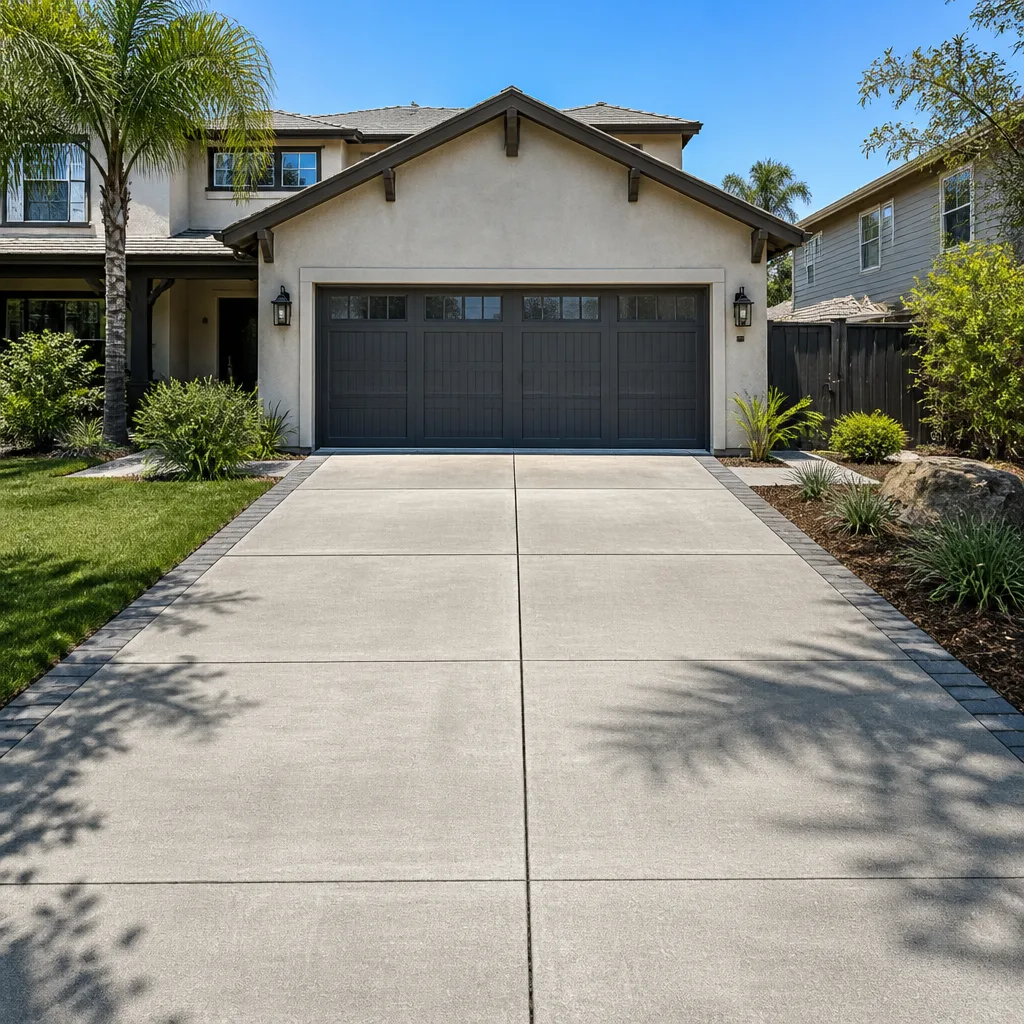
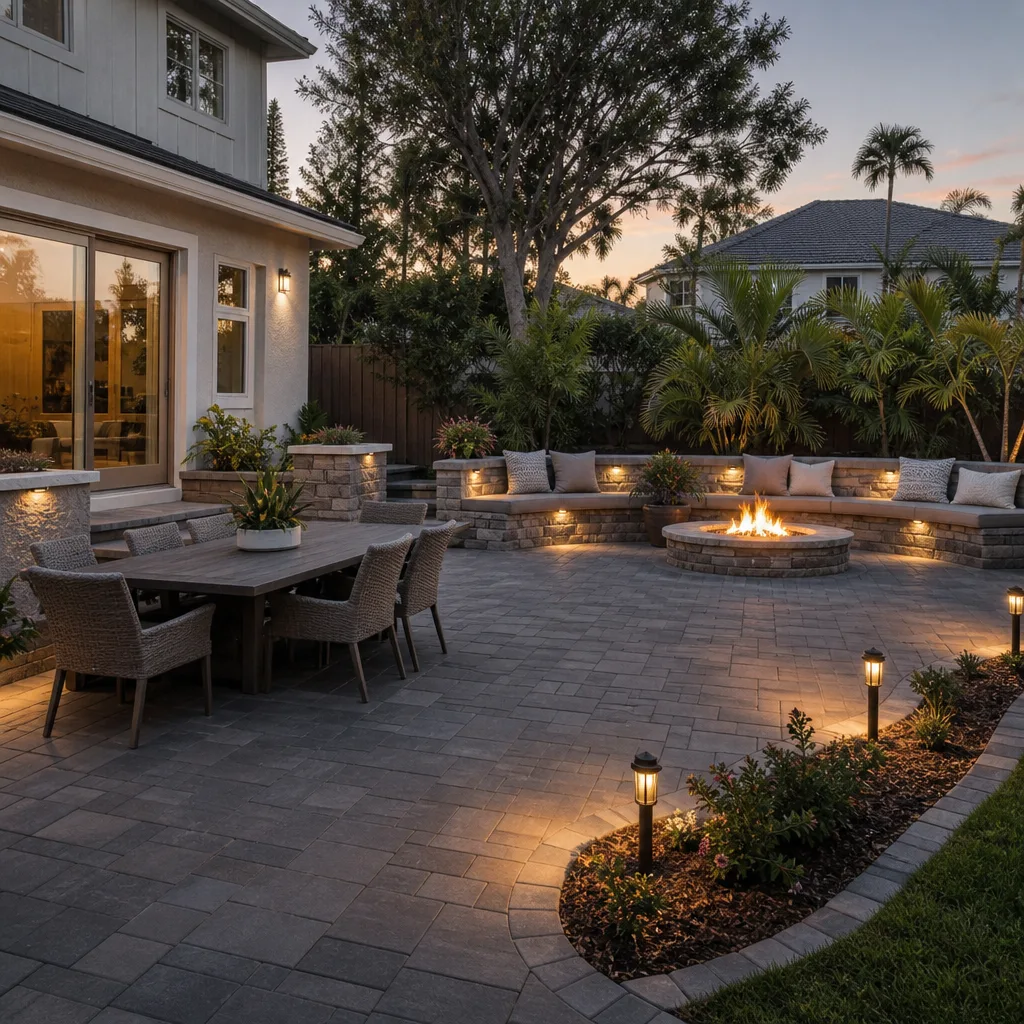
See the difference
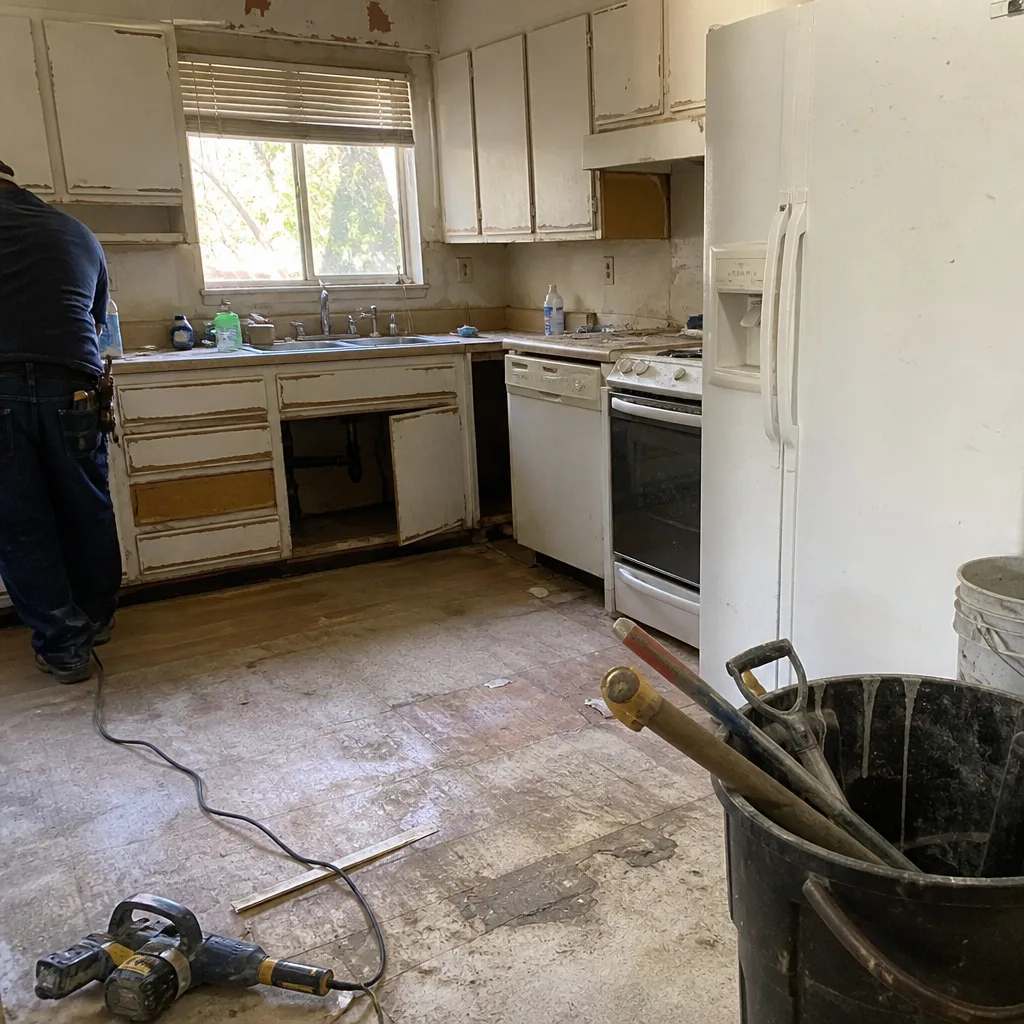 Before
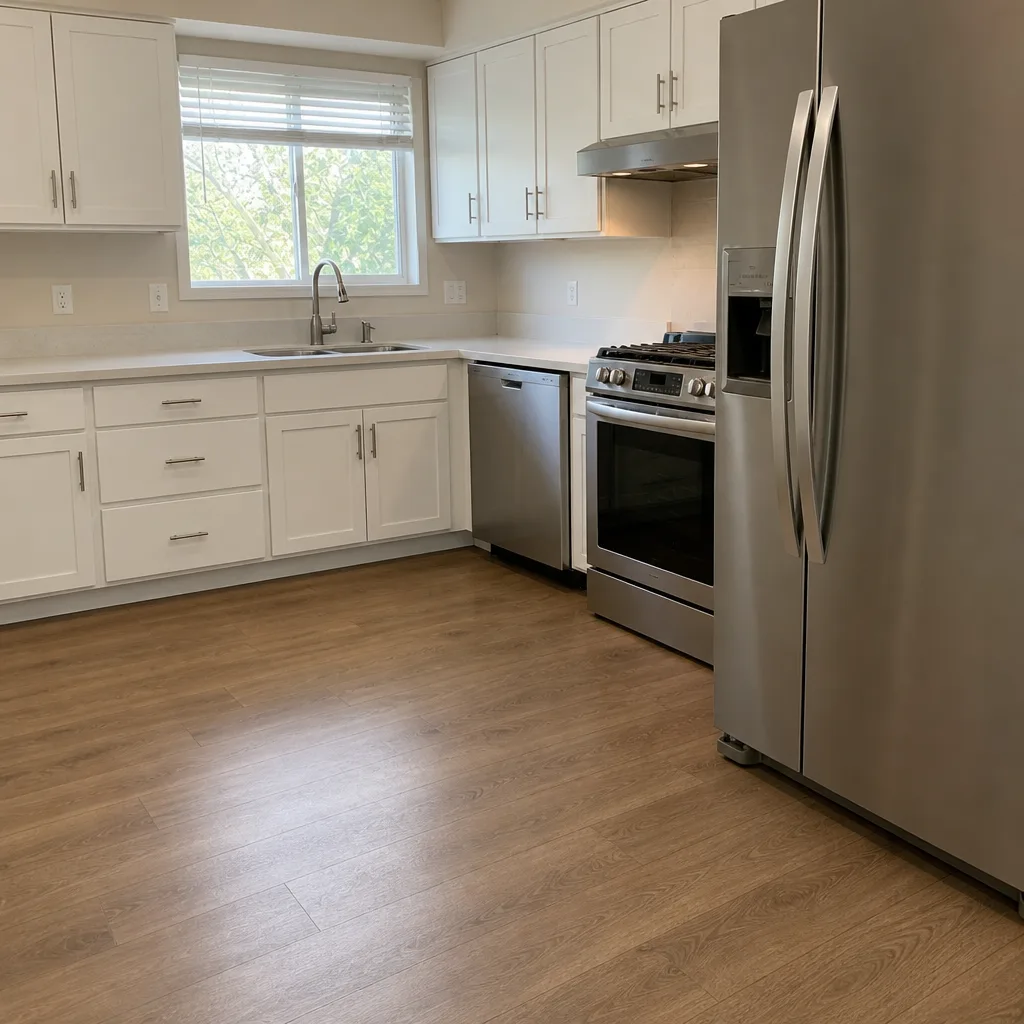 After
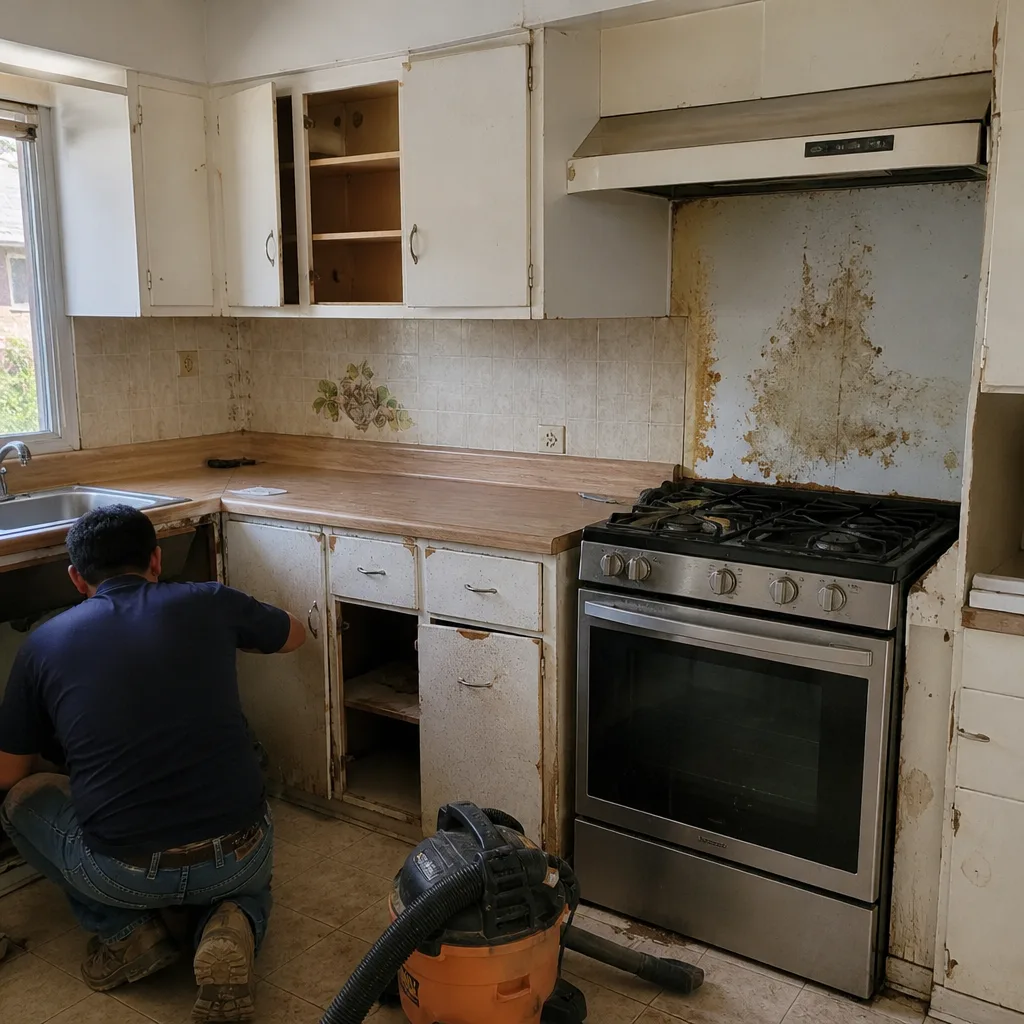 Before
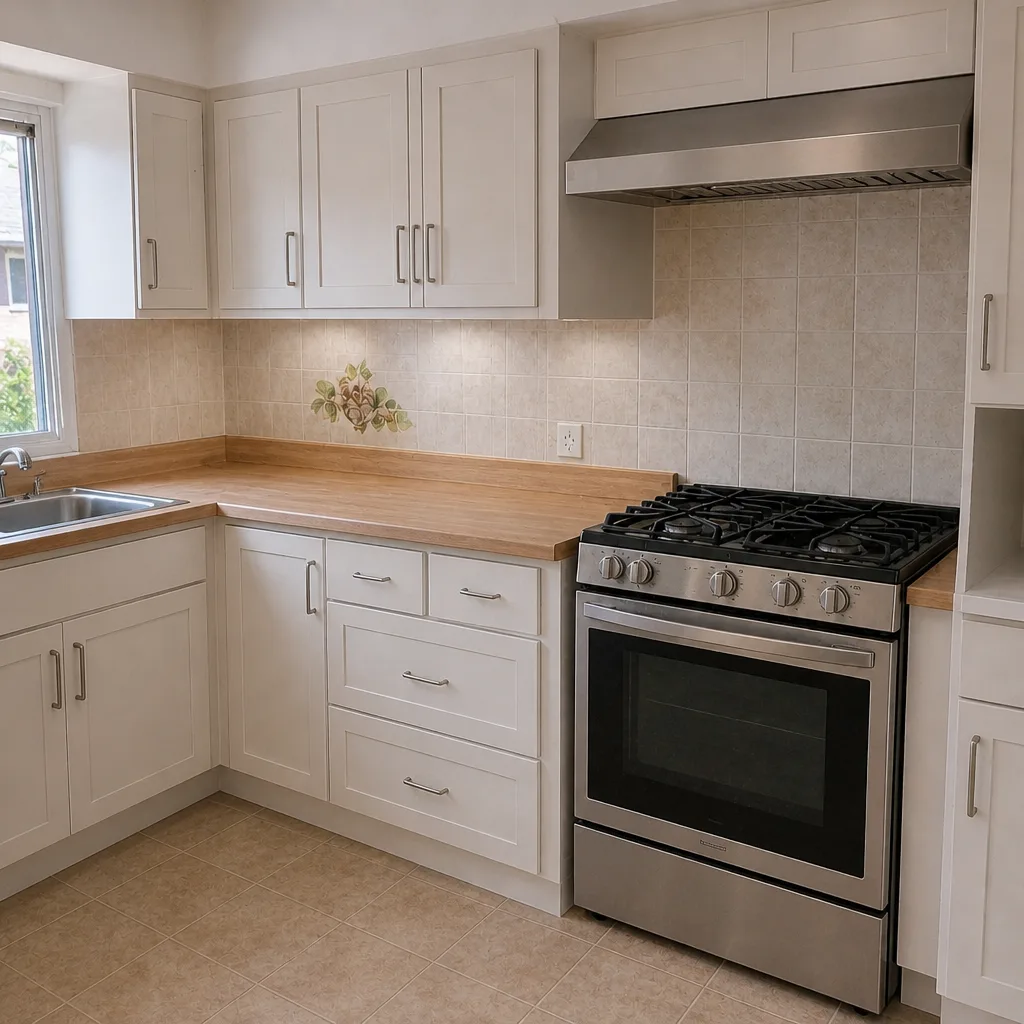 After
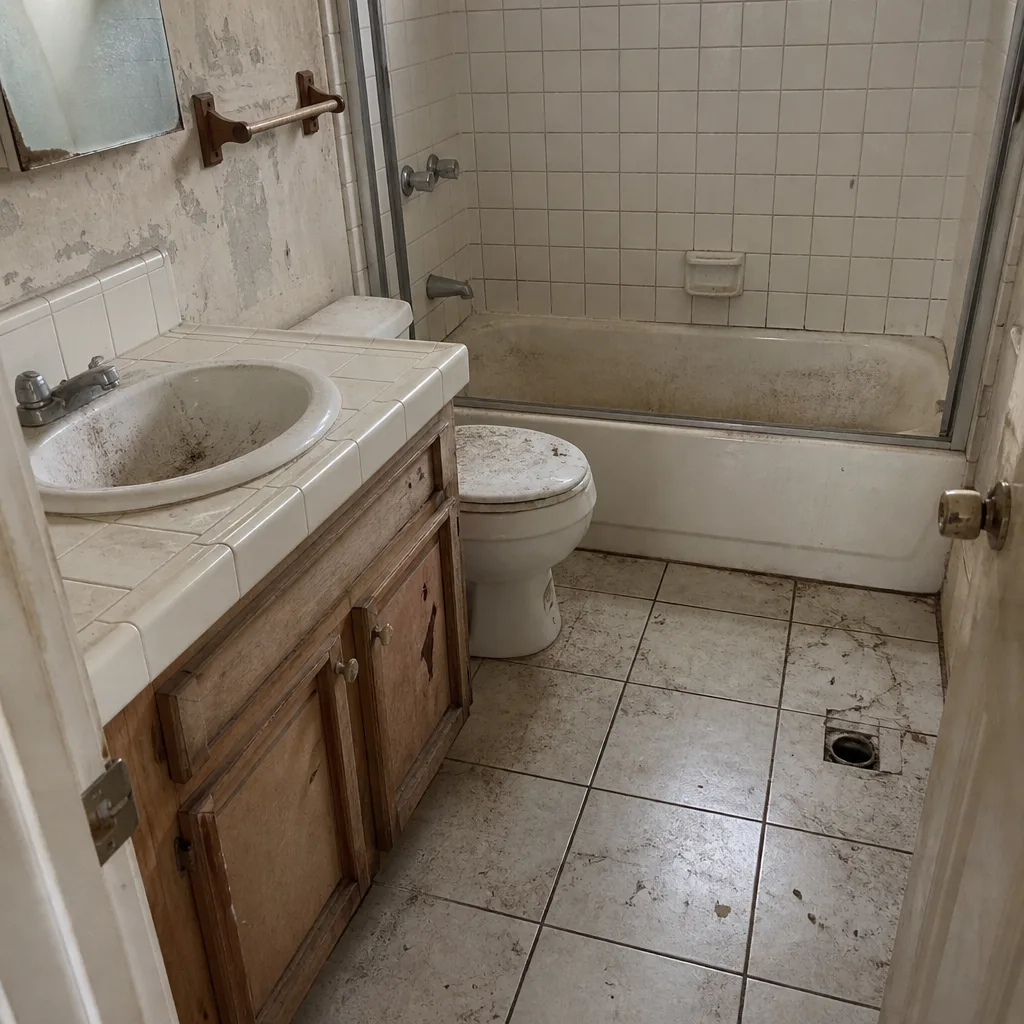 Before
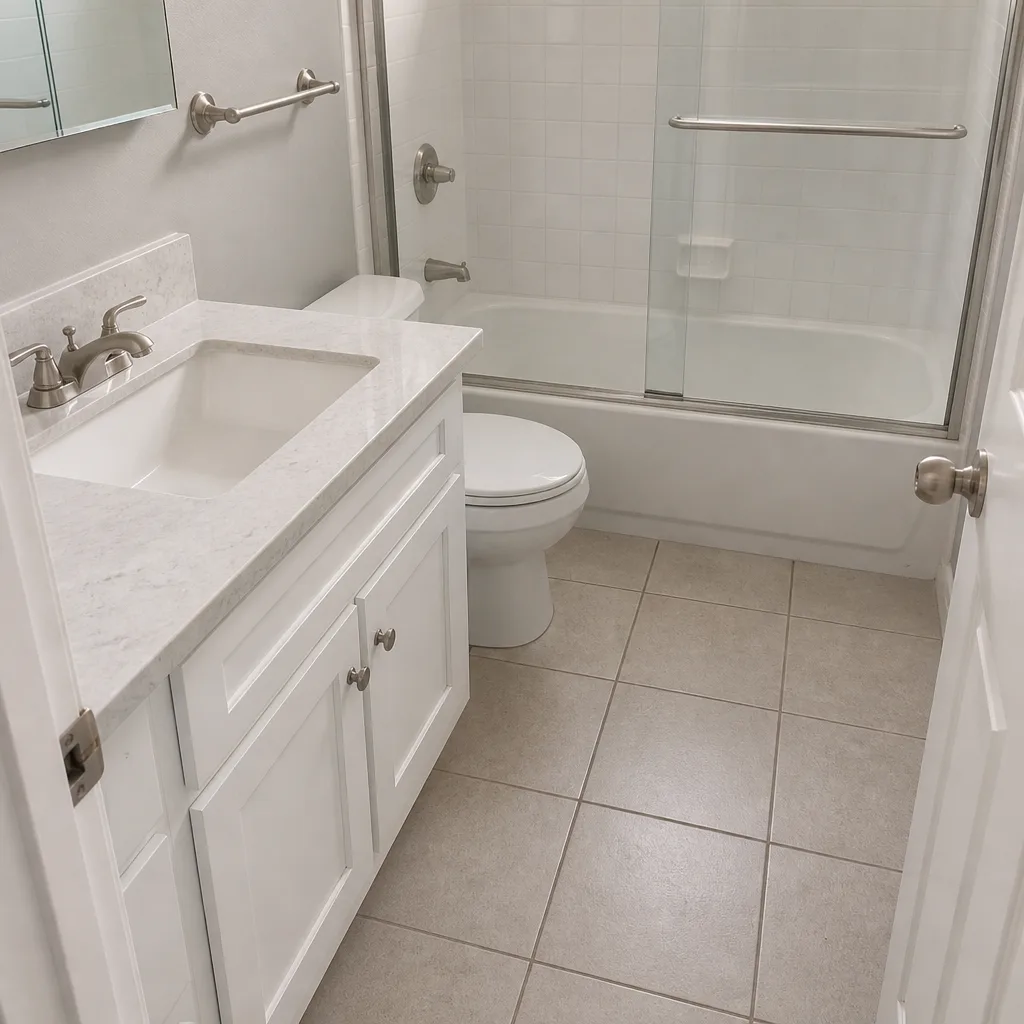 After
When to Call a Professional
Hire a professional paver installer if any of these describes your situation: your base is going over expansive clay, your driveway abuts a structure where water intrusion would be expensive, you can’t line up a plate compactor rated for the job, or the base depth required exceeds 6 inches (which usually means a subgrade correction a homeowner can’t reasonably DIY). Also hire out if you need documentation – a compaction test, a written warranty, a photo record – because those deliverables come from an installer, not a rental yard.
Rowan Construction Group Fullerton offers free estimates in Fullerton – call (844) 320-7095. Every quote is a written flat price with a written scope, and the crew arrives background-checked and uniformed with a documented photo record of what they found and what they did. If you’re comparing bids, we’ll review a competitor’s estimate line by line as a free second opinion before you sign anything.
Frequently Asked Questions
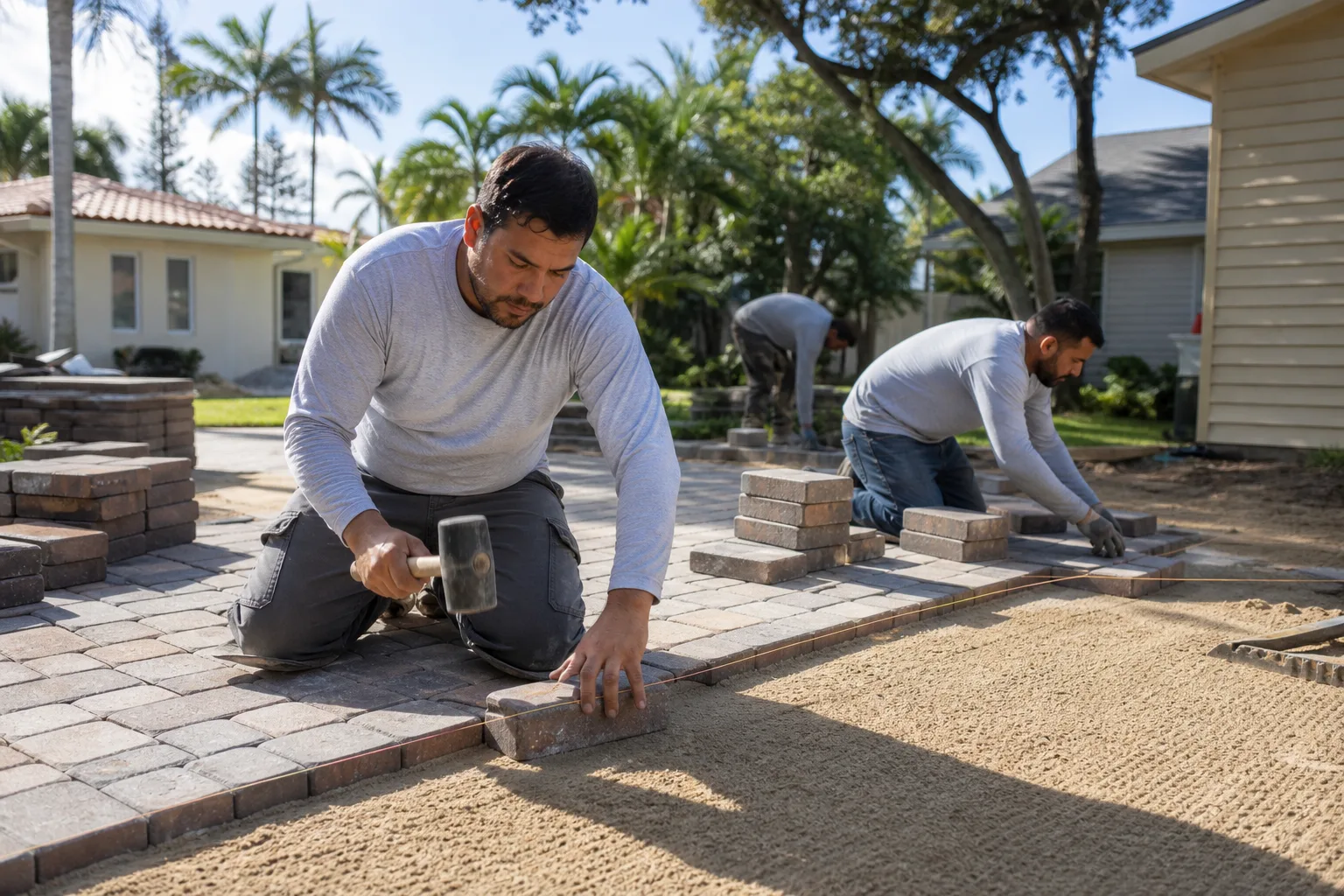
Yes, you can lay the pavers themselves, but you should not attempt the base preparation unless you can secure professional equipment. The plates, cuts, and polymeric sand are all within reach of a patient homeowner. The 4 to 6 inches of compacted aggregate base, the 95% compaction density, and the slope grade are where the job succeeds or fails, and those require a plate compactor rated at 3,000+ lb/ft² and a way to verify density. For an exact quote on the base portion alone, call (844) 320-7095 – estimates are free.
Professional paver driveway installation in Fullerton typically runs $15 to $24 per square foot installed, so a 400 sq ft driveway lands between $6,000 and $9,500 depending on paver grade and base depth. A 600 sq ft driveway is $9,000 to $14,500. Equipment, base aggregate, and compaction testing account for a larger share than most homeowners expect. Call (844) 320-7095 for a written flat price on your specific driveway – it’s delivered before any work starts.
Pavers require the base aggregate to be compacted to 95% of maximum dry density, measured by Standard Proctor test (ASTM D698). Anything below 92% and the base will settle under vehicular load within two to three seasons. The number is documented either by nuclear density gauge readings during installation or by a proof-roll with a loaded truck – ask which method your contractor uses, and ask for the record.
A paver driveway over a correctly compacted base lasts 25 to 30 years or more, with only joint sand top-ups every 2-3 years. Half of that lifespan is decided in the base preparation stage. The pavers themselves, from a manufacturer like Belgard or Techo-Bloc, are rated for 30+ years of normal service; base failures, not paver wear, are what cause premature replacement.
Replacement-in-kind of an existing driveway typically does not require a permit in Fullerton, but widening, changing the apron, or altering drainage may. Confirm with the city’s building department before demolition – it’s a five-minute phone call that saves a bigger conversation later. Rowan Construction Group Fullerton does not pull permits directly but can advise on what to ask and can include the permit line in any written bid.
Under our Clause 1, no work proceeds on a change until a change order is signed – that discipline is why Rowan projects finish within a few percent of the agreed price. If a neighbor or a contractor says “we’ll figure out the price when we see what’s under the pavers,” that’s a change order waiting to happen without the paperwork. Call (844) 320-7095 and we’ll walk you through a written flat price and written scope before a single shovel hits the ground.
The Bottom Line
The DIY vs professional question for driveway pavers comes down to base preparation. Laying pavers is a craft any patient homeowner can learn from a good tutorial. Hitting 95% compaction with a correctly graded aggregate base, on Fullerton’s clay-heavy soil, at the right slope, is a different job. If you can rent the right equipment and want the weekend project, the DIY numbers are real – about $2,700 to $4,500 for a 400 sq ft driveway once you count the equipment line items most guides omit. If your base is over expansive clay, abuts a structure, or you can’t secure a suitable compactor, hire out and demand documentation. Either way, the number belongs in writing before the first shovel moves.
If you’re ready for that written number, Rowan Construction Group Fullerton offers free estimates, a 365-Day Done Right Promise, and a free second opinion on any estimate you’re comparing. Our technicians have up to 19 years of experience, and every visit comes with a documented photo record. Reach our team at Rowan Construction Group Fullerton or call (844) 320-7095 to schedule your free estimate. If your project touches fencing or other exterior work, our Fence Installation in Newport Beach page shows how we price adjacent exterior scopes.
Written by the team at Rowan Construction Group Fullerton.